

















































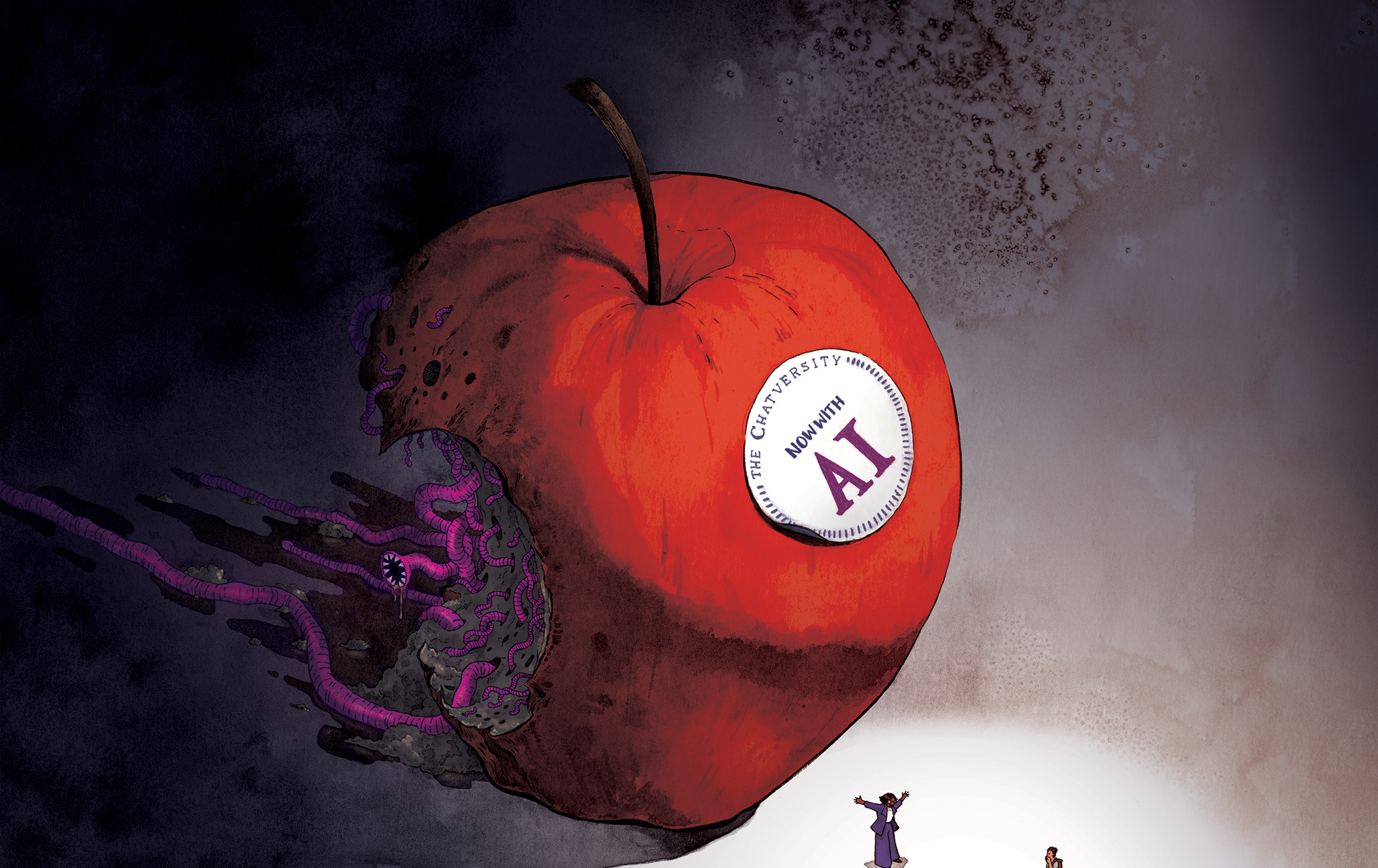
The California State University (CSU) system, the largest public university system in the U.S., has embarked on a controversial $17 million partnership with OpenAI to enhance its educational offerings with artificial intelligence. This initiative, announced amid significant budget cuts—including a proposed $375 million reduction—has raised questions about the value of investing in AI technologies while slashing faculty positions and academic programs.
Initially met with apprehension, the introduction of AI tools such as ChatGPT has rapidly shifted from concern over academic integrity to an enthusiastic embrace of AI as a necessary educational tool. Faculty members who once feared the implications of AI for plagiarism detection are now rebranding themselves as “AI-ready educators.” CSU aims to become the nation’s first “AI-Empowered” university system, providing free access to a campus-branded version of ChatGPT to all students and staff.
This pivot towards AI comes at a time when many CSU campuses are facing severe financial constraints. For instance, Sonoma State University has announced plans to eliminate 23 academic programs, including philosophy and economics, while laying off over 130 faculty members. As faculty grapple with the implications of AI integration, the juxtaposition of budget cuts against the backdrop of AI investment has created a palpable tension within the academic community.
The CSU’s partnership with OpenAI is seen by some as emblematic of a broader trend described by cultural theorists as “academic capitalism,” where knowledge is treated as a commodity and students as consumers. Critics argue that this leads to a focus on “learning outcomes” driven by fiscal metrics rather than genuine educational values. The irony is stark: millions are allocated to AI partnerships while academic programs and faculty—the cornerstone of education—are being dismantled.
In a revealing irony, entire graduate programs at some campuses are being suspended while students receive free licenses to use ChatGPT Edu. As noted by Professor Martha Kenney of the Women and Gender Studies department, this contradicts the mission of higher education, which should encourage critical thinking and inquiry. The newly minted AI tools are presented as solutions, yet they risk undermining the very essence of education.
As the CSU celebrates its technological advancements, a chilling reality looms: students are entering a system where degrees may hold less value as they rely increasingly on AI to complete assignments. The immediate benefits of AI, such as efficiency, come at the cost of deeper cognitive engagement, leading to what scholars warn could be a “cognitive debt.” A recent MIT study indicates that heavy reliance on AI for tasks like essay writing can impair critical reasoning skills, ultimately diminishing the quality of learning.
Underpinning this trend is a growing resistance from students who feel disenfranchised by the corporatization of education. Many students are questioning the motives behind AI integration, recognizing that they are being asked to pay for a learning experience that increasingly relies on automated processes. This skepticism is particularly pronounced among first-generation college students who view education as a pathway to upward mobility and who are now faced with a system that seems to prioritize efficiency over genuine learning.
The CSU’s implementation of AI initiatives raises significant ethical questions about the future of education. As administrators promote AI as an educational enhancement, faculty and students alike are left to wonder about the implications for their academic integrity and intellectual development. The question remains: what value does a degree hold when the primary means of obtaining it is through automated processes?
Amid these challenges, the CSU finds itself at a crossroads. The promise of AI in education could offer innovative opportunities, but it also risks further alienating students and undermining the very principles of learning. As the university system aligns itself more closely with corporate interests, the soul of public education is at stake, challenging the mission of public institutions to serve the community and foster critical thought.
The CSU’s partnership with OpenAI may be positioned as a forward-looking initiative, but it also exemplifies a troubling trend that could redefine the landscape of higher education in California and beyond. As discussions about AI’s role in classrooms continue, the need for a balanced approach that emphasizes both technological advancement and the preservation of educational values becomes increasingly pressing.
See also AI’s Impact: 59% of Colleges See Increased Cheating as Student Engagement Declines
 Idomoo Partners with AWS to Enhance AI Video Creation for Enterprises
 AI Tokens Plunge 7.3% Amid Risk Asset Slide; Bittensor Stays Resilient Before Halving Event
 AI-Driven Insights Transform Caribbean Diplomacy Amid US-Venezuela Tensions
 Sankei Shimbun Demands Immediate Action Against Perplexity for Copyright Violations