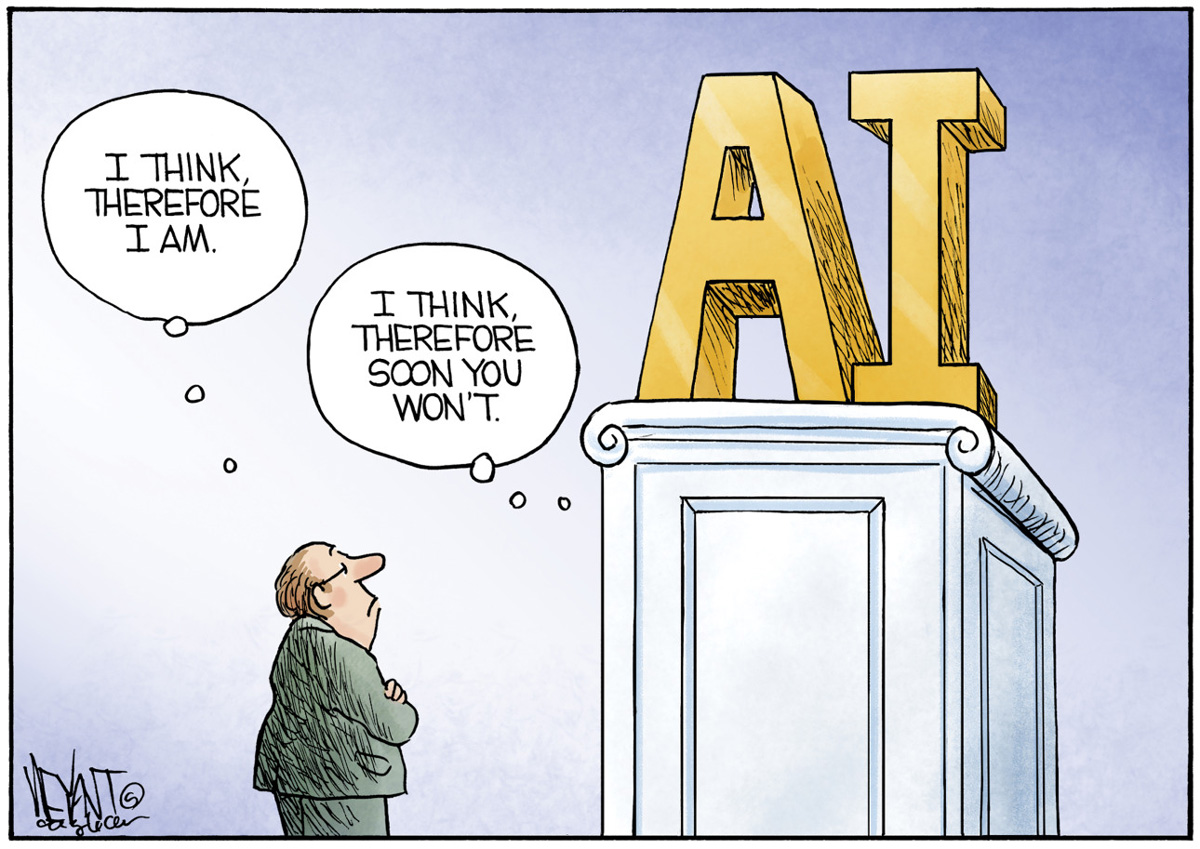
Barth Keck, a retired high school English teacher and current college instructor, has raised concerns regarding the impact of artificial intelligence (AI) on education, particularly in the context of student learning and engagement. In recent years, as teaching demands have intensified, Keck has observed a troubling decline in student interest in reading and writing, exacerbated by the introduction of powerful large language models (LLMs) like ChatGPT.
Keck’s college assignments often include reading nonfiction articles and completing a “Reader Response” template. However, he notes a disparity in the writing quality of these responses compared to students’ initial handwritten work, leading him to suspect the influence of AI. After testing ChatGPT with his assignment, he found the generated responses remarkably aligned with expectations, even offering to enhance the work further. This revelation has contributed to Keck’s alarm about academic integrity, as he reported that many students are opting to submit AI-generated work instead of producing original content.
A survey conducted by the American Association of Colleges and Universities found that 59% of college administrators believe cheating has increased since generative AI tools became more accessible. Furthermore, 21% noted a significant surge in academic dishonesty. Alarmingly, 54% of respondents expressed doubts about faculty effectiveness in identifying AI-generated content.
The challenges posed by AI extend beyond mere cheating. Keck emphasizes how AI can inhibit critical thinking and the learning process itself. LLMs allow students to bypass essential research, brainstorming, and organization, effectively diminishing their engagement with the material. Research from New Mexico State University and the University of Pennsylvania supports this notion, suggesting that reliance on these models leads to a superficial understanding of topics compared to more interactive learning methods like Google searches.
In addition to concerns about academic rigor, there is a growing apprehension regarding the accuracy of information generated by LLMs. The journal Science reported that these models are prone to producing misleading or incorrect responses, a phenomenon termed “hallucination.” Researchers from OpenAI and the Georgia Institute of Technology confirmed that even under ideal conditions, LLMs cannot possess comprehensive knowledge, as some queries are inherently unanswerable.
The integration of AI in education is met with a mixed response. While many institutions, including Yale University and New Haven public schools, are exploring AI as an educational resource, students themselves are wary. First-year Yale student Tiffany Sadiq commented on the disturbing trend of increased reliance on AI, warning that it does not foster the intellectual growth necessary for societal development. Similarly, Abdella Aly, a junior at Hill Regional Career High School, expressed concern that while some use AI appropriately, many misuse it.
Keck, reflecting on his own teaching methods, has adapted by administering unannounced quizzes based on assigned readings and requiring handwritten responses in class. He acknowledges that this approach may seem retrogressive but views it as a necessary measure to combat plagiarism. The resurgence of traditional assessment methods, such as blue books for handwritten exams, underscores the urgency of addressing these AI-related challenges.
As educators grapple with the implications of AI in the classroom, the broader societal ramifications remain significant. The reliance on AI tools has the potential to reshape not only educational standards but also critical thinking skills essential for future generations. The ongoing dialogue about AI’s role in education highlights a pressing need for thoughtful integration, ensuring that technology serves as a genuine aid to learning rather than a barrier to it.
See also Idomoo Partners with AWS to Enhance AI Video Creation for Enterprises
 AI Tokens Plunge 7.3% Amid Risk Asset Slide; Bittensor Stays Resilient Before Halving Event
 AI-Driven Insights Transform Caribbean Diplomacy Amid US-Venezuela Tensions
 Sankei Shimbun Demands Immediate Action Against Perplexity for Copyright Violations
 Global AI Growth: Why Ignoring Emerging Markets Risks Your Competitive Edge