



















































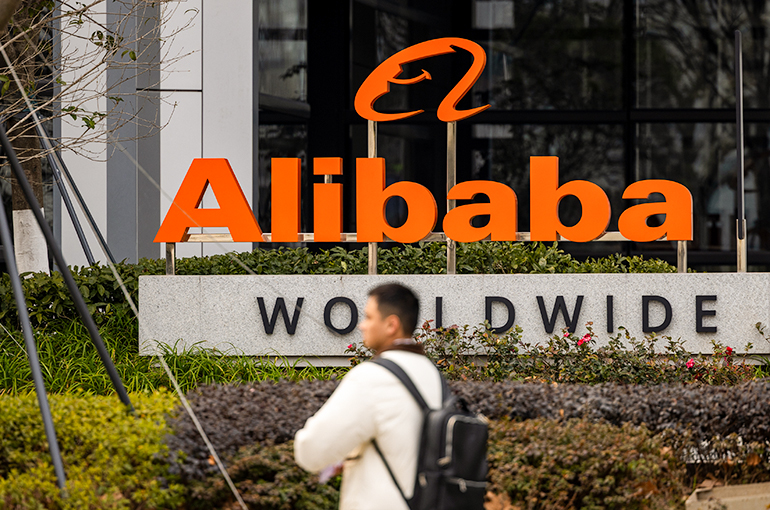
Chinese e-commerce giant Alibaba Group Holding reported a 53 percent decline in net profit for the fiscal second quarter, highlighting the pressures from substantial investments in artificial intelligence and an intensifying competition within the food delivery sector. For the three months ending September 30, the Hangzhou-based company posted a net profit of CNY20.6 billion (approximately USD2.9 billion), down from the previous year, according to its second-quarter earnings report released on November 26.
Despite the drop in profit, Alibaba’s revenue increased by 5 percent to CNY247.8 billion (about USD34.8 billion), surpassing market expectations of CNY245.2 billion. Excluding revenue from disposed businesses such as Sun Art and Intime, revenue on a like-for-like basis would have expanded by 15 percent.
Income from operations plummeted by 85 percent to CNY5.4 billion (around USD754 million), primarily due to substantial investments in quick commerce and technology. However, this decline was somewhat offset by a double-digit growth in e-commerce revenue and enhanced performance in its cloud business.
In discussing Alibaba’s AI initiatives, CEO Eddie Wu stated, “We have entered into an investment phase to build long-term strategic value in AI technologies and infrastructure and a consumption platform integrating daily life services and e-commerce.” Wu noted that the company’s core businesses of AI and Cloud have continued to show strong growth during this quarter.
The company’s Cloud Intelligence Group experienced a notable increase in revenue, expanding by 34 percent to CNY39.8 billion, largely driven by public cloud revenue growth spurred by increased adoption of AI-related products. CFO Toby Xu revealed that over the past four quarters, Alibaba has deployed approximately CNY120 billion in capital expenditures focused on AI and cloud infrastructure, a part of a broader plan that includes an investment of CNY380 billion over the next three years in these areas.
Wu expressed confidence in the sustainability of AI investments, asserting that the current demand cycle will last for at least two to three years amid ongoing shortages in AI resources. “We don’t think there will be a so-called ‘AI bubble’ in the next three years,” he remarked, indicating that their investment plan now seems conservative in light of market conditions.
In the food delivery arena, the competitive landscape has intensified following JD.Com’s entry into the market early this year, which sparked a price war. In response, Alibaba launched its instant retail business Taobao Flash Buy in April, building on its existing delivery platform, Ele.me. The company announced a substantial investment of CNY50 billion (approximately USD7.1 billion) to subsidize users over the next year, aiming to bolster its market share.
Revenue from Alibaba’s quick commerce business surged 60 percent to CNY22.9 billion in the September quarter, largely due to increased order volumes following the launch of Taobao Flash Buy. However, the company is also focused on reducing losses from this venture. CEO of Alibaba China E-Commerce Group, Jiang Fan, reported that by October, the loss per order for Taobao Flash Buy has halved since the earlier months, aided by optimized order structures and reduced logistics costs.
Looking ahead, Alibaba’s management plans to prioritize operational efficiency while potentially reducing investments in delivery services. Xu highlighted that the third quarter is typically a peak investment period for Taobao Flash Buy, but as overall operational efficiency improves, investments in this area are expected to decline significantly in the upcoming quarter.
As of 11 a.m. in Hong Kong today, Alibaba’s shares were trading down 1.6 percent at HKD155.30 (approximately USD19.96), following a 2.4 percent drop at market opening. In the U.S., the company’s stock fell by 2.3 percent to USD157.01 yesterday.
As Alibaba navigates these challenges, its investments in AI and cloud infrastructure could position it for long-term growth in an increasingly competitive market, while the evolving landscape in food delivery services will require careful management to maintain profitability.
See also Trump Launches Genesis Mission to Accelerate AI-Driven Scientific Breakthroughs
 OpenAI Projects 220 Million Paying ChatGPT Users by 2030 Amid Rising Revenue
 HGC Accelerates AI-Driven Transformation with New Leadership to Capture Digital Market Growth
 Google Stock Surges 1.5% to $323.44, Driven by Strategic AI and Cloud Innovations
 OpenAI Enhances ChatGPT Voice Mode, Integrating Real-Time Transcripts in Conversations