






















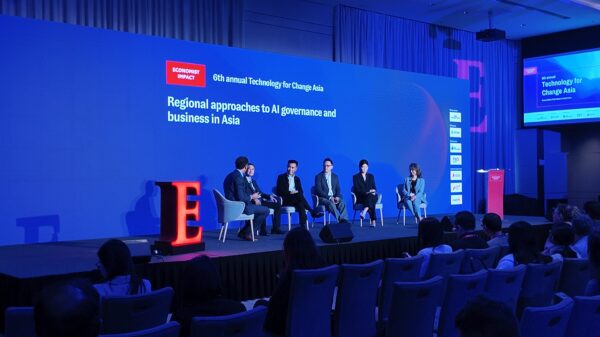























Artificial intelligence is grappling with a significant trust issue, and leading companies such as Amazon, Microsoft, and OpenAI are contending with a challenging landscape as they strive to address it. Last month, Amazon took proactive steps to manage its narrative by hosting its inaugural “editorial exchange” event in Seattle. This gathering aimed to showcase the company’s approach to AI, sustainability, and workforce development to journalists and marketing professionals, including representatives from Digiday.
The event featured a series of panels where Amazon executives addressed recent media coverage and public sentiment regarding the company’s energy and water usage. Brandon Oyer, head of energy and water for the Americas at AWS, highlighted the misinformation surrounding the company’s water consumption, stating, “There’s so many articles that are just misinformed. And it’s just not true.” He refuted claims that Amazon data centers use water extensively throughout the year, explaining that a facility in Northern Virginia consumes a million gallons of water only 4% of the year. “A million gallons, it sounds like a lot of water. But to put it in context, a golf course is going to use about seven to eight times that,” Oyer added.
According to a report from the Energy Department, data centers consumed up to 21.2 billion liters (5.6 billion gallons) of water in 2014, primarily from internal data centers, which accounted for 64% of the usage. By 2023, total water consumption surged to 66 billion liters (17.4 billion gallons), with hyperscale and colocation centers making up 84% of the total water use and internal data centers responsible for just 12%, thanks to improved water-saving techniques.
The discussions at the Amazon event also encompassed AI’s implications for the workforce and its ethical usage, alongside the company’s initiatives to foster community programs. Amazon outlined its workforce development strategies and investments in AI technology aimed at affordability and accessibility. The growing demand for AI services is underscored by Bloomberg’s report from last November, which noted that Amazon’s data centers exceeded 900 as the AI sector expanded rapidly. Amazon did not respond to a follow-up request for comment prior to publication.
Addressing Negative Perceptions
The environmental impact of AI and its effect on the human workforce have become focal points of criticism for tech companies. As a result, many brands are adjusting their marketing strategies to emphasize human agency in their AI applications. Graham Douglas, co-founder and creative director at Gus, a New York City creative strategy firm, remarked, “When we see brands use AI as a shortcut or as a copout, that’s where I see the descent and the negative sentiment comes through.” He emphasized the importance of discovering the human aspects of technology to resonate with consumers.
Amazon’s efforts to mitigate negative headlines are particularly timely, given the scrutiny the company has faced regarding its data centers, climate impact, and workforce practices. Last fall, AWS entered into a partnership with OpenAI, allowing the latter to expand its infrastructure utilizing existing AWS data centers while planning for new facilities. Concurrently, reports surfaced that Amazon intended to lay off 30,000 corporate employees to reduce bureaucracy and enhance AI utilization. More than 1,000 Amazon employees subsequently signed an open letter expressing concerns regarding the company’s AI initiatives.
Despite a 60% uptick in consumers using AI weekly, according to recent research from Klaviyo, skepticism surrounding the technology has intensified. Issues related to environmental impacts and societal perceptions have come to the forefront, forcing companies to balance AI deployment with public sentiment. Diya Wynn, principal responsible AI lead at AWS, articulated during the editorial exchange that, “We’re in very much the early stages of things. We have choices and decisions to make today in terms of the way in which we invest and how we see what may come, but also start to prepare.”
Amazon’s challenges are echoed throughout the tech industry. OpenAI’s recent deal with the Pentagon, granting access to its AI models, has drawn criticism, particularly following rival Anthropic‘s decision to decline a similar arrangement. Other brands, including Coca Cola, McDonald’s, and Svedka vodka, have also faced backlash from consumers.
As companies continue to embrace AI’s potential for efficiency and scale, the prevailing sentiment indicates that the hype surrounding the technology is unlikely to dissipate soon. In the interim, firms are increasingly focusing on responsible, human-centric messaging to shape public perception. “You’ve got to find the culturally relevant human reason for being to really resonate,” Douglas concluded, underscoring the need for an empathetic approach in an evolving technological landscape.
See also Germany”s National Team Prepares for World Cup Qualifiers with Disco Atmosphere
 95% of AI Projects Fail in Companies According to MIT
 AI in Food & Beverages Market to Surge from $11.08B to $263.80B by 2032
 Satya Nadella Supports OpenAI’s $100B Revenue Goal, Highlights AI Funding Needs
 Wall Street Recovers from Early Loss as Nvidia Surges 1.8% Amid Market Volatility