





















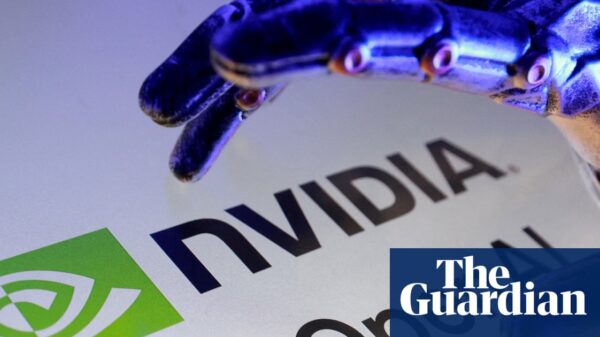



























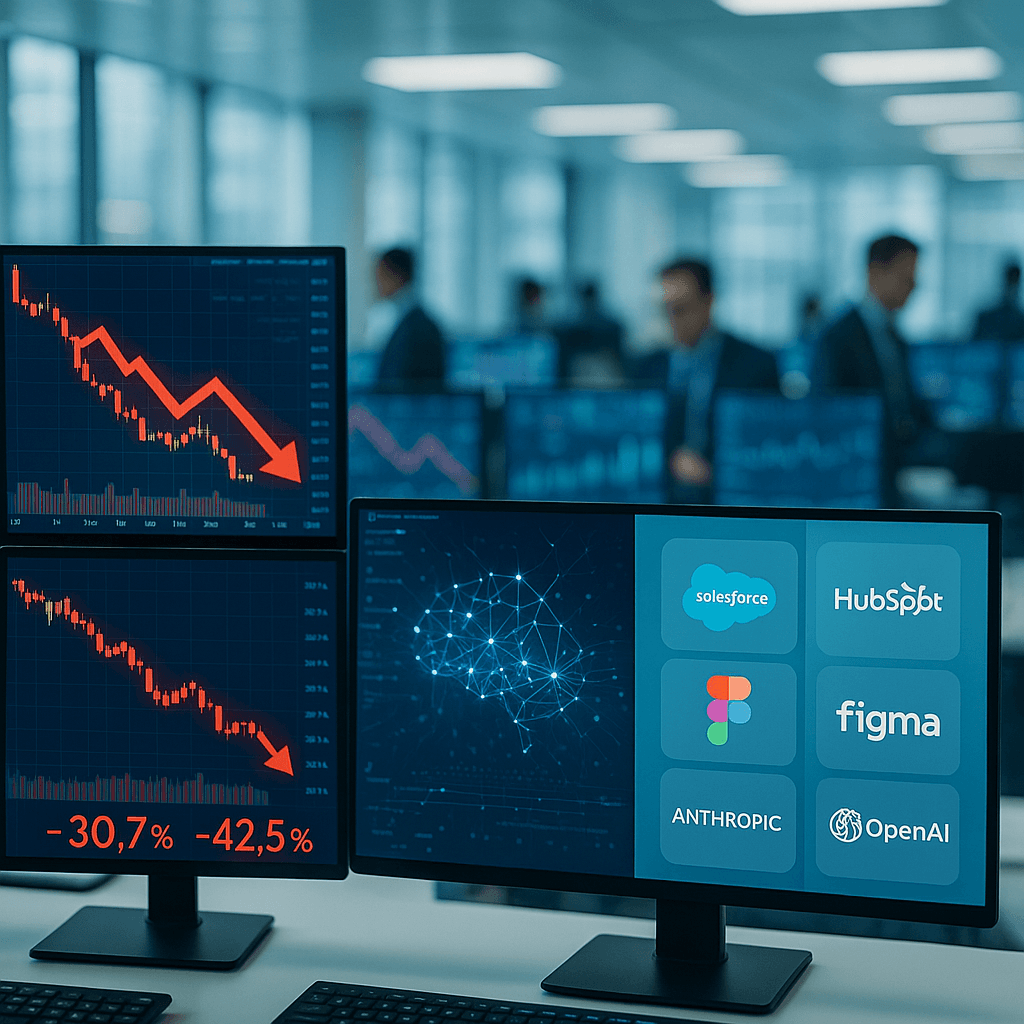
The software industry is facing a significant downturn, with recent developments shaking investor confidence and triggering a selloff in technology stocks. Following **Anthropic’s** announcement on Friday about open-source enterprise plugins for its **Claude Cowork** platform, the sector has experienced a steep decline, erasing nearly 30% of its value in the last three months. This drastic shift has been underscored by the **WisdomTree Cloud Computing Fund**, which has plummeted 20% in 2026, with notable drops from major players like **HubSpot**, **Figma**, and **Atlassian**. HubSpot has seen its shares tumble 39% year-to-date, while Figma’s shares are down 40%, and Atlassian has dropped 35%. Even established firms like **Salesforce** have recorded a 25% decline, highlighting the widespread impact of these market shifts.
Anthropic’s launch of new plugins designed for legal, finance, and product marketing applications has sent shockwaves throughout the industry, contributing to an immediate 6.5% drop in the WisdomTree fund this week alone. The market’s reaction suggests a growing belief that foundational AI models, such as those from **Anthropic** and **OpenAI**, could threaten the viability of traditional software companies. Investors are increasingly wary, questioning the future of specialized software in an era where AI can potentially address diverse business needs through simple text prompts.
The repercussions are evident across the software landscape: HubSpot’s share price has faced severe pressure, plummeting 39% this year after a 42% decline in 2025. Meanwhile, Figma and Atlassian’s respective 40% and 35% drops have compounded the anxiety among stakeholders. Even **Box**, whose CEO **Aaron Levie** recently characterized the current landscape as “the most exciting moment we’ve ever had” in the company’s 20-year history, finds itself grappling with a 17% decrease in value this year.
The prevailing narrative on Wall Street paints a stark picture: the rise of AI technologies signals a fundamental shift in how companies will utilize software. Observers argue that investing in specialized vendors for CRM systems and back-office software may soon become obsolete, as companies may prefer to rely on AI to manage tasks traditionally handled by dedicated applications. **Celso Pinto**, senior director of product at **The Access Group**, echoed this sentiment in a recent post, expressing admiration for the capabilities of Claude Cowork, citing its utility in producing legal documents and reviewing marketing materials.
However, not all industry executives share the bleak outlook. Levie contends that investors are misreading the situation, suggesting that the actual dynamics of enterprise operations require nuanced understanding. He emphasized that businesses typically prefer to engage specialized vendors, rather than taking on the burdens and liabilities of developing and maintaining software in-house. “It somewhat misunderstands this idea of where companies tend to spend their resources and their time and their energy,” Levie stated, positioning specialized software as essential to effective business operations.
As investors grapple with the consequences of Anthropic’s disruptive innovation and the broader implications of AI technologies, the software sector stands at a crossroads. The ongoing discourse reflects a tension between the promise of AI and the reality of established business practices, raising questions about the future of software development and investment strategies. Despite the turmoil, some investors, like **Byron Deeter** from **Bessemer**, view the downturn as an opportunity, suggesting that fears surrounding AI’s potential to disrupt the industry may be overstated.
Looking ahead, the intersection of AI and traditional software will continue to shape the market landscape. As companies assess their strategies in light of rapidly evolving technologies, the dialogue between software executives and investors will be critical in navigating this transformative period.
See also MIT’s AI Innovations Unleash New Antibiotics, Battling Multi-Drug Resistance with Breakthroughs
 Oklahoma Prisons Implement AI to Enhance Safety, Reduce Costs, and Streamline Inmate Releases
 Oakley and Meta Launch Vanguard AI Glasses in India Priced at Rs. 52,300
 Maas Group’s $1B Construction Sale Sparks 25% Stock Plunge Amid AI Shift; Firmus Invested
 AI-Designed Virus Breakthrough: Evo-Φ2147 Targets E. coli, Sparks Biosecurity Debate