APPSO has recently acquired the highly anticipated NVIDIA DGX Spark, a personal supercomputer endorsed by NVIDIA’s CEO Jensen Huang. The initial reaction to the device has been overwhelmingly positive, with observers noting its “small yet beautiful” design.
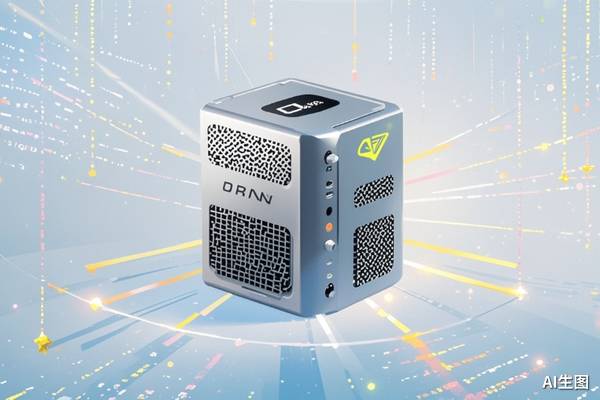
Measuring approximately the size of a Mac Mini and weighing in at just 1.2 kg, the DGX Spark stands out due to its sleek silver finish and unique metal mesh design for heat dissipation. This compactness sets it apart from bulkier models like the Mac Studio, which weighs 2.74 kg and is larger in dimensions.
Equipped with impressive specifications, the DGX Spark boasts 128GB of unified GPU+CPU memory and operates on the GB10 Grace Blackwell supercomputing chip, delivering performance comparable to the RTX 5070/5070 Ti. With a memory bandwidth of 273 GB/s, the device is positioned to handle demanding tasks efficiently.
The potential applications for this supercomputer are manifold, particularly for those involved in artificial intelligence (AI) research and development. Users can process local tasks involving sensitive content—such as PDFs, images, and videos—without the need for an internet connection, ensuring greater privacy. Despite its merits, the relevance of local processing remains a debated topic, especially given the prevalence of cloud-based AI services.
Retailing at around 30,000 yuan on platforms like JD.com, the DGX Spark has generated interest not only for its price but also for its Linux Ubuntu operating system, which is considered user-friendly. However, some users have noted that the bandwidth speed can be a bottleneck during tasks, such as watching responses being generated in real-time.
The DGX Spark is characterized as a dedicated Linux desktop computer that facilitates the local execution of models with up to 200 billion parameters. This capability empowers AI researchers and developers to quickly reproduce cutting-edge research and validate their ideas, although it is not particularly suited for AI tasks outside of deep learning, such as video editing or gaming.
Performance and Capabilities
One of the standout features of the DGX Spark is its ability to run open-source models directly. The system supports various frameworks, including Open WebUI, designed for efficient local execution of large language models. Initial tests with the gpt-oss 20b model yielded average performance, while attempting to deploy the 65GB gpt-oss 120b model revealed the limitations of the system, as processing times slowed significantly under the model’s demands.
Further trials included generating images and videos using various open-source platforms. The DGX Spark managed to run tasks using Comfy, a user-friendly image generation tool, and successfully produced impressive results. However, challenges arose during video generation, where memory usage peaked at nearly 90GB and GPU utilization reached 96% for a simple 10-second video. This underscores the considerable computational resources required for such tasks.
Despite the challenges, NVIDIA provides a detailed playbook for DGX Spark users, covering deployment methods and project collaboration. Users can also explore the capabilities of knowledge graphs and video summarization through this guide, showcasing the system’s versatility.
The discussion around fine-tuning existing large models has also gained traction, with researchers recognizing the need to adjust parameters for enhanced performance in specific applications. Using frameworks like LLaMa Factory, users can fine-tune models such as Llama 3, optimizing them for their unique datasets without the extensive resource demands of training from scratch.
As the landscape of AI technology continues to evolve, the DGX Spark exemplifies the potential of personal supercomputing for specialized applications. Its compact size and robust capabilities might make it an attractive option for AI enthusiasts, researchers, and developers looking to push the boundaries of what is possible in the realm of artificial intelligence.
See also India Surges to No. 3 in Global AI Vibrancy Index with Talent Pool Growing 252%
 AI Identifies Two Distinct MS Subtypes, Paving Way for Personalized Treatments and Better Outcomes
 Grok’s X Profile Overrun with AI-Generated Explicit Images, Experts Warn Users to Avoid
 India Surges to 3rd on Global AI Vibrancy Index as Talent Pool Soars 252%
 Wall Street’s 2026 AI Stock Picks: Microsoft, Apple, Tesla Lead, NVIDIA Omitted