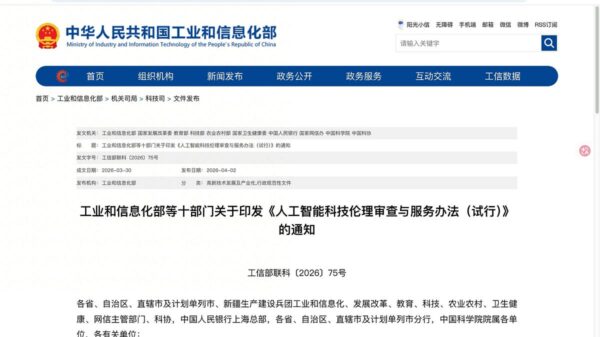

















































China has set an ambitious target to ensure a “safe and reliable supply” of foundational artificial intelligence (AI) technologies by 2027, reflecting its commitment to securing a leading position in the global tech landscape. This objective, announced in a plan released on Wednesday by eight government agencies, including the Ministry of Industry and Information Technology, underscores the urgency as nations worldwide vie for supremacy in cutting-edge technologies.
The newly unveiled plan outlines strategic areas of focus aimed at achieving this goal. Among these initiatives is the promotion of the deep application of three to five general-purpose large AI models specifically designed for the manufacturing sector. This initiative is part of a broader effort to enhance both the scale and capability of China’s AI industry, positioning the nation among global leaders in the field.
According to the plan, by 2027, the capabilities of China’s AI industry are expected to significantly expand. The framework aims to develop industry-specific large models characterized by broad applicability and unique features. Additionally, the plan includes the creation of 100 high-quality datasets tailored for various industrial domains and the promotion of 500 typical application scenarios, further solidifying the country’s commitment to advancing AI technologies.
China’s goal of establishing a robust AI infrastructure is crucial, especially in light of the rapid advancements made by U.S. tech giants like Nvidia, OpenAI, and Google, which continue to lead in AI innovation. As nations race to harness the transformative power of AI, China’s strategic framework may catalyze significant developments in both its domestic tech landscape and the global market.
To maintain momentum, the plan emphasizes collaboration between government agencies and private enterprises, encouraging investments and research in AI technologies. This partnership is essential for fostering innovation and ensuring the successful implementation of the outlined initiatives. By enhancing cooperation across sectors, China aims to accelerate the development of its AI ecosystem, addressing both technological advancements and regulatory frameworks.
The implications of this initiative are profound, as AI is poised to reshape industries ranging from manufacturing to healthcare. As China positions itself as a formidable player in the global AI arena, the ripple effects could influence international standards and practices in technology deployment. The push for a self-sufficient AI supply chain may also drive competition, prompting countries to reevaluate their own strategies for technological advancement.
Moreover, the emphasis on ethical considerations and data governance within the framework indicates a recognition of the challenges posed by AI technologies. As concerns surrounding data privacy and bias in AI systems grow, China’s proactive approach to establishing guidelines may serve as a model for other nations navigating similar issues.
In conclusion, China’s strategic initiative to secure a leading position in AI technology by 2027 could redefine the global tech landscape. The successful realization of this plan not only aims to fortify China’s domestic capabilities but also positions the country as a key player in shaping the future of AI on an international scale. As the race for AI supremacy intensifies, the outcomes of China’s efforts will be closely monitored by both competitors and allies alike.
See also Nvidia Tightens H200 Chip Sales Amid China’s Regulatory Uncertainty, Demand Surges
 Modi Urges Indian AI Startups to Lead Global Innovation with Ethical, Inclusive Models
 Oracle’s $50B AI Bet Sparks Investor Concerns Amid Rising Debt and Cash Flow Strain