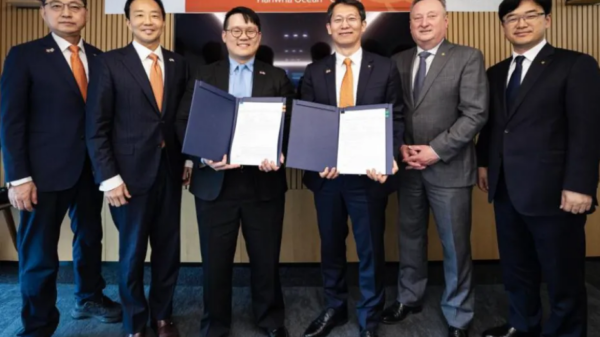


































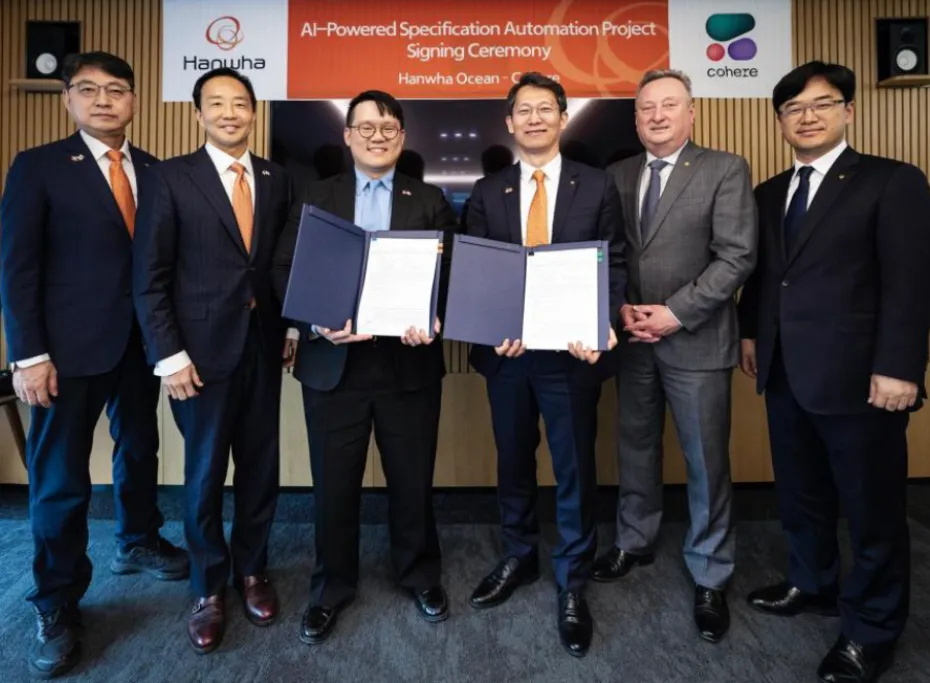
In a notable advancement for the shipbuilding industry, Canada’s security-focused artificial intelligence firm Cohere has partnered with Hanwha Ocean to launch a proof-of-concept (PoC) project aimed at integrating generative AI into core engineering workflows. Signed on March 31 in Seoul, the initiative seeks to automate and validate engineering specification documents used in ship design and procurement, reflecting a significant shift toward digitally enabled engineering in this complex industrial sector.
This pilot project represents a transition from exploratory collaboration to practical application within controlled environments, where precision, traceability, and consistency are paramount. At the heart of the project are Purchase Order Specification (POS) documents, which are pivotal engineering materials developed in the early stages of shipbuilding that heavily influence procurement, production, and system integration. Historically, the preparation and review of these documents have been manual processes, fraught with potential for inconsistencies and inefficiencies.
Through this collaboration, the companies aim to harness generative AI to create POS documents from existing vessel data and new design inputs, while also enabling the identification and reflection of specification changes. The project is focused on validating these outputs against standardized frameworks, with the dual goals of reducing manual workload and enhancing the scalability of engineering processes.
The initial phase will concentrate on main engine specifications, an area recognized for its intricate data structures and repeatable workflows that lend themselves well to AI-driven automation. Should this approach prove successful, similar methodologies could be applied to additional design domains, including hull structures, piping systems, and electrical and instrumentation components.
“The ability to integrate AI into core engineering workflows is becoming a key differentiator in shipbuilding,” stated Steve SK Jeong, Senior Executive Vice President at Hanwha Ocean. “This work is focused on where it matters most—improving how design information is created, validated, and scaled across complex programs.”
As emphasized by Andrew Chang, Vice President of APAC at Cohere, deploying enterprise AI in intricate environments such as shipbuilding necessitates a commitment to technical excellence and secure, controlled integration. “Through merging Hanwha’s deep marine systems expertise with our frontier AI models, this partnership marks a pivotal leap toward sovereign AI solutions that meet the exacting standards of industrial applications,” he noted. “Together, we’re demonstrating how AI can reliably and securely tackle complex engineering challenges at scale.”
This partnership exemplifies a foundational technology sharing initiative, underlining a practical approach to AI collaboration aimed at driving innovation within the realms of shipbuilding and defense. As digital tools become increasingly embedded in core engineering functions, the integration of domain expertise with scalable technologies is poised to redefine the landscape of next-generation naval capabilities. This evolution could lead to the establishment of more digitally enabled “smart shipyard” environments, with potential applications extending to international shipbuilding ecosystems.
Hanwha Ocean is actively expanding its footprint in Canada, securing over 30 teaming agreements and memoranda of understanding with Canadian businesses and universities. These collaborations are designed to directly embed Canadian entities into Hanwha’s global submarine supply chain, thereby enhancing Canada–South Korea cooperation and fostering shared industrial capacity. The initiatives have the potential to generate tens of billions of dollars in trade and investment across Canada’s strategically vital sectors. Furthermore, Hanwha’s Comprehensive Industrial Plan (CPSP) aims to sustain an average of 25,000 jobs annually from 2026 to 2044, while delivering one of the most advanced conventional submarine platforms in production today on an expedited timeline.
The integration of generative AI into shipbuilding signifies a paradigm shift that could reshape not only engineering practices but also the overall structure of naval capabilities. As these advanced technologies become more prevalent, they will likely accelerate the transformation of traditional shipbuilding practices into a more innovative, efficient, and scalable industry.
See also Anthropic Surpasses $30B Revenue Run Rate Amid Strategic Partnerships with Broadcom and Google
 Germany”s National Team Prepares for World Cup Qualifiers with Disco Atmosphere
 95% of AI Projects Fail in Companies According to MIT
 AI in Food & Beverages Market to Surge from $11.08B to $263.80B by 2032
 Satya Nadella Supports OpenAI’s $100B Revenue Goal, Highlights AI Funding Needs