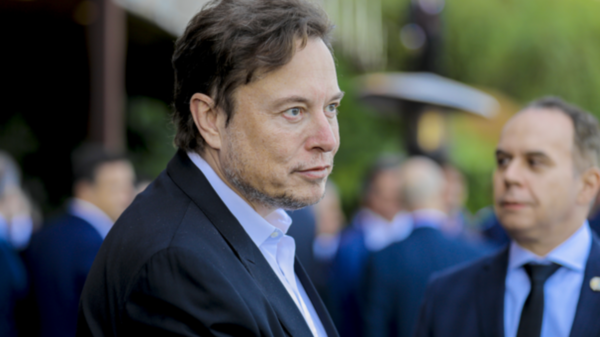
















































As tax-filing season accelerates, many individuals are considering leveraging artificial intelligence to navigate the complexities of their returns. Elon Musk, CEO of X and owner of Grok AI, recently highlighted the potential benefits of Grok in assisting users with tax filings, sharing a post that detailed how one woman reportedly used the tool to secure a $1,400 increase in her refund through a double-check of her TurboTax submission. Musk’s endorsement comes amidst rising interest in AI solutions for personal finance, yet experts caution against relying on these technologies for such intricate tasks.
While Musk’s enthusiasm for Grok may suggest confidence in its capabilities, the reality of AI-assisted tax filing is more nuanced. Despite its prowess in various applications, industry experts assert that AI is not yet adept enough to navigate the intricacies of tax law reliably. Concerns surrounding privacy and the security of sensitive personal information further complicate the landscape, leading many to question whether automating such a critical process is advisable.
The New York Times recently tested four prominent AI chatbots—Google’s Gemini, OpenAI’s ChatGPT, Anthropic’s Claude, and Grok—by presenting them with eight fictional tax scenarios. Each chatbot struggled to deliver accurate calculations, with discrepancies of over $2,000 in the amounts owed or refunded. This underperformance raises significant doubts about the readiness of AI to handle tax filings accurately, highlighting a gap between the technology’s general capabilities and the precision required in tax preparation.
Analyst Benedict Evans noted, “The problem with taxes is all those very small details matter, and it’s not going to get every single little detail right.” The evolving nature of AI models, which improve incrementally every six months, still falls short of providing the reliable accuracy needed for tax matters. While AI has the potential to excel in research and content creation, its application in tax filing reveals a fundamental mismatch.
The report from the Times emphasizes AI’s challenges in understanding complex relationships among the plethora of information it processes, a critical factor in tax preparation. Unlike traditional tax software such as TurboTax, which relies on procedural logic designed for mathematical accuracy, AI tools currently lack the necessary structure to navigate the multi-faceted nature of tax scenarios effectively. Erik Brynjolfsson, a senior fellow at the Stanford Institute for Human-Centered A.I., stated, “Traditional tax software is procedural, following ‘if-then’ logic built for mathematical precision.” This systematic approach enables traditional software to outperform AI in scenarios that require exactitude.
Despite some promising instances of users achieving favorable outcomes through AI tools, the broader consensus points to a significant cautionary note. For those unfamiliar with the tax-filing process, the allure of AI promises convenience and potential savings but can also lead to costly mistakes if relied upon too heavily. The disclaimer attached to Musk’s post about Grok—cautioning users to always verify the AI’s guidance—serves as a reminder of the importance of personal diligence in tax matters.
As the tax deadline approaches and interest in AI applications continues to grow, the need for a balanced perspective becomes increasingly critical. While innovations like Grok signal exciting advancements in technology, their applicability in sensitive areas such as tax filing remains under scrutiny. The challenge for AI developers lies in bridging the current gaps in accuracy and understanding, ensuring that future iterations can meet the demands of complex tasks while safeguarding user data.
In conclusion, as individuals weigh the benefits of utilizing AI for tax-filing assistance, the importance of thorough verification cannot be overstated. The current limitations of AI, particularly with the nuanced requirements of tax law, underscore the continued relevance of traditional tax preparation methods. As technology evolves, the ultimate question remains whether AI will ever reach a point of reliability sufficient to replace human oversight in such a crucial arena.
See also Shattered Globe Theatre Debuts AI Character in ‘Morning, Noon, and Night’ Premiere
 CoreWeave Partners with Perplexity AI to Enhance Multiyear Inference Workloads
 Meta AI Engineer Reveals Résumé Strategy That Secured Machine Learning Role
 Germany”s National Team Prepares for World Cup Qualifiers with Disco Atmosphere
 95% of AI Projects Fail in Companies According to MIT