











































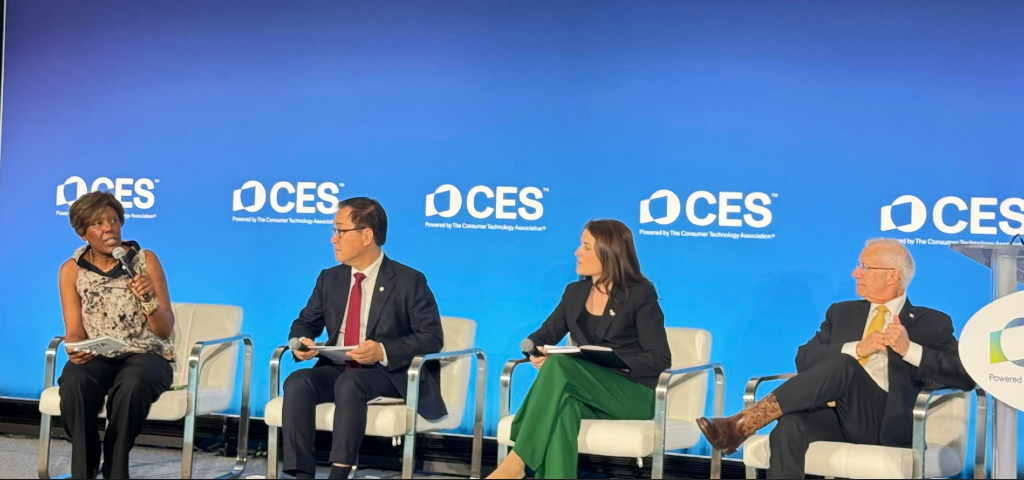
Officials from Ireland, South Korea, and Canada highlighted the growing necessity for shared regulatory frameworks as artificial intelligence (AI) technology expands globally. This statement was made during discussions at the Consumer Electronics Show (CES) 2026, held on January 6, 2025, in Las Vegas. The increasing sophistication and deployment of AI raise critical questions regarding safety, ethics, and governance.
During a panel discussion, Tiffany Moore, senior vice president of political and industry affairs at the Consumer Technology Association, underscored that without cohesive regulations, nations risk falling into a fragmented patchwork of standards that could hinder innovation and international cooperation. Her sentiments were mirrored by Hyung Du Choi, South Korea’s lead architect of AI legislation, who emphasized that a collaborative approach is vital for effectively managing the challenges posed by AI.
Caitlín Higgins Ní Chinnéide, Ireland’s consul general to the southwestern United States, noted that countries must strike a balance between fostering innovation and ensuring safety. “The tech landscape is evolving rapidly, and with it, the need for a unified regulatory framework becomes more pressing,” she stated. Meanwhile, Vic Fedeli, Ontario’s minister of economic development, job creation, and trade, pointed out the competitive advantages that a coherent regulatory environment could offer to businesses across borders.
The discussions at CES 2026 reflect a broader global trend where nations are increasingly concerned about the ethical implications and potential risks associated with AI technologies. Concerns range from data privacy to algorithmic bias, necessitating a concerted effort to establish guidelines that could help mitigate these risks. The European Union has already taken steps in this direction, introducing legislative proposals aimed at regulating AI systems based on risk categories.
As regulatory bodies in various countries consider how to approach AI governance, the conversation at CES 2026 underscores the urgency for collaboration. “We need to learn from each other. Different countries have unique challenges and solutions that can inform our collective efforts,” added Choi. Efforts to align regulations could not only enhance safety but also stimulate economic growth by attracting investment into regions that prioritize responsible AI development.
The interconnected nature of today’s technology landscape necessitates that nations avoid unilateral regulatory actions that could stifle innovation. Experts warn that overly stringent regulations could push companies to relocate to jurisdictions with more favorable conditions, potentially leading to a brain drain. This concern was echoed by multiple panelists who urged for a balanced approach that encourages innovation while addressing ethical concerns.
As discussions around AI governance continue to evolve, the outcomes from CES 2026 may set the stage for future international agreements on AI regulation. The convergence of diverse regulatory perspectives from countries like Ireland, South Korea, and Canada could pave the way for a new era of global cooperation. The future of AI is not just about technological advancement but also about establishing a framework that ensures this technology serves humanity responsibly.
In conclusion, as AI technologies continue to rise in prominence, the call for standardized global regulations becomes increasingly urgent. The discussions at CES 2026 signal that stakeholders are beginning to recognize the importance of collaborative governance that addresses both innovation and safety. With nations poised to tackle the complexities of AI, the need for shared rules may soon become not just beneficial but essential.
See also Rokid Launches World’s First Open AI Ecosystem Smart Glasses Weighing Just 38.5 Grams
 AZIO AI Secures Strategic Investor Support, Advances Merger with Envirotech Vehicles Inc.
 CurveBeam AI Surges to 2-Month High Following Approval of Chinese Investment
 Grok Faces UK Regulatory Scrutiny for Creating Non-Consensual Images of Women
 Venture Capitalists Shift Focus: AI Drives M&A and Hiring Strategies at CES 2026