


















































As Germany’s energy landscape evolves, grid operators are exploring artificial intelligence to enhance the security and efficiency of power systems. This initiative is particularly crucial as decentralized power generation increases and load flows become more complex, necessitating innovative solutions in grid management.
Recently, German utility Stadtwerk am See partnered with HTWG Konstanz – University of Applied Sciences, Fraunhofer Institute for Solar Energy Systems (ISE), and the International Solar Energy Research Center Konstanz to develop and test prototypes of AI-based low-voltage controllers. Jan Etzel, Head of Power Grid Operation at Stadtwerk am See, noted that the project builds on previous work with non-AI algorithms aimed at system optimization. The integration of AI was contingent on extensive measurement technology deployment within low-voltage grids, utilizing data from an industrial estate in Friedrichshafen to simulate future grid control.
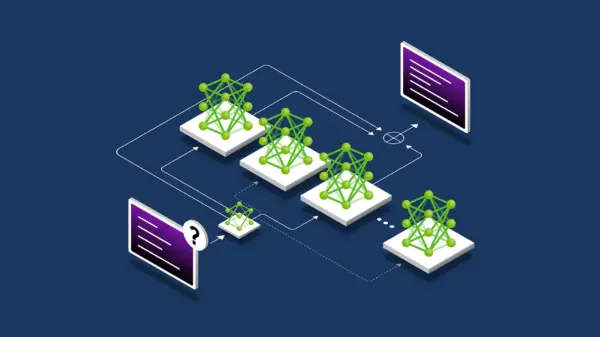
Despite these advancements, a significant challenge persists: many distribution system operators across Germany still lack comprehensive data regarding the status of individual grid lines. This data deficit complicates the deployment of sophisticated algorithms, as AI relies heavily on real-time measurement data. Once this data becomes available, a smart control system powered by AI can manage the low-voltage grid more effectively, linking information from transformer stations, consumers, producers, and environmental forecasts.
With AI’s capability to analyze vast data sets, it can make rapid decisions to mitigate peak loads and prevent grid congestion, even adjusting energy generation when necessary. This dynamic learning process means that AI will increasingly enhance grid operations based on historical data and predictive analytics.
The Smart Grids Platform Baden-Württemberg showcased these cutting-edge AI applications during the Smart Grids Dialog 2024 in Konstanz. Arno Ritzenthaler emphasized that AI goes beyond merely creating digital twins; it stabilizes grids and reduces the need for extensive grid expansion. Professor Gunnar Schubert from HTWG Konstanz introduced the concept of “Digitainability,” merging digitalization with sustainability, which is vital for accommodating the anticipated 60 GW of photovoltaic energy generation in mid to low-voltage grids.
Looking ahead, the energy transition in Germany anticipates a surge in demand driven by electric vehicles, projected to reach 35 million by 2045, thereby doubling electricity consumption. Concurrently, renewable energy capacities are slated to exceed 400 GW for solar power and 300 GW for wind. Such changes will require sophisticated grid management strategies to handle fluctuating supply and demand effectively.
Manuela Linke, leader of the AI4Grids research project at HTWG Konstanz, underscored the complexities involved in managing these new dynamics. AI is poised to play a crucial role in load flow calculations and grid stability, provided sufficient data and control mechanisms are established. However, she noted that the quality of data collection and IT security remains a significant hurdle, particularly as both the energy and IT sectors face a shortage of skilled professionals.
The traditional model of standard load profiles, which assumes uniform consumption patterns across households, is also becoming obsolete. Jann Binder from the Center for Solar Energy and Hydrogen Research Baden-Württemberg highlighted the inaccuracies of this model in light of increasing solar installations and battery storage. New load profiles tailored to individual consumption patterns could be developed with AI’s assistance, according to Dominik Jost from the Fraunhofer Institute for Energy Economics and Energy System Technology (IEE).
In a related initiative, Karen auf der Horst, who leads the GenAI project at Netze BW, demonstrated AI’s versatility beyond grid management. The utility employs AI to assist installation engineers in the field by using image recognition to automate the identification of equipment and streamline maintenance processes. This approach mitigates the risks associated with incorrect data entry and supports engineers with real-time information from a centralized database.
The European Commission has estimated that network operators will require an investment of at least 170 billion euros in grid digitalization and intelligence by 2030. Upcoming discussions at EM-Power Europe, scheduled for May 2025 in Munich, will explore the latest innovations in grid digitalization and the application of AI in energy systems. With the expectation of over 3,000 exhibitors and more than 110,000 energy experts, this event will provide a platform for advancing the dialogue on the integration of decentralized energy solutions.
As Germany’s energy landscape continues to transform, the role of artificial intelligence will be pivotal in shaping a sustainable and resilient power grid for the future.
See also CODIT Unveils ChatCODIT: Transforming Global Regulatory Intelligence with AI-Powered Insights
 Apple Chooses Google Gemini AI to Enhance Siri, $1B Annual Deal Confirmed
 Celebrities Rally Against AI Copyright Violations in “Stealing Isn’t Innovation” Campaign
 Trump Threatens NATO with Tariffs as 96% of Burden Falls on American Consumers
 EPAM’s Cursor Partnership: A Game-Changer or Risky Investment for Shareholders?






