



































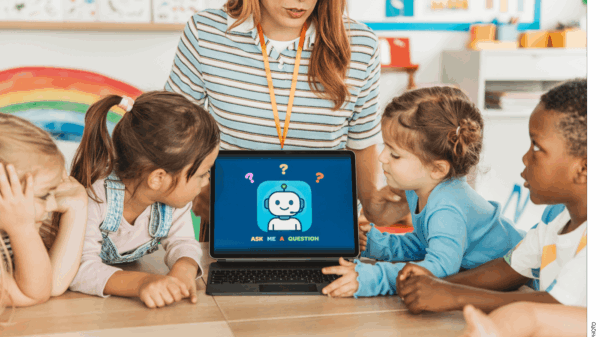

















Artificial intelligence (AI) is fundamentally transforming childhood, influencing how millions of children learn, access healthcare, and engage with an evolving world. As leaders convene for the Global AI Impact Summit in Delhi this week, the stakes are high. The summit presents a pivotal opportunity to shape effective AI governance that addresses both the potential benefits and the risks associated with AI technologies.
UNICEF is advocating for the inclusion of children and young people in the summit’s Leader’s Declaration, recognizing them as rights-holders, users, and contributors within the AI ecosystem. This acknowledgment is crucial; it underscores the reality that children are already central to the AI revolution. Despite their prominence, the governance frameworks surrounding AI have largely neglected their specific needs and vulnerabilities, a gap that must be addressed.
With hundreds of millions of children growing up in an AI-infused world, the implications are profound. AI has the potential to personalize learning experiences for students with disabilities, deliver diagnostic tools to remote healthcare settings, and provide mental health support to communities in need. However, uncertainties surrounding the long-term effects of AI on children’s cognitive development and mental health necessitate a proactive rather than reactive approach. Current online risks, including the emergence of AI-generated child abuse material, are evolving at a pace that challenges existing protective measures.
As AI continues to alter labor markets and redefine education systems globally, there is an urgent need for informed governance. Child-centered AI governance entails a careful examination of how these systems affect children prior to deployment. This includes ensuring access to services, protecting data privacy, and considering the long-term developmental impacts on children. The design of AI technologies must also reflect real-world conditions — accommodating offline access, shared devices, and diverse linguistic and social contexts. Transparency is essential, allowing children and caregivers to understand how AI is used and the mechanisms available for addressing any resulting harm.
Exclusion often stems from narrow design choices, a reality emphasized by Kartik Sawhney, the founder of I-STEM, who is visually impaired. His organization, supported by the UNICEF Venture Fund, developed an AI accessibility platform that operates effectively in low-bandwidth environments and multiple languages, enabling visually impaired and dyslexic learners to access information readily. This initiative is currently being piloted in collaboration with governments and partners in UNICEF’s operational regions.
UNICEF is actively collaborating with governments and tech companies to shape policies, test innovative solutions, and establish child rights-based guidance for businesses. This partnership aims to build evidence regarding effective practices and identify emerging risks across vital areas such as education, health, child protection, and climate action. The organization positions itself as a key resource in navigating the complexities of AI’s potential and pitfalls for future generations.
The commitments made during the Delhi Summit should focus on creating child-centered, age-appropriate, and safe AI systems. These systems must be founded on principles of transparency, data protection, responsible business practices, human oversight, and effective mechanisms for redress. Despite the fact that approximately one in three internet users globally is under 18, two-thirds of school-aged children lack reliable home internet access. AI systems that overlook these realities risk entrenching exclusion on a monumental scale.
Moving forward requires a concerted effort from governments, industry, and civil society to work not just for children but in partnership with them. The decisions made in Delhi will have long-lasting implications, echoing across generations. It is imperative that world leaders act with foresight and responsibility to ensure that the transformative power of AI is harnessed for the benefit of all children.
See also Arista Networks Raises 2026 AI Revenue Forecast to $3.25B, Shares Surge Over 10%
 FTC Intensifies Investigation into Microsoft’s AI and Cloud Practices Amid Antitrust Concerns
 Revolutionize Research: AstaLabs Launches AutoDiscovery for Automated Hypothesis Generation
 OpenAI Alleges DeepSeek Is Attempting to Clone ChatGPT Models for AI Training
 TurboCell’s Modular Power System Targets AI’s Urgent Infrastructure Shortage by 2026