







































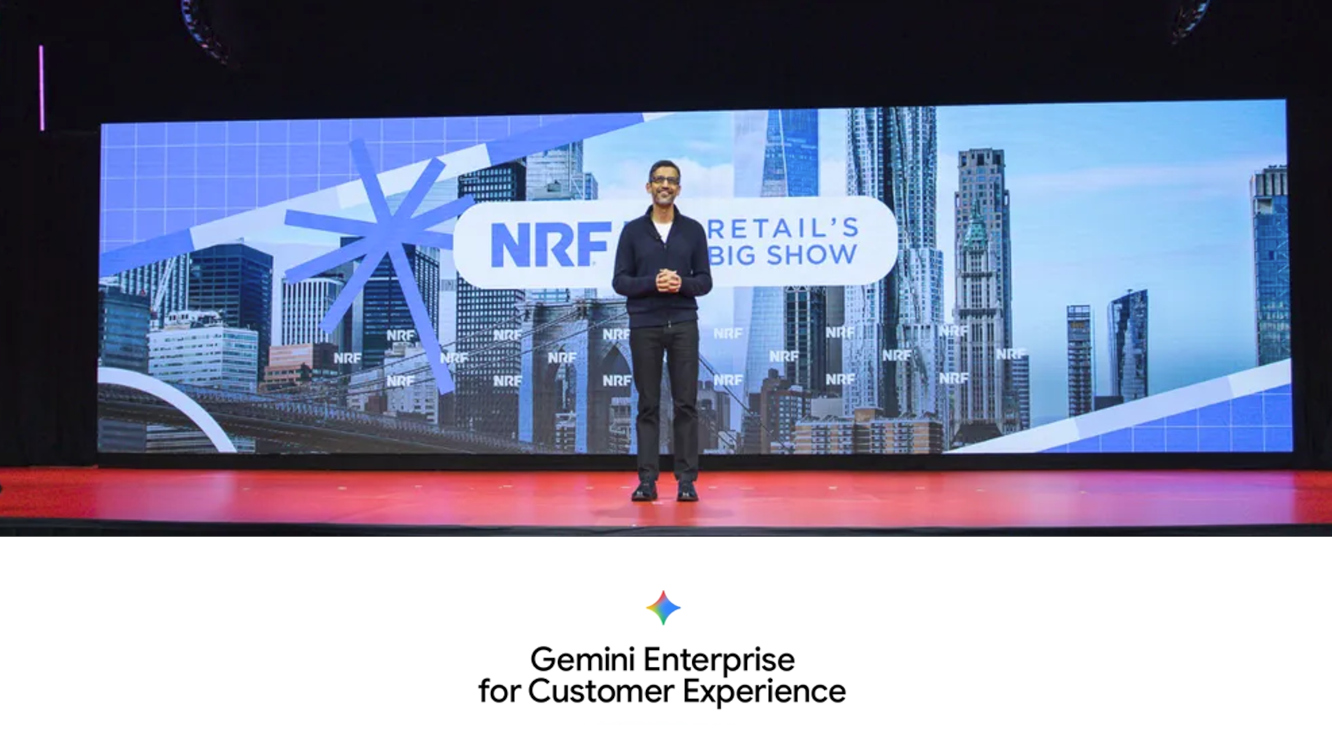
Google and Walmart have announced an expanded strategic partnership focused on artificial intelligence and new delivery technologies at the National Retail Federation (NRF) 2026 conference. In a joint keynote, Google CEO Sundar Pichai and incoming Walmart CEO John Furner detailed how AI-driven shopping, personalized experiences, and drone logistics are set to transform retail operations beginning in 2026.
At the heart of the partnership is the integration of Walmart’s products into Google’s AI chatbot, Gemini. This innovation will allow shoppers to search, compare, and purchase items directly through conversational AI. Gemini will access real-time assortments, pricing, and availability, while Walmart loyalty members can link their accounts to receive personalized recommendations based on their shopping history and preferences.
Furner emphasized that convenience and personalization will be the hallmarks of future retail experiences, positioning AI as a new customer interface rather than merely a backend optimization tool. This collaboration underscores a broader trend where retail is increasingly influenced by platform partnerships, with AI-driven shopping interfaces and real-time commerce data becoming essential components of retail infrastructure.
Universal Commerce Protocol
In addition to the partnership with Walmart, Google introduced the Universal Commerce Protocol (UCP), an AI commerce framework aimed at establishing an industry standard. Developed in collaboration with major retail players, including Walmart, Shopify, Etsy, and Target, the UCP will enable AI agents to interact directly with retailers’ commerce systems.
This new protocol will allow retailers to personalize messages, loyalty prompts, and offers within AI-driven conversations while maintaining control over customer relationships. The first implementation supports native checkout in Google’s AI Mode and Gemini, with integrated payment options through Google Pay.
For Google, the introduction of UCP is a strategic move to address growing competition from other AI platforms, as conversational AI continues to disrupt traditional search models. Gemini will now utilize Google’s Shopping Graph, which features over 50 billion product listings with real-time pricing, reviews, and inventory data.
Walmart is also making strides in expanding its drone delivery operations through its collaboration with Google’s Wing service. Currently operational in cities such as Dallas, Orlando, and Atlanta, the service will be expanded to an additional 150 locations, including Miami and Los Angeles, bringing the total to 270 locations across the U.S.
Google reports that approximately half of Wing customers in Atlanta use the service repeatedly, with most deliveries completed in under 20 minutes. Furner acknowledged that while there are ongoing regulatory and technical challenges, the expansion represents a significant step toward nationwide drone delivery capabilities.
The developments at NRF 2026 highlight a pivotal moment in the retail landscape, as companies like Google and Walmart leverage AI and advanced logistics to redefine consumer experiences. As the industry moves toward more integrated and personalized shopping solutions, the impact of these partnerships will likely resonate well beyond 2026, influencing how retailers engage customers in an increasingly digital marketplace.
For further details, visit Google, Walmart, and Shopify.
See also Coinbase Partners With Perplexity AI to Integrate Real-Time Crypto Data in New Browser
 SoundHound AI’s Market Shift: Is Its Path to Profitability Worth the 38% Stock Drop?
 Quill.org Leads $2.8M Initiative to Elevate AI Literacy Standards in Education
 Gloo’s Flourishing AI Initiative Reveals Bias in AI Models Against Christian Worldview