



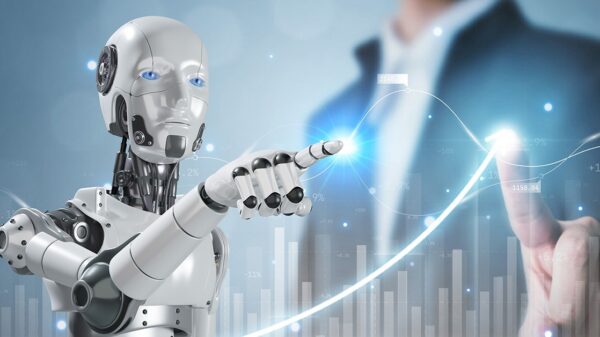
































Humanoid robots have long sparked interest in technology circles, but a significant partnership between Google DeepMind and Boston Dynamics aims to advance practical applications. Announced at CES 2026, this collaboration seeks to transform the use of humanoid robots from mere novelty to scalable industrial tools. Central to this initiative is the Atlas humanoid robot, enhanced by Google DeepMind’s Gemini Robotics AI models, which are designed to make Atlas more intelligent and adaptable in real-world settings.
The partnership’s ambitions are high; it intends to overcome limitations faced by current robotic systems that often rely on rigid programming. By focusing on visual-language-action models, the collaboration aims to empower Atlas to interpret both spoken and written guidelines while reacting effectively to dynamic environments. This capability would allow the robot to navigate unexpected challenges on a factory floor, enhancing its utility in industries such as automotive manufacturing.
Boston Dynamics revealed that the timing of this announcement coincides with the launch of the latest fully electric version of Atlas, which is set to enter production immediately. Initial deployments for 2026 have already been secured, with robots slated for use by Hyundai Motor Group and Google DeepMind. These initial fleets will focus on training Atlas for various industrial functions, marking a significant milestone in the commercialization of humanoid robotics.
This collaboration represents a pivotal shift for Boston Dynamics, which has spent years refining the nuances of movement, balance, and control. The company formally committed to developing a commercial humanoid robot only in 2024. Recent advancements in AI foundation models have opened new avenues, enabling robots to transition from controlled laboratory environments to more unpredictable real-world applications.
“We are thrilled to be partnering with the Google DeepMind team,” stated Alberto Rodriguez, Director of Robot Behavior for Atlas at Boston Dynamics. “We are building the world’s most capable humanoid, and we knew we needed a partner that could help us establish new kinds of visual-language-action models for these complex robots.” Rodriguez emphasized that DeepMind is uniquely positioned to create reliable, scalable models capable of being deployed across diverse tasks and industries.
From Google DeepMind’s standpoint, advancing robotics is integral to bringing AI into physical environments. The Gemini Robotics framework integrates perception, reasoning, and action, enabling it to adapt to various tasks and settings rather than being limited to a single application. “We developed our Gemini Robotics models to bring AI into the physical world,” said Carolina Parada, Senior Director of Robotics at Google DeepMind. “We are excited to begin working with the Boston Dynamics team to explore what’s possible with their new Atlas robot.”
The partnership also signals a strategic talent acquisition initiative within Google DeepMind. In a post on X, the company’s CEO highlighted rapid advancements in robotics and announced that aggressive hiring is underway in this field. A notable addition is Aaron Saunders, the former CTO of Boston Dynamics, who has joined DeepMind as Vice President of hardware engineering.
This collaborative effort between Google DeepMind and Boston Dynamics not only highlights a technological evolution in humanoid robotics but also underscores an expanding recognition of their commercial potential. As both companies aim to create robots capable of performing complex industrial tasks, the future of robotics appears to be moving toward practical applications that can significantly enhance productivity in various sectors. The implications of this partnership may redefine what is possible in automation, potentially paving the way for broader adoption of humanoid robots in workplaces around the globe.
See also Oboe Unveils AI Learning Platform, Secures $16M Series A to Transform Goal-Oriented Education
 Walmart’s AI Shopping Tools and Wellness Focus Signal Major Shift for Investors
 Revolutionizing Pediatric Urology: AI Innovations Enhance Diagnosis and Treatment Efficiency
 AI Predictions Face Unprecedented Uncertainty Amid Public Backlash and Regulatory Challenges