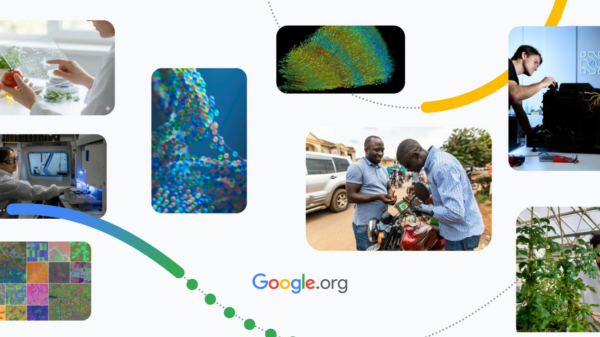

















































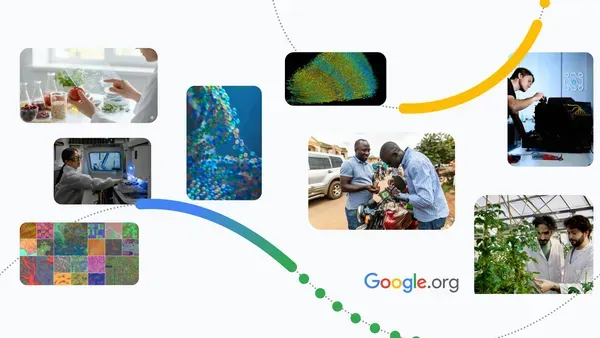
Google.org has announced a significant investment of $20 million to support twelve organizations leveraging artificial intelligence (AI) to address pressing global challenges in health, agriculture, and biodiversity. This initiative, known as the AI for Science fund, aims to accelerate scientific discovery at a time when research progress has been stalling despite increasingly complex global issues.
Unveiled on January 26, 2026, the fund targets the urgent need for innovation in scientific research, with Google’s Vice President and Global Head Maggie Johnson stating that these selected teams are employing AI to overcome significant obstacles in various scientific domains.
Among the notable recipients is UW Medicine, which is utilizing its Fiber-seq technology alongside AI to probe the 99% of the human genome that remains uncharted, seeking the genetic bases of rare diseases. Similarly, Cedars-Sinai Medical Center is developing an AI tool called BAN-map to analyze neural data in real time, aiming to decode the processes through which thoughts and memories form.
The fund’s impact may be most immediately felt through Spore.Bio, a French startup that is creating an AI scanner to detect drug-resistant bacteria within an hour—a drastic reduction from the current multi-day process. This advancement could save countless lives in hospital settings where time is crucial.
In the realm of agriculture, several projects are set to combat food insecurity. The Sainsbury Laboratory is launching “Bifrost,” employing Google DeepMind’s AlphaFold3 to predict plant immune system interactions with pathogens based on genomic data. This capability could significantly hasten the development of disease-resistant crops without the lengthy field trials traditionally required.
The Periodic Table of Food Initiative takes an innovative approach, seeking to catalog the vast “dark matter” of food molecules that influence nutritional quality and flavor, potentially enabling healthier dietary designs. Addressing climate concerns, the Innovative Genomics Institute at UC Berkeley is utilizing AI to decode cow microbiomes, aiming to identify bacterial interactions that could reduce methane emissions from livestock, a key factor in climate change.
On the biodiversity front, The Rockefeller University is working to modernize genome sequencing processes through AI automation, striving to produce high-quality genomic blueprints for Earth’s 1.8 million species—vital for conservation efforts and medical advancements. Additionally, the UNEP-WCMC, the UN’s biodiversity monitoring organization, is deploying large language models to analyze millions of scientific records, creating definitive distribution maps for all known plant species to aid conservation efforts.
The energy and materials sector is also poised for innovation. The Swiss Plasma Center at EPFL is standardizing global fusion energy data, allowing AI models to learn from collective experiments worldwide, which could hasten the path to commercial fusion power. The University of Liverpool is exploring a “Hive Mind” approach, using autonomous laboratory robots alongside human scientists to discover new materials for carbon capture, marking a shift in collaborative research methodologies.
What distinguishes this funding initiative from traditional grant programs is its commitment to open science; all awardees are required to make their datasets and solutions publicly accessible. This strategy aims to multiply the impact of the funded projects, fostering a collaborative environment where discoveries can benefit the broader scientific community.
For instance, the Technical University of Munich is developing a multiscale foundation model that connects cellular functions to whole organ simulations, potentially revolutionizing how pharmaceutical companies test drugs if made open source. The Infectious Disease Institute at Makerere University in Uganda is utilizing existing open AI tools to anticipate malaria parasite evolution and drug resistance, which can help African health systems better respond to changing resistance patterns.
This $20 million commitment, while modest by big tech standards, reflects a strategic focus on initiatives likely to yield measurable breakthroughs. By selecting twelve teams positioned for success, Google.org aims to demonstrate the transformative potential of AI in scientific research, hoping to counterbalance the slowing pace of discovery.
As AI technology continues to be integrated into scientific workflows, the outcomes of these projects could signal a new era in research. If successful, they will not only address specific challenges in health, agriculture, and climate but may also provide a roadmap for how AI can reinvigorate scientific progress and tackle existential threats facing humanity. With this initiative, Google.org is taking a bold step in reshaping the future of science.
See also Meta Cuts Teen Access to AI Characters Amid Growing Safety Concerns and Redesign Efforts
 AI Investment Surge: Bridgewater Warns of Inflation Risks and Potential Market Bubble
 California Senate Passes SB 300, Restricting AI Chatbots from Accessing Explicit Content for Minors
 Google’s DeepMind Reveals AI Drug Discovery System That Reduces Development Time by Years
 Wells Fargo Appoints AWS Veteran Faraz Shafiq to Drive AI Strategy, Enhancing Competitive Edge