





































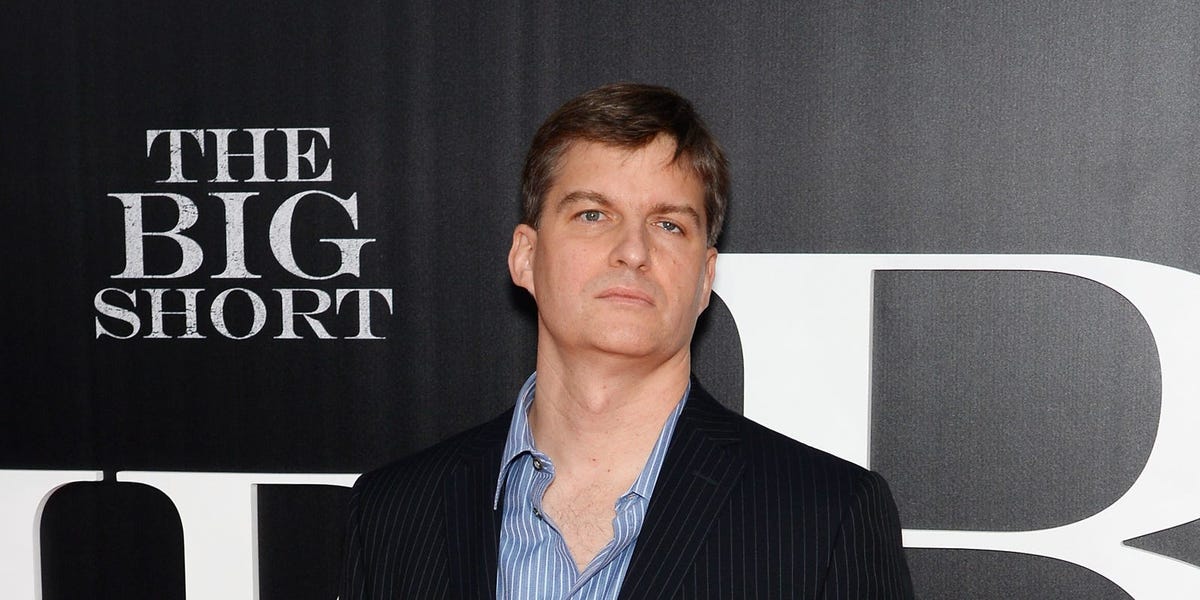
Michael Burry, renowned for his role in “The Big Short,” has recently become a focal point in the financial community, particularly on social media. His bearish stance on the AI sector, targeting companies like NVIDIA, has sparked considerable discussion and debate, notably after a notable stock market dip attributed in part to his comments.
Understanding Burry’s Current Influence
Michael Burry gained fame for accurately predicting the collapse of the mid-2000s U.S. housing market, a feat that was chronicled in both the book and film “The Big Short,” featuring Christian Bale as Burry. Frequently vocal about impending market crashes and recessions, he has adopted the moniker “Cassandra” on social media platform X, alluding to the Greek mythological figure cursed to speak the truth yet remain disbelieved.
After a two-year hiatus from X, Burry resurfaced in late October, promptly voicing concerns about a potential bubble in AI stocks. His hedge fund, Scion Asset Management, disclosed that it held bearish put options on NVIDIA and Palantir, with a total notional value amounting to $1.1 billion by the end of September. Following this revelation, Palantir’s CEO Alex Karp dismissed Burry’s strategies as “batshit crazy,” prompting Burry to retort that Karp couldn’t “crack a simple 13F,” a reference to the SEC form detailing institutional investment holdings.
Subsequently, Burry clarified he was no longer short on Palantir, having exited his puts in October. He also ceased Scion’s SEC registration, effectively closing the fund to outside investments. Most recently, he criticized NVIDIA following its third-quarter earnings report, questioning the durability of its chips and its financial dealings with other AI firms, as well as citing concerns over stock dilution.
Despite a surge in NVIDIA shares following its earnings announcement—where it reported an increase of over 5%—the stock experienced a reversal. Investors were unsettled by analysts’ warnings regarding rising inventories and deferred revenues, which raised skepticism about the sustainability of NVIDIA’s growth trajectory. On Thursday, while NVIDIA shares initially opened higher, they ultimately ended the day down by about 3%, followed by an additional 1% drop on Friday.
This volatility had a ripple effect on the broader stock market. The S&P 500 saw a significant shift, erasing a 1.9% gain to close 1.6% lower, while the Nasdaq Composite faced a similar fate, going from a 2.6% increase to a 2.2% decline—the largest intraday fluctuation since April. The market’s reaction has led some analysts to reconsider Burry’s critiques of the AI boom, suggesting he may have been onto something.
While his views have attracted both ridicule and support, with some defending his acumen, it’s important to note that Burry was not the sole catalyst for the market’s downturn. Broader economic indicators, such as the U.S. unemployment rate hitting an almost four-year high of 4.4% in September, also contributed to investor sentiment.
As Burry continues to navigate this tumultuous financial landscape, his followers on X anticipate further insights. His bio hints at upcoming revelations, stating: “’Unchained’ coming maybe sooner than Nov 25th.”
In summary, Michael Burry’s bold assertions about the AI sector have reignited discussions around market valuations and the sustainability of tech giants like NVIDIA and Palantir. As the financial community watches closely, his ability to influence market sentiment remains a crucial element in the evolving landscape of AI investments.
See also Google Unveils Scholar Labs: AI Tool Transforms Complex Research Queries for Academics
 Grok AI’s Controversial Responses Highlight Risks of Chatbot Bias, Says Musk
 UC San Diego’s AI Wearable Patch Enables Real-Time Robot Control in Chaotic Environments
 OneStream Partners with Microsoft to Integrate AI Financial Analysis into 365 Tools
 AI-Driven Model Accurately Predicts Hypoglycemia in Hospitalized Type 2 Diabetes Patients