











































Microsoft Corporation has announced a significant restructuring of its core operational priorities, a move that industry analysts consider the most substantial strategic shift since Satya Nadella became CEO nearly a decade ago. The company’s latest plans, outlined in a corporate blog post, emphasize the integration of artificial intelligence capabilities across its product ecosystem while enhancing cybersecurity measures in response to increasing threats against enterprise systems.
This dual-pronged strategy aims to address two critical challenges faced by the technology sector: harnessing the transformative potential of generative AI and dealing with the escalating sophistication of cyberattacks targeting corporate infrastructure. According to industry veterans, Microsoft’s recalibration comes at a time when enterprises are under unprecedented pressure to modernize their digital operations while maintaining robust security, creating a delicate balancing act between innovation and protection.
Microsoft’s approach to artificial intelligence marks a departure from the experimental implementations that characterized early generative AI deployments. Instead of positioning AI as a standalone capability, the company has embedded intelligent features directly into its productivity suite, developer tools, and cloud infrastructure. This architectural decision reflects lessons learned from previous technology transitions, where separate platforms often led to integration challenges that hindered enterprise adoption.
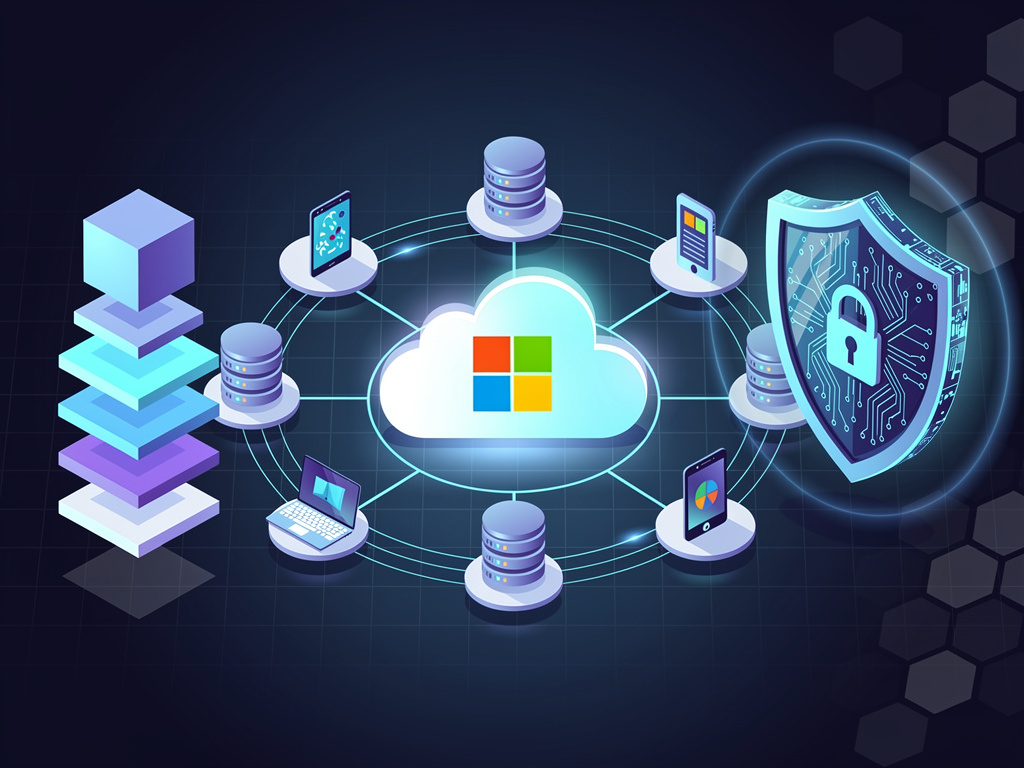
The firm’s “AI-first architecture” embeds machine learning capabilities at the foundational level of its software stack, enabling applications to leverage AI processing without requiring extensive custom development. This could reduce implementation timelines from months to weeks, representing a significant competitive advantage for organizations facing talent shortages in specialized AI engineering. Such democratization of advanced capabilities allows businesses to deploy sophisticated automation and analysis tools without the need for dedicated data science teams.
Alongside its AI initiatives, Microsoft’s security enhancements focus on addressing vulnerabilities that have plagued enterprise systems amid an evolving threat landscape. The company has committed to implementing a “zero-trust architecture by default,” moving away from perimeter-based security models that assume internal network traffic can be trusted. This shift acknowledges the modern work environment, where employees access corporate resources from various locations and devices, rendering traditional security boundaries obsolete.
Microsoft’s enhanced security framework incorporates continuous authentication protocols, which require validation of user identity and device integrity throughout active sessions rather than solely at login. This approach mitigates risks associated with credential theft, where attackers exploit stolen passwords to maintain persistent access to corporate systems. The implementation also includes behavioral analytics that establish baseline patterns for individual users, triggering additional verification steps when activities deviate from established norms. This technique has been effective in detecting compromised accounts before substantial damage occurs.
Technology analysts have responded to Microsoft’s announcements with cautious optimism, recognizing the strategic necessity while acknowledging the challenges inherent in large-scale architectural changes. The dual focus on AI and security addresses market demands that have intensified following high-profile breaches and the rapid commercialization of generative AI technologies, positioning Microsoft to capture enterprise spending in both categories.
However, skeptics point to Microsoft’s mixed track record with major platform transitions, citing instances where ambitious roadmaps faced delays or required significant modifications based on customer feedback. Previous security initiatives, while generally well-received, have sometimes struggled with complexity that created adoption barriers for smaller organizations lacking dedicated IT personnel. The challenge ahead for Microsoft lies in delivering sophisticated capabilities through interfaces simple enough for widespread deployment across diverse customer segments.
Microsoft’s announcements come amid increasing competition in cloud infrastructure and enterprise software, where rivals such as Amazon Web Services and Google Cloud vie for corporate technology budgets. The integration of AI capabilities into productivity applications creates potential switching costs for organizations already invested in Microsoft’s ecosystem, while simultaneously pressuring competitors to accelerate their AI integration efforts.
The security enhancements hold particular significance for regulated industries, including financial services, healthcare, and government sectors, where compliance and data sensitivity require robust protection mechanisms. Microsoft’s emphasis on built-in security features rather than add-ons simplifies procurement and reduces total cost of ownership, influencing purchasing decisions in price-sensitive markets. Competitors are likely to respond with their own security-focused announcements, potentially elevating baseline security standards across the industry.
Looking at the technical specifications behind Microsoft’s announcements reveals a coherent long-term strategy that extends beyond immediate product releases. The company has designed its AI capabilities to function across edge devices, cloud infrastructure, and hybrid environments, acknowledging that enterprise computing increasingly spans multiple deployment models. This flexibility addresses practical constraints such as data sovereignty requirements and latency sensitivity that pure cloud solutions may not meet.
The security framework similarly demonstrates foresight, incorporating provisions for quantum-resistant cryptography, despite quantum computing being years away from commercial availability. This proactive approach protects organizations against “harvest now, decrypt later” attacks, where adversaries collect encrypted data with the intention of breaking encryption once quantum computers become viable.
The financial implications of Microsoft’s announcements will significantly influence adoption patterns across customer segments. Although the company has not disclosed detailed pricing for all features, the integration of AI and security enhancements suggests a strategy to drive value through improved functionality rather than creating entirely new revenue streams. This could accelerate adoption by making new capabilities accessible within existing licensing agreements, minimizing the need for new budget approvals.
However, fully leveraging the announced capabilities may necessitate infrastructure upgrades, particularly for organizations with legacy systems lacking the capacity for AI workloads and continuous security monitoring. These indirect costs could serve as barriers for smaller enterprises or those in capital-constrained industries, potentially widening the technology gap between well-resourced corporations and smaller competitors. Microsoft must ensure that its enhanced platform remains accessible across the customer spectrum.
Microsoft’s announcements carry significant implications for the developer community, which will need to adapt applications and workflows to leverage new AI capabilities while meeting enhanced security requirements. The company has released updated software development kits and APIs designed to simplify integration of AI features, potentially accelerating the development of tailored solutions that go beyond generic productivity tools. However, the security enhancements introduce additional complexity to development processes, necessitating compliance that may extend timelines and increase expertise requirements.
Microsoft has outlined a phased rollout schedule for its capabilities, with initial features becoming available to enterprise customers within the current quarter and full implementation extending through the next fiscal year. This gradual deployment strategy allows the company to gather feedback and refine features based on real-world usage, potentially avoiding the disruptions experienced during previous large-scale updates. The market impact of these initiatives will hinge on execution quality and competitive responses. If Microsoft successfully delivers on its promises while maintaining system stability and reasonable cost structures, it could solidify its position as the leading provider of integrated AI and security solutions for enterprises. The technology industry will be closely observing how this next chapter in enterprise computing unfolds, shaping organizational approaches to digital transformation in an era defined by artificial intelligence and ongoing security threats.
See also Anthropic Launches Open-Source Plugins for Claude Cowork, Triggering 30% Software Selloff
 MIT’s AI Innovations Unleash New Antibiotics, Battling Multi-Drug Resistance with Breakthroughs
 Oklahoma Prisons Implement AI to Enhance Safety, Reduce Costs, and Streamline Inmate Releases
 Oakley and Meta Launch Vanguard AI Glasses in India Priced at Rs. 52,300
 Maas Group’s $1B Construction Sale Sparks 25% Stock Plunge Amid AI Shift; Firmus Invested