










































Geoeconomics Reshapes Global Trade and Innovation
The global economy is undergoing a seismic shift influenced by two powerful forces: geoeconomic fragmentation and rapid technological innovation. This evolving landscape is compelling established diplomatic frameworks to adapt, emphasizing the necessity for enhanced dialogue, creativity, and entrepreneurship. As companies increasingly take center stage in this dynamic, the interplay between governmental policies and technological advancements is reshaping competitive landscapes worldwide.
Governments are reasserting their roles as key players in economic activity, altering trade dynamics through industrial policies, tariffs, and substantial investments in domestic businesses. Concurrently, significant strides in technology—especially in fields like artificial intelligence (AI)—are creating unprecedented opportunities for competition. This duality is transforming the operational strategies of businesses, which must now integrate foresight into their models to navigate the complexities of a changing geopolitical environment.
According to World Trade Organization estimates, global goods trade growth slowed to a modest 2.4% last year, while services exports grew by 4.6%. Despite these numbers, the nature of trade cooperation is evolving. Over 100 economies are exploring plurilateral agreements focused on digital trade and foreign direct investment (FDI). Major trade deals, such as the anticipated EU-Mercosur comprehensive partnership, are further indicative of shifting alliances.
As trade flows diversify, governments face the challenge of streamlining processes to connect to emerging value chains. For instance, digital trade has seen robust expansion, averaging around 12% growth annually over the last five years. In contrast, AI-related goods, particularly semiconductors, accounted for nearly 43% of global merchandise trade growth in the first half of 2025.
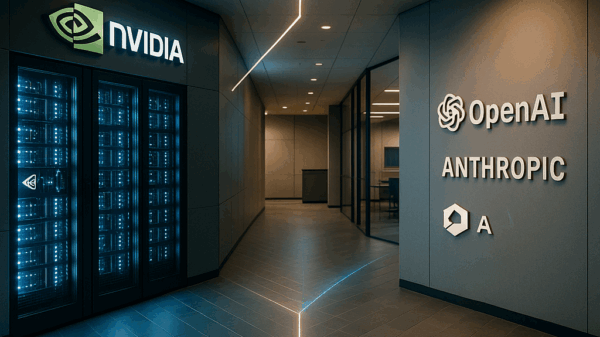
Within this context, AI is evolving into what experts are calling an AI Super System—a comprehensive network that interlinks energy systems, infrastructure, financial resources, and strategic partnerships, all critical for scaling AI-driven economic value. The competitive edge is increasingly determined not just by singular technologies but by how effectively these system components work in concert. The interplay between computing resources and energy supply, infrastructure investment, and financing decisions all play pivotal roles in this intricate ecosystem.
The race for dominance in data and computing power is intensifying, signaling a new geoeconomic “arms race.” Investments in AI infrastructure are soaring, with global capital expenditures in the sector reaching at least $400 billion in 2025 and projected to exceed $750 billion by 2029. While these investments come with substantial energy costs, they also foster advancements in energy generation and infrastructure. With the potential for AI to contribute approximately $15 trillion to global GDP by 2030, the stakes have never been higher for companies engaged in AI.
As governments deepen their partnerships with AI and tech firms, they are increasingly likely to play active roles in regulating these companies, particularly to address national security concerns. This trend extends to strategic sectors such as energy, semiconductors, and logistics, where access to critical minerals has become as vital as oil was in prior economic conflicts. Future disruptions in resource availability will be crucial to monitor, necessitating stronger international cooperation to mitigate risks.
In response to these evolving challenges, businesses can adopt several core strategies. First, staying informed is paramount, as much of the knowledge required to navigate this new economy is still being established. Companies must create agile playbooks and engage in continuous collaboration with industry peers. Secondly, organizations should maintain a systems-wide perspective, recognizing the interconnectedness of various sectors. Finally, mastering continuous adaptation is essential. Instead of merely striving for resilience, companies must integrate both change and stability into their operations, evolving proactively within an environment characterized by volatility.
The intersection of geopolitical shifts and technological advancements is prompting a reconfiguration of roles traditionally occupied by policymakers and business leaders. As governments increasingly act as economic agents and businesses venture into regulatory domains, constructive engagement becomes crucial. Platforms for public-private dialogue, such as the upcoming World Economic Forum Annual Meeting 2026, themed ‘A Spirit of Dialogue,’ will play an essential role in navigating this transformative era of opportunity and risk.
See also Davos 2026: Global Leaders Address AI Disruption Amid Geopolitical Fragmentation
 AI Era Interview Insights: Key Skills for Engineers to Succeed in 2026 and Beyond
 AI Transforms Customer Care: 32% of Projects Surpass Pilot Stage Amid Workforce Concerns
 India Advances Global AI Ethics with Comprehensive Standards at Upcoming AI Impact Summit 2026
 Mistral Secures ₹100 Crore Defence Radar Subsystem Order for LLTR Ashwini Programme