

































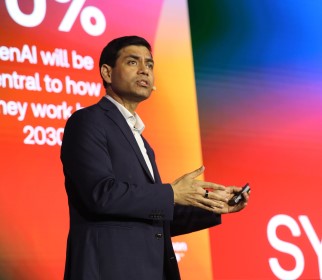









NVIDIA executives recently outlined the company’s ambitious vision for the future of artificial intelligence, emphasizing a shift towards ‘agentic AI’ systems capable of autonomously executing tasks. During a presentation, CEO Jensen Huang introduced a concept called ‘token manufacturing,’ where engineers are allocated token budgets to create AI-generated content. He also announced a staggering forecast of over $1 trillion in demand for the company’s Blackwell and Rubin products through 2027, underscoring the rapidly expanding AI market. The discussions highlighted the growing significance of open-source AI models and introduced the ‘OpenClaw strategy’, aimed at enhancing personal AI computing.
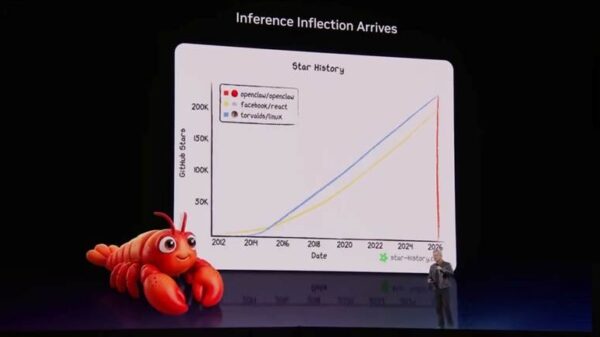
Huang stated that agentic AI systems will fundamentally reshape how customers perceive computing, transforming devices from mere tools into ‘manufacturing equipment’ that generates AI-produced ‘tokens.’ He elaborated on the open-source ‘OpenClaw’ initiative, positioning it as the operating system for a ‘personal AI computer.’ Huang urged companies to adopt an ‘OpenClaw strategy’ akin to previous successful models like the ‘Linux strategy’ and ‘mobile cloud strategy,’ suggesting its critical importance for future technological advancement. He updated a prior demand estimate of $500 billion to exceed $1 trillion, encompassing forecasts and purchase orders specifically for NVIDIA’s Blackwell and Rubin products through 2027, excluding other offerings.
NVIDIA also anticipates ongoing business transactions, aiming to close, book, and ship additional deals as the deadline for 2027 approaches. This demonstrates a strong confidence in their product lineup and the overarching AI market, which continues to gain momentum. The company’s foresight into the potential applications of agentic systems is noteworthy, as Huang mentioned their increasing use in areas like software development and the standardization of token consumption in knowledge work.
Colette Kress, NVIDIA’s Executive Vice President and Chief Financial Officer, echoed Huang’s sentiments, highlighting the essential role of AI in driving future innovations. The executives noted the strategic importance of integrating open-source models, which could facilitate broader access to advanced AI technologies and democratize their use across various sectors. This focus on open-source frameworks aligns with current trends in technology, where collaboration and shared resources have become vital in accelerating development.
The implications of NVIDIA’s vision extend beyond mere product offerings; they signal a transformative phase in computing that prioritizes autonomous systems and user-driven innovation. By positioning their technologies as essential tools for AI-driven productivity, NVIDIA is paving the way for the next generation of computing solutions. Their emphasis on personal AI systems and open-source strategies reflects a commitment to not only harnessing AI’s potential but also ensuring it is accessible and beneficial to a diverse user base.
Looking ahead, the integration of agentic AI and the adoption of ‘token manufacturing’ could redefine standard practices in industries ranging from software development to content creation. As companies begin to embrace these concepts, the landscape of technology is likely to evolve dramatically, with NVIDIA at the forefront of this change. The company’s robust forecasts signal confidence in a future where AI plays an even more integral role in everyday operations, reinforcing its status as a leader in the tech sector.
See also Germany”s National Team Prepares for World Cup Qualifiers with Disco Atmosphere
 95% of AI Projects Fail in Companies According to MIT
 AI in Food & Beverages Market to Surge from $11.08B to $263.80B by 2032
 Satya Nadella Supports OpenAI’s $100B Revenue Goal, Highlights AI Funding Needs
 Wall Street Recovers from Early Loss as Nvidia Surges 1.8% Amid Market Volatility