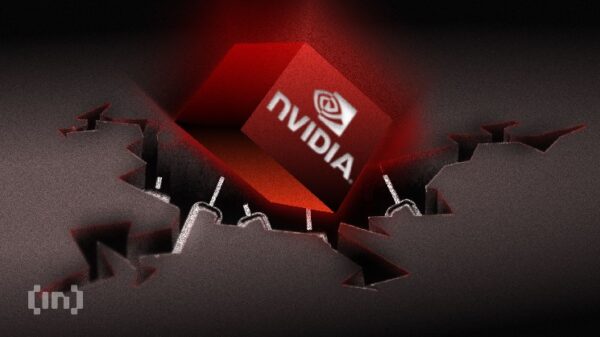


















































Nvidia Corporation (NVDA) closed at $176.69 on Thursday, rising 0.53%, a notable performance amid widespread sell-offs in the technology sector due to escalating geopolitical tensions related to the Iran conflict. While other major tech stocks faced sharp declines, Nvidia’s relative outperformance is striking, particularly as it had been one of the hardest-hit names in premarket trading following former President Trump’s address on Wednesday. The stock’s 52-week trading range stretches from a low of approximately $164.46 to a high of nearly $207.04, with the current price reflecting a discount influenced by geopolitical risks, rather than any deterioration in the company’s robust operating metrics. Year-to-date, shares are down about 6.5%, primarily driven by broader macroeconomic concerns including inflation anxiety sparked by the Iran war.
The divergence between Nvidia’s stock price and its operational performance presents a compelling analytical opportunity. In its most recent fiscal fourth quarter, Nvidia reported revenues of $68.13 billion, marking a 73.2% year-over-year increase and surpassing analyst expectations by $1.9 billion. The company also reported a non-GAAP earnings per share (EPS) of $1.62, beating estimates by $0.08. Guidance for the first quarter was set at approximately $78 billion, significantly above the street’s consensus of $72.78 billion. Revenue growth for fiscal year 2026 came in at 65.5%, with projections for 2027 expected to accelerate to 71.08%. This stark contrast of a 6.5% stock decline against a backdrop of over 70% revenue growth highlights an investment opportunity driven by a fundamental disconnect.
At the recent Global Technology Conference, Nvidia CEO Jensen Huang made a historic assertion regarding the company’s growth trajectory, stating Nvidia could reach $1 trillion in cumulative sales across its Blackwell and Rubin product generations from 2025 to 2027. In 2025 alone, Blackwell is expected to generate $184 billion in revenue from compute and networking segments, with projections for 2026 climbing to $320 billion. These two figures alone already surpass the $500 billion threshold, and the Rubin generation, which introduces seven new chips and a high-performance AI supercomputer, is expected to elevate this total further.
Current analyst consensus estimates suggest approximately $480 billion in revenue for Nvidia during this period, a figure that falls significantly short of Huang’s projections. If Nvidia’s actual performance aligns more closely with the $500 billion forecast suggested by conservative estimates of the Blackwell product line, the gap between the consensus and actual revenue could serve as a substantial alpha catalyst for investors. Notably, investment analyst Beth Kindig, known for her accurate Nvidia forecasts, posits that revisions from the $480 billion figure could lead to around a 63% alpha for investors entering positions at current levels.
Historical patterns indicate that Nvidia’s stock typically experiences a sell-off following earnings beats that would generally prompt buying activity. The recent quarterly results, which outperformed expectations, did not lead to sustained appreciation, raising questions about market sentiment. Analysts believe this sentiment shift stems from broader skepticism regarding the sustainability of AI investments, particularly following reports of significant layoffs in the tech sector and concerns about the broader economic environment.
The emergence of significant capital expenditures in AI infrastructure is crucial for Nvidia’s revenue outlook. Major tech companies are projected to invest an aggregate of around $700 billion in AI capabilities by 2026, cementing Nvidia’s position as a primary beneficiary due to its dominant GPU market share of approximately 85-90%. This demand visibility, bolstered by Nvidia’s strong cash position of $62.56 billion against only $11.41 billion in debt, underscores its capability to navigate potential macroeconomic challenges.
Another potential catalyst for Nvidia’s revenue is its recent approval to sell H200 chips in China, with estimates suggesting this market could generate $25 billion annually. This revenue was not considered in Nvidia’s prior earnings guidance, indicating a significant upside. The geopolitical risks associated with Chinese sales, however, remain a pertinent consideration as tensions with the U.S. persist.
Looking forward, the anticipated release of the Vera Rubin platform is poised to be a significant driver for Nvidia’s share performance. This upcoming product includes new chips and systems that promise tenfold improvements in performance per watt, particularly suited for inference-heavy AI applications. As companies increasingly shift towards agentic AI workloads, the timing of Vera Rubin’s launch is strategically aligned with market demands.
Overall, the current valuation of Nvidia at $176.69 reflects a 19% discount to its historical average forward price-to-earnings ratio. Expectations for fiscal year 2027 project an EPS growth of over 70%, arguing for a price target considerably above $250. The convergence of Nvidia’s strong fundamental performance, historic cash reserves, and the emerging AI infrastructure buildout presents a robust case for investors. As the geopolitical climate stabilizes, Nvidia’s significant competitive positioning and potential revenue growth from its various initiatives may well drive its stock price to new heights.
See also Germany”s National Team Prepares for World Cup Qualifiers with Disco Atmosphere
 95% of AI Projects Fail in Companies According to MIT
 AI in Food & Beverages Market to Surge from $11.08B to $263.80B by 2032
 Satya Nadella Supports OpenAI’s $100B Revenue Goal, Highlights AI Funding Needs
 Wall Street Recovers from Early Loss as Nvidia Surges 1.8% Amid Market Volatility