



































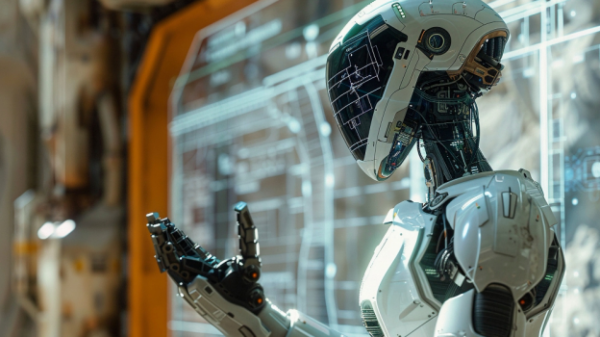

Tesla is set to make a significant financial commitment with its ambitious Terafab project, which could cost between $35 billion and $45 billion in capital expenditures, according to a recent report from Morgan Stanley. The project, which CEO Elon Musk has indicated could launch this week, aims to establish a facility dedicated to manufacturing the chips necessary for Tesla’s autonomous vehicles and humanoid robots, thereby mitigating potential supply bottlenecks.
The scale of the Terafab initiative is staggering. If Tesla achieves its long-term goal of producing 100 million humanoid robots annually, it will need to manufacture over 200 million chips per year—more than 50 times its current demand, as noted by Morgan Stanley. This escalation underscores not only Tesla’s ambition but also the challenges inherent in scaling production to meet rapidly growing technological needs.
Morgan Stanley’s analysts highlighted that the estimated total capital expenditure includes $20 billion to $25 billion earmarked specifically for wafer fabrication equipment. This substantial investment is not part of Tesla’s current $20 billion capital expenditure budget for the year, marking an important financial undertaking for the company. The firm characterized the endeavor as a “Herculean task,” emphasizing the complexities associated with building advanced chip manufacturing capabilities from the ground up.
Though Tesla will likely spread this investment over several years, the initial output from the Terafab facility is not expected to materialize until the latter half of the decade, even on an aggressive timeline. The anticipated financial burden will heavily impact Tesla’s cash flow, indicating a shift towards a more capital-intensive business model as the company seeks to expand its technological capabilities.
Historically, Tesla’s most expensive factory to date is its Nevada battery plant, which commenced construction in 2014 and is estimated to have cost around $10 billion over its lifespan. This figure pales in comparison to the expected costs associated with the Terafab project, illustrating the scale of Tesla’s current ambitions.
The implications of the Terafab project extend beyond immediate financial considerations. As Tesla strives to assert itself as a leader in autonomous technology and robotics, the successful execution of this initiative could position the company as a significant player in semiconductor manufacturing. This move may not only alleviate supply chain issues for Tesla but could also contribute to the broader semiconductor landscape, which has been grappling with shortages in recent years.
As the electric vehicle market continues to evolve, Tesla’s focus on in-house chip production signifies a strategic pivot that could redefine its operational landscape. By investing heavily in the Terafab project, Tesla aims to secure its technological future while grappling with the complexities and costs of semiconductor manufacturing. The success or failure of this undertaking may have profound implications not just for Tesla but for the entire industry as it navigates an increasingly competitive and technologically driven market.
See also Germany”s National Team Prepares for World Cup Qualifiers with Disco Atmosphere
 95% of AI Projects Fail in Companies According to MIT
 AI in Food & Beverages Market to Surge from $11.08B to $263.80B by 2032
 Satya Nadella Supports OpenAI’s $100B Revenue Goal, Highlights AI Funding Needs
 Wall Street Recovers from Early Loss as Nvidia Surges 1.8% Amid Market Volatility