










































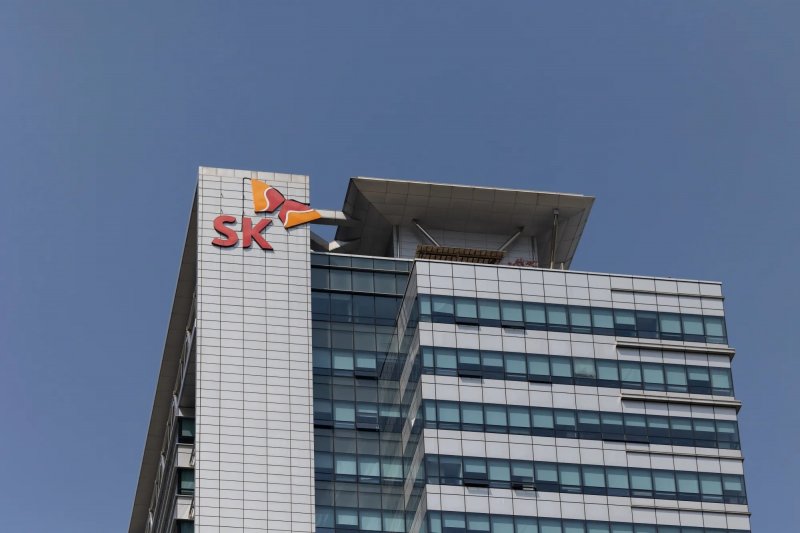
South Korea’s SK Hynix announced on Tuesday a significant investment of 19 trillion won ($12.9 billion) to establish an advanced chip packaging facility in South Korea, a move aimed at addressing the increasing demand for memory chips spurred by the growth of artificial intelligence (AI).
The construction of the new plant is set to commence in April, with SK Hynix targeting completion by the end of next year, according to a statement reported by News.Az, citing Reuters.
SK Hynix pointed to intensifying global competition in AI as a major driver behind the heightened demand for AI-centric memory solutions. The company emphasized the necessity to respond proactively to the burgeoning market for high-bandwidth memory (HBM) chips, which are critical for various AI applications.
HBM, a type of dynamic random-access memory (DRAM) that was first developed in 2013, is designed to stack chips vertically. This innovative architecture not only saves space but also reduces power consumption, enabling faster processing of the large volumes of data that complex AI applications generate.
As a leading supplier of HBM, SK Hynix commanded a dominant position in the market last year, holding a 61% share, while competitors Samsung Electronics and Micron held 19% and 20%, respectively, according to data from Macquarie Equity Research. This strategic investment appears to be a direct response to the increasing reliance on AI technologies across various sectors, necessitating advanced memory solutions.
The push for advanced memory technologies aligns with the growing needs of data centers and AI-driven applications, which require high-speed processing capabilities to manage and analyze vast amounts of information. As companies look to integrate AI more deeply into their operations, the demand for these specialized memory chips is expected to surge.
In conjunction with SK Hynix’s investment, other tech giants are also ramping up their capabilities in AI and memory technologies. Companies such as Nvidia, which heavily relies on HBM for its AI processing needs, will likely benefit from the expanded production capacity that SK Hynix aims to create.
As the AI landscape evolves, the implications of SK Hynix’s strategic investment may extend beyond just memory chip production. It reflects a broader trend where technology firms are investing substantially to secure their positions in the rapidly expanding AI market.
This development underscores the critical role that memory technology will play in the advancement of AI applications, marking a pivotal moment for the semiconductor industry in South Korea. With the global demand for AI-related technologies continuing to grow, SK Hynix’s new facility may become a cornerstone in the ongoing technological arms race driven by AI innovation.
See also AI Fashion Market Reaches $2.14 Billion, Projected to Hit $75.9 Billion by 2035
 C-suite Executives Anticipate 43% AI Adoption by 2030 Amid Cost Pressures and Risk Management Priorities
 AI and Geopolitical Tensions Drive Surge in Global Cyber Fraud Risks, Experts Warn
 Trump Demands Microsoft Cover AI Data Center Electricity Costs Amid Rising Bills
 Go!Foton Unveils Innovative Fiber Slack Panel for AI-Ready Data Centers at BICSI 2026