


















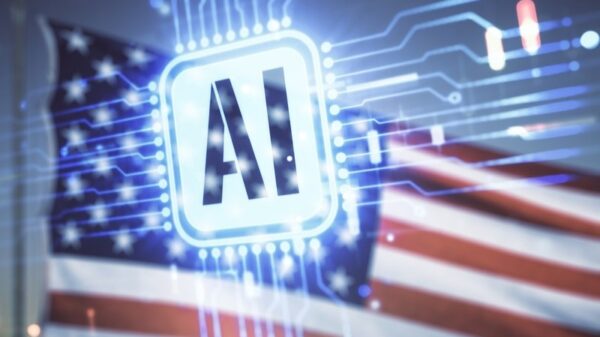


















(PITTSBURGH) – President Trump is making strides to prohibit states from establishing their own regulations on artificial intelligence (AI) by either embedding such measures in the defense bill or issuing an executive order. This provision had previously been removed from the “Big Beautiful Bill” but has now resurfaced, facing similar opposition.
Christine McComas, whose daughter Grace tragically died by suicide at the age of 15 following severe cyberbullying in 2012, has emerged as a vocal advocate for online safety. McComas expressed concerns about the ramifications of preempting state laws, stating, “We’ve gotten multiple laws made in Maryland that will protect children from online harms. One being an AI bill this year, but it will be devastating to wipe those off the books, and I believe there’s a tremendous amount of money involved with lobbying and big tech. If they wipe these laws off the books, it is a death sentence for some children.”
If Trump’s proposed moratorium on state AI regulations is enacted, existing state laws could be nullified, potentially jeopardizing federal funding for those states. Julie Scelfo, founder of Mothers Against Media Addiction, emphasized the dual nature of AI, acknowledging its potential while pointing out its current dangers to children. “Just this week in the Pennsylvania Senate, a bill was passed that would protect young people from AI-generated child sexual abuse material,” Scelfo noted. “One of the things we’re seeing AI is capable of is really creating horrific fake images, where they could take a real picture of a child and attach it to a pornographic video. This should not happen.”
McComas recounted a distressing case she encountered where a child’s image was misappropriated. “They found out that her face was stolen from a picture that had been shared online when she was 12 years old, and it was put on other bodies, and it was on the outside of XXX porn sites,” she said, illustrating the grave risks associated with unregulated AI technologies.
Experts have pointed out that the federal government has not passed legislation aimed at protecting children online since 1998, a time predating the advent of social media. Scelfo highlighted the urgency of the situation, stating, “We do want federal AI legislation eventually. It’s just, in the meantime, we should not prevent state lawmakers from keeping their residents safe.”
Industry Impact
A bipartisan coalition of governors and senators opposed the original proposal, which contributed to its defeat in the Senate. With the recent developments disclosed on November 20, several legislators are voicing their concerns once again. The ongoing discussions reflect a growing acknowledgment of the risks posed by AI technologies, particularly in relation to the safety and wellbeing of minors.
The potential federal restrictions could have substantial implications for the AI industry. A nationwide ban on state-level regulations could stifle innovation in protective measures that states have begun to implement, potentially leaving children vulnerable to the misuse of AI technologies. As states like Maryland and Pennsylvania take proactive steps to manage the impact of AI on young individuals, a federal ban may negate those efforts and diminish the possibilities for tailored, region-specific solutions to emerging challenges.
Next Steps
As discussions around AI regulation continue, it remains critical for stakeholders in the AI sector, including engineers, analysts, and policymakers, to engage in the discourse. The balance between innovation and public safety is delicate, and the direction of forthcoming legislation could shape the landscape of AI deployment and regulation for years to come. Industry professionals are encouraged to monitor developments closely and advocate for measures that prioritize both technological advancement and the protection of vulnerable populations.
See also Yann LeCun’s Departure from Meta Signals Potential Shift in AI Strategy and Investments
 Transformative AI Strategies Drive Measurable Business Success Beyond Tactical Deployments
 OpenAI Academy Launches Nationwide AI Training for 1,000 Small Business Owners
 Malta to Launch Study on AI’s Impact on Labour Market Amid Rapid Economic Changes
 Palo Alto Networks’ $3.35B Chronosphere Deal and AI Innovations Position It for Quantum Cybersecurity Leadership