

















































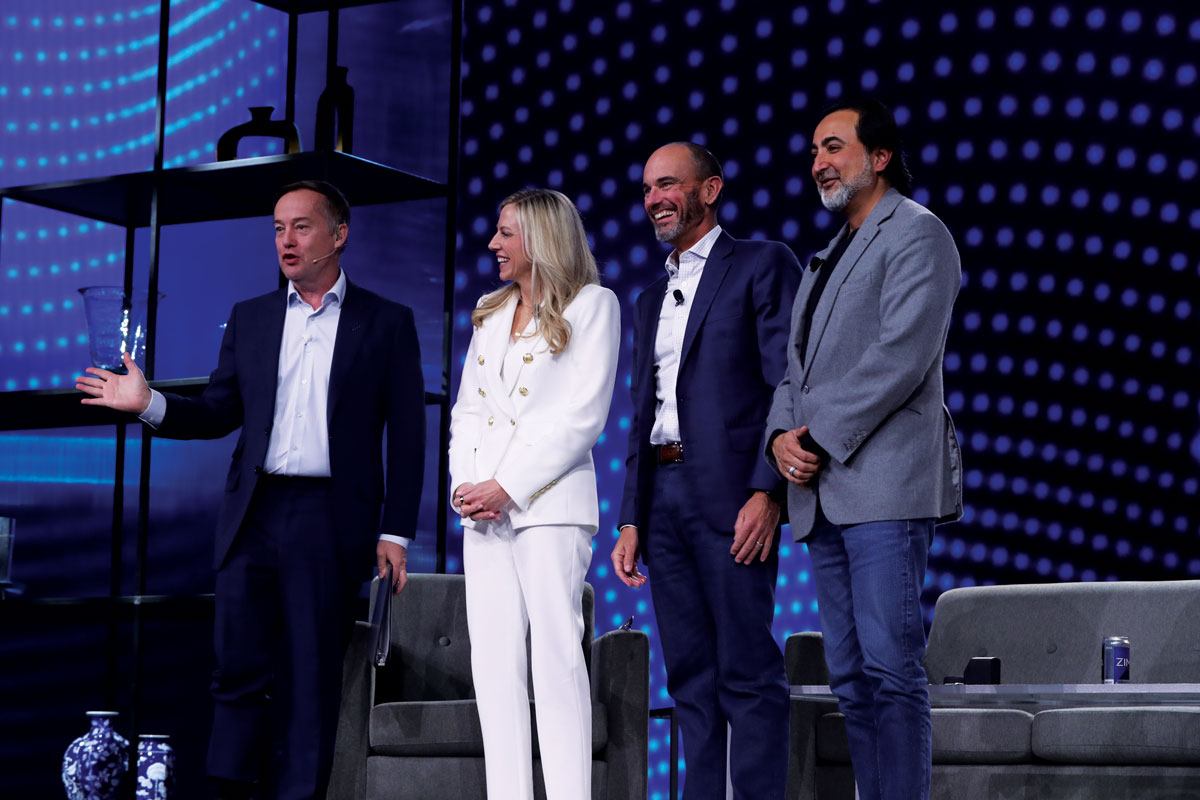
Venture capitalists are increasingly shifting their strategies in the face of rapid advancements in artificial intelligence (AI), opting to acquire struggling companies to revitalize them rather than solely backing new startups. This evolution in investment approach was a focal point during a recent taping of the popular All-In podcast at CES 2026, hosted by former investor Jason Calacanis, who was joined by industry leaders such as Bob Sternfels, global managing partner of McKinsey & Company, and Hemant Taneja, CEO of General Catalyst.
Sternfels pointed out that corporate leaders are now more preoccupied with enhancing their organizations’ speed rather than solely focusing on strategic positioning. “I haven’t met a CEO yet that isn’t talking about how do I get my organization moving faster,” he stated. This reflects a broader trend where the urgency to adapt to technological changes has taken precedence over traditional business strategies.
The conversation underscored how the launch of ChatGPT in November 2022 marked a significant point in this transition, coinciding with a period of “peak ambiguity” characterized by geopolitical shifts and rapidly evolving economic landscapes. Taneja noted that these changes necessitate a reassessment of what enduring value looks like in a world where technology is in constant flux. “What does scale really mean? What are we in the business of creating?” he posed, emphasizing the need for organizations to navigate these complexities without undermining their value propositions.
Amid these challenges, companies must evolve their data infrastructure and workforce capabilities. Sternfels raised concerns about the diminishing lifespan of skills, asserting, “The half-life of skills [is] getting shorter and shorter.” He elaborated that the typical return on investment for employee skills has halved over the past three decades, decreasing from about seven years to approximately 3.6 years. This rapid evolution demands a workforce that is continuously learning and adapting, a need that many organizations currently struggle to meet.
The discussion also highlighted the role of AI in enhancing operational efficiency and the importance of reskilling employees to harness its potential. Companies are urged to equip their teams to leverage AI agents, a skill set that is becoming increasingly vital in the modern workplace. However, Sternfels cautioned that many organizations are still lagging in preparing their employees for this future, creating a significant gap in readiness.
This evolving landscape underscores the necessity for companies to remain agile and innovative in their approach. The insights shared during the podcast suggest that the venture capital sector is adapting to a new reality where revitalizing existing businesses may be just as critical as fostering new ventures. As organizations navigate the complexities of the AI-driven market, the ability to quickly adapt and reskill will likely determine long-term success.
As venture capitalists continue to rethink their strategies, the implications for workforce development, technology implementation, and strategic planning remain profound. The transition from traditional investment models to a focus on rejuvenating existing companies could reshape industries and redefine the role of technology in business practices. This evolution not only highlights the urgency for companies to adapt but also sets the stage for a new era in venture capital and corporate sustainability.
See also Anthropic President Daniela Amodei Questions Relevance of AGI Amid AI Limitations
 Grok Scandal Highlights Urgent Need for AI Ethics and Robust Privacy Guardrails
 NYSE Pre-Market Update: Tech Stocks Surge Ahead of CES 2026, Tortoise Launches AI ETF
 Infosys and AWS Launch Collaboration to Boost Generative AI Adoption in Enterprises
 Cisco’s New AI Security Strategies Address Risks Amid Rapid Adoption in Middle East