









































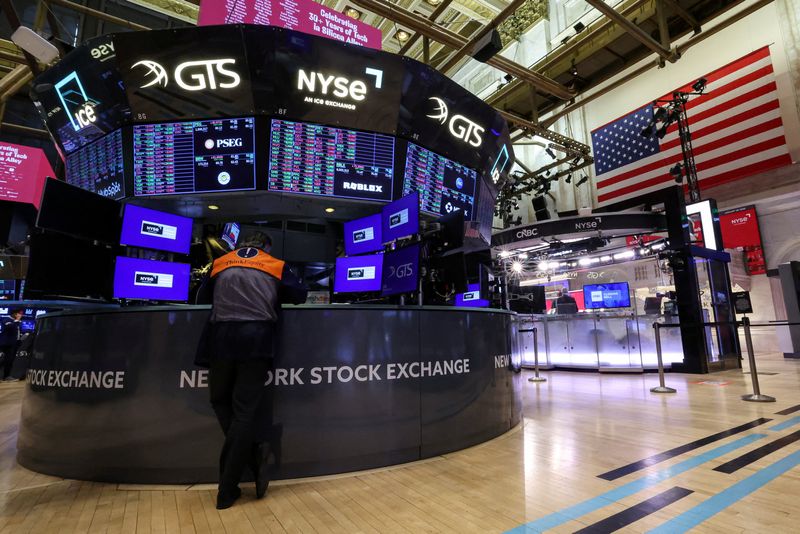
ORLANDO, Florida, Feb 3 (Reuters) – Wall Street experienced a downturn on Tuesday, driven by apprehensions that technology companies may face increased competition and reduced profit margins stemming from advancements in artificial intelligence (AI). Concurrently, precious metals saw a significant rebound, boosted by escalating tensions between the U.S. and Iran.
The volatility in markets reflected broader economic concerns. A tumultuous atmosphere surrounded investors, particularly those with a long-term focus, as the erratic price movements risked considerable damage to portfolios. Traditional safe havens, including U.S. Treasuries, the dollar, and gold, are also facing heightened risks, complicating the search for reliable hedges.
In the context of monetary policy, former President Donald Trump has shifted his focus toward reducing long-term U.S. yields. However, experts argue that the Federal Reserve’s ability to control these yields is limited, regardless of adjustments to the policy rate.
The Australian central bank has drawn attention after becoming the first G10 bank to reverse course and raise interest rates recently, following the Bank of Japan’s actions. The Reserve Bank of Australia’s decision was primarily influenced by inflation that has drifted above its target range of 2-3%. Analysts are now questioning whether the U.S. Federal Reserve might be compelled to adopt a similar approach in the near future, given that inflation has remained above target for five consecutive years with no clear signs of a downturn.
On the geopolitical front, tensions between the U.S. and Iran escalated sharply on Tuesday when the U.S. military intercepted an Iranian drone over the Arabian Sea, raising concerns about potential conflicts in the region. Additionally, U.S. naval forces reported that armed boats approached a U.S.-flagged vessel in the Strait of Hormuz. These developments cast a shadow over upcoming nuclear negotiations scheduled for Friday, as Iran has expressed demands for changes to the venue and scope of discussions.
Market analysts are monitoring these geopolitical tensions closely, predicting that an element of risk premium will likely remain embedded in market pricing. As investors grapple with the implications of these events, the landscape for both technology and precious metals continues to evolve, underscoring the interconnectedness of economic and geopolitical factors.
As volatility persists, traders and investors are urged to remain vigilant, as the increasingly complex interplay of technology competition and geopolitical risks could have far-reaching implications for market dynamics in the days ahead.
For further insights into market trends, you may explore resources from the Federal Reserve and detailed reports on global economic indicators.
Opinions expressed are those of the author. They do not reflect the views of Reuters News, which is committed to integrity, independence, and freedom from bias.
(By Jamie McGeever; Editing by Nia Williams)
See also AI Adoption Fuels 55,000 U.S. Layoffs in 2025 as Companies Restructure Workforce
 Amazon and Prosus Form $100M AI Cloud Partnership to Boost Global Expansion
 Sandisk’s AI NAND Demand Fuels 31.8% Stock Surge Amid Kioxia Supply Deal
 Healwell AI Faces Crucial 2026: Must Prove Growth Post-Transformation Amid 52% Stock Decline
 Hackers Exploit Hugging Face to Distribute 6,000+ Android Banking Trojans