













































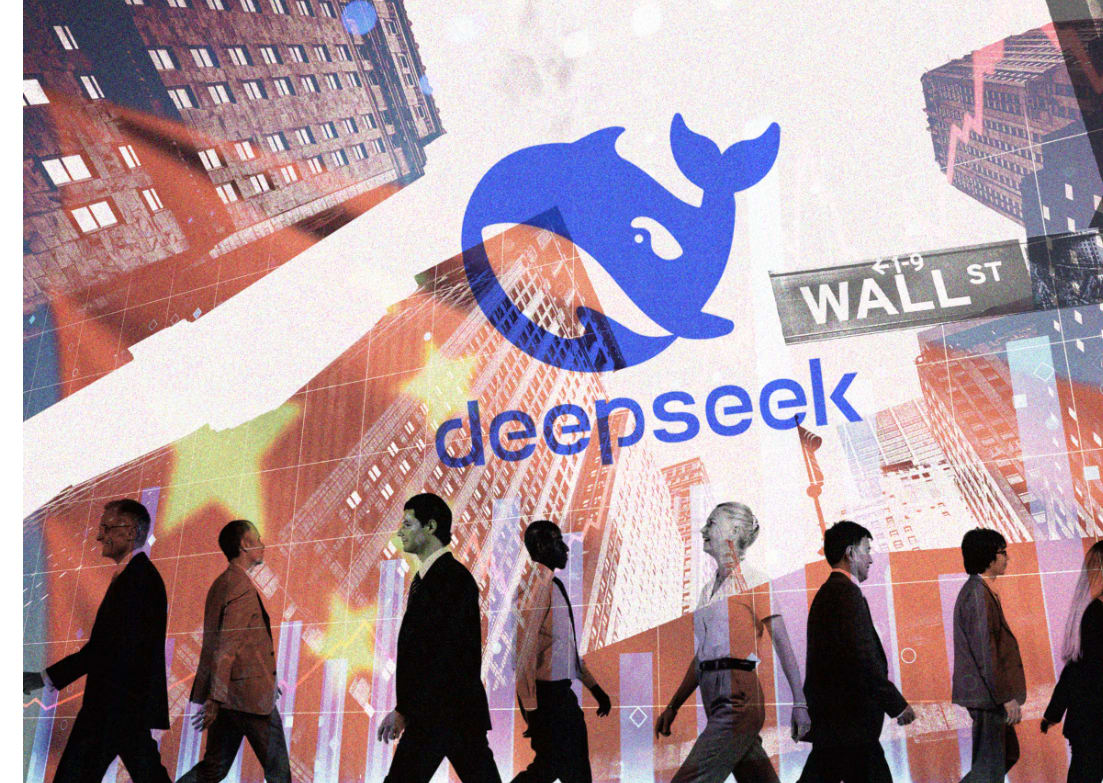
Chinese artificial intelligence company DeepSeek has resurfaced in discussions about global tech competition, after initially captivating attention with claims that rivaled those of Western AI models. The debates it sparked among investors and analysts have reignited concerns from tech hubs like Silicon Valley to Wall Street, but once again, the fervor appears to be waning.
Currently, the spotlight remains on industry giants such as OpenAI, Google, Microsoft, and Nvidia. Meanwhile, firms like DeepSeek are often relegated to the background, viewed as overhyped or unworthy of serious consideration. However, this neglect may be misleading. Wall Street’s current perception of Chinese AI could be not only incomplete but also perilously misguided.
DeepSeek’s ascent did not occur in isolation; it is the product of years of significant investment in AI research within China, bolstered by government support, vast datasets, and a tech workforce capable of scaling quickly. When DeepSeek unveiled models that purportedly deliver substantial performance at a fraction of the cost of their Western counterparts, it challenged a long-held belief in global technology: that cutting-edge AI must be costly and predominantly American-led.
Such claims have discomforted investors and analysts, as a rapid, low-cost competitor not embedded in the US ecosystem threatens the established dominance of familiar companies. One method for mitigating that unease is to simply ignore the competition.
Wall Street has a historical tendency to underestimate technologies that don’t fit neatly into conventional valuation or regulatory frameworks. Chinese companies frequently fall into this category, with concerns about transparency, geopolitical factors, and regulatory risks leading many investors to categorize all Chinese tech as “too risky.” This sweeping generalization may feel safe but is fundamentally lazy.
Chinese AI development is not dependent on Western capital markets for its success. Instead, it relies on domestic demand, state-backed funding, and integration into various sectors, from logistics and manufacturing to education and surveillance. DeepSeek is not focused on attracting American investors; it aims to address challenges specific to China.
This distinction is critical. One of Wall Street’s notable missteps is the assumption that innovation must adhere to the Silicon Valley playbook, characterized by eye-catching launches, inflated valuations, and aggressive monetization strategies. Chinese AI firms often favor efficiency, real-world deployment, and system integration over branding. DeepSeek’s reported emphasis on lowering training costs and addressing practical performance challenges raises challenging questions about the long-term advantages enjoyed by US tech giants.
Instead of confronting these complexities, many analysts opt to look away. The political dimension of DeepSeek’s temporary absence from public discourse is another significant factor. As US-China tensions escalate, narratives surrounding Chinese technology become more rigid. Western media often frames Chinese tech as either a looming threat or a failure, leaving little room for nuance.
If Chinese AI succeeds, it is portrayed as perilous; if it falters, it is dismissed as evidence that innovation cannot thrive under state control. DeepSeek occupies an uncomfortable middle ground—credible enough to be relevant but inconvenient to acknowledge. This creates a dilemma for Wall Street: recognizing the potential of Chinese AI necessitates an admission that technological leadership is no longer an assured American privilege, complicating market predictability.
This narrative extends beyond mere financial implications. AI significantly influences societal structures—shaping decision-making, automating labor, and distributing power. Ignoring key players within this ecosystem distorts our understanding of its future. For the general populace, the stakes are high. Global AI competition affects job security, privacy, education, and even geopolitical stability, and when financial narratives overlook certain actors, public awareness diminishes.
Complacency carries consequences. History is replete with examples of industries that underestimated foreign competition only to face severe repercussions later. From manufacturing to consumer electronics, failure to address external threats has led to sudden and disruptive shifts. DeepSeek may or may not achieve global recognition, but its existence signals an essential truth: AI development is no longer centralized. Progress is unfolding in parallel systems with varying values, constraints, and objectives.
Wall Street’s fundamental error lies not in questioning DeepSeek’s legitimacy but in presuming that its silence equates to irrelevance. Perhaps the most significant takeaway is that leadership in AI does not necessarily correlate with being the loudest or most expensive player. Rather, it may hinge on adaptability, scalability, and the degree of integration into everyday life.
Chinese AI firms are focusing on a vast domestic market characterized by unique challenges and fewer philosophical debates surrounding data use. This reality provides them with advantages that Western analysts often overlook. Choosing to ignore this dynamic does not shield investors from risk; it blinds them to crucial developments.
The question remains: Did everyone truly forget about DeepSeek? While it may appear that way, forgetting is ultimately a choice. Wall Street tends to favor narratives that feel familiar and manageable, yet the emergence of Chinese AI disrupts that comfort. The future trajectory of technology will not pause for analysts’ consensus or investors’ approval.
For those observing from the sidelines—workers, students, creators—the pressing question transcends which company emerges victorious. It is about whether we are adequately attuned to the complete narrative. Neglecting significant components of the global innovation landscape not only skews market interpretations but also distorts our understanding of the world itself.
See also Applied Materials Faces Crucial Earnings Call Amid Surge in AI Equipment Demand and Analyst Upgrades
 OpenAI Partners with Leidos to Enhance Federal Operations Using AI Technology
 OPENLANE’s AI Data Layer Revolutionizes Investment Potential Amidst Execution Risks