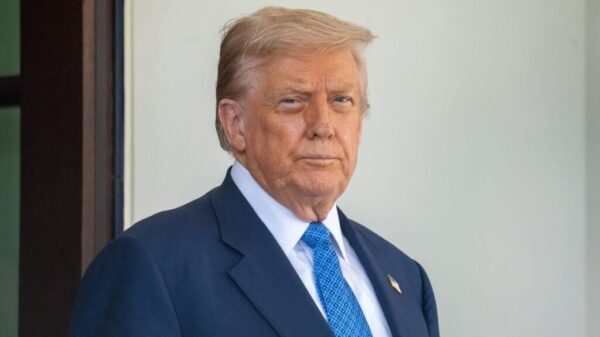











































World leaders are gathering in Davos, Switzerland, for the annual World Economic Forum from January 19 to 23, amid escalating geopolitical tensions and economic uncertainty fueled by the Trump administration. U.S. President Donald Trump is attending the forum in person for the first time since 2020, drawing significant attention as provocative social media posts emerged while he remained in the U.S.
Shortly after midnight, Trump’s account claimed to have held “a very good telephone call” with NATO Secretary General Mark Rutte, centering on Greenland. The post asserted that Trump had agreed to a meeting of “the various parties” in Davos, emphasizing that “Greenland is imperative for National and World Security,” and ominously noted, “There can be no going back.”
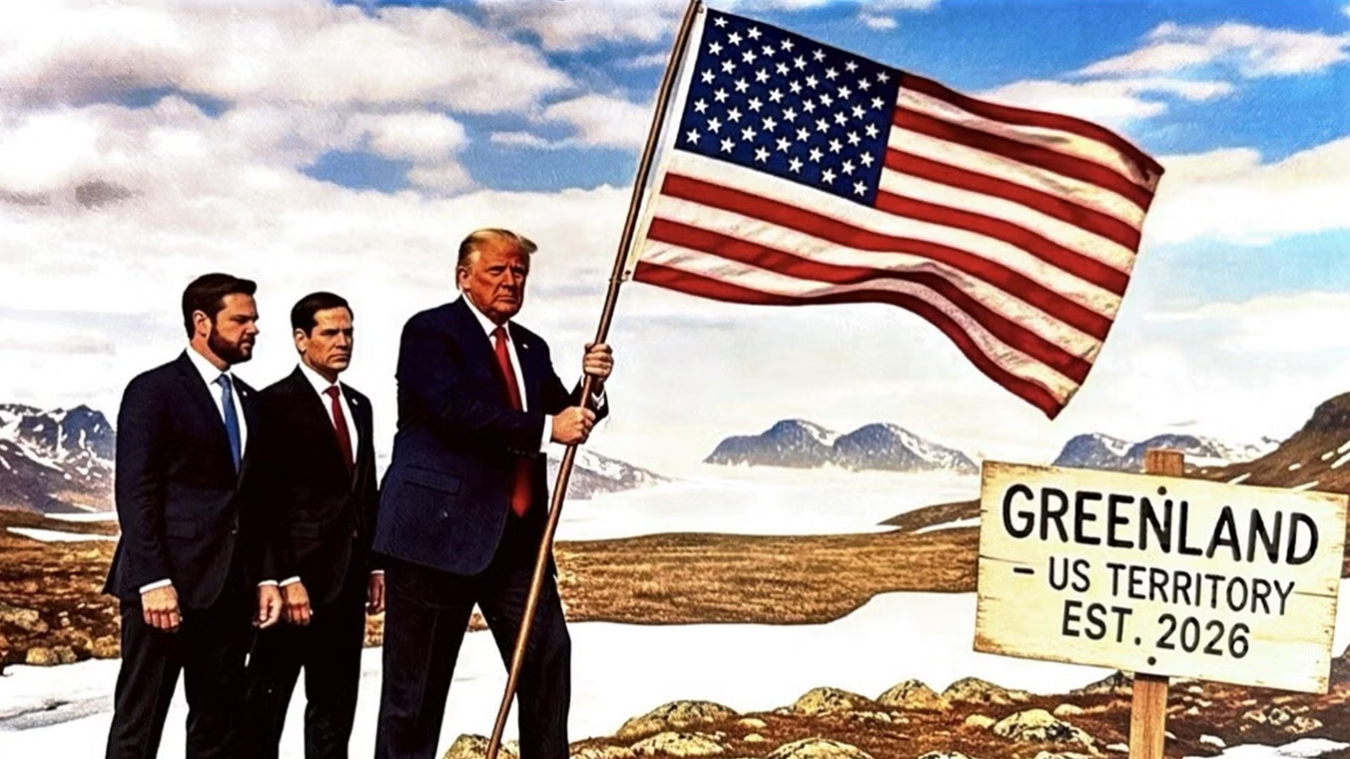
Following this, his account shared an AI-generated image depicting world leaders seated before Trump’s desk in the Oval Office, with a map of North America entirely covered in the U.S. flag, including Canada and Greenland, as well as Venezuela. Another image showed Trump standing on an Arctic landscape with Vice President J.D. Vance and Secretary of State Marco Rubio, holding a U.S. flag beside a sign reading: “GREENLAND — US TERRITORY EST. 2026.”
The posts escalated further, with Trump sharing what he claimed were private text messages from Rutte and French President Emmanuel Macron, mocking diplomatic efforts. He also reposted inflammatory content targeting NATO, the United Nations, and Islam, asserting that NATO would not exist without his intervention and would have been “in the ash heap of History.”
In an increasingly chaotic narrative, Trump’s account published messages criticizing Federal Reserve Board member Lisa Cook and launched attacks on political figures such as Democratic Governor Tim Walz and Representative Ilhan Omar. He described protesters of Immigration and Customs Enforcement actions in Minnesota as “agitators and insurrectionists,” calling for their imprisonment.
On the sidelines of Davos, California Governor Gavin Newsom urged European leaders to confront Trump firmly. He tweeted, “America’s allies and business leaders need to understand this: There’s no diplomacy with Donald Trump. Get off your knees and grow a spine.”
Trump’s posts included unsubstantiated claims of widespread crime by “vicious animals” while asserting that national crime statistics were at record lows. He also revisited long-debunked allegations regarding the 2020 U.S. presidential election, particularly citing false claims involving Nevada, Dominion Voting Systems, and China.
In Washington, Trump held a press conference where he presented a document labeled “ACCOMPLISHMENTS” but soon abandoned it, focusing instead on denying reports of ICE abuses. He attempted to substantiate his claims with photographs labeled “WORST OF WORST,” repeatedly referencing “many murderers.” Journalist Aaron Rupar remarked that Trump’s behavior suggested “the president is not well.”
Markets reacted sharply to Trump’s threats regarding Greenland and warnings of heavy tariffs on Europe if governments there failed to support his ambitions. On January 20, the Dow Jones Industrial Average plummeted by 870.74 points (1.76%), while the S&P 500 and Nasdaq Composite fell 2.06% and 2.39%, respectively, marking their worst day since October.
This market downturn coincided with reports highlighting the domestic costs of Trump’s previous tariff policies, indicating that U.S. consumers and importers had borne about 96% of the costs associated with these tariffs, contrary to his assertions. The stakes are particularly high regarding his threats to Europe, as the **European Union** is the largest trading partner of the United States, with leaders discussing possible retaliatory measures through the bloc’s Anti-Coercion Instrument.
Amid these developments, broader discussions about the global order were prominent at Davos. In a piece for The Atlantic, Robert Kagan cautioned that Americans are entering “the most dangerous world they have known since World War II,” suggesting that decades of stability have left the public unprepared for a breakdown in the liberal international order.
During a speech in Davos, Canadian Prime Minister Mark Carney described the current global climate as a profound “rupture,” condemning the increasing tendency of powerful nations to weaponize economic integration. Carney advocated for a model of “variable geometry,” proposing that middle powers form flexible coalitions around shared interests and values. He stated, “We know the old order is not coming back. Nostalgia is not a strategy.”
As discussions unfold in Davos, the ramifications of Trump’s rhetoric and actions on both domestic and international fronts highlight the challenges ahead. The responses from global leaders reflect not only their stance on Trump’s policies but also a potential shift in the way international relations may evolve in a fractured global landscape.
See also AI Model Dominance Lacks Geopolitical Edge, Warns India’s Vaishnaw at Davos 2026
 German Utility Stadtwerk am See Tests AI for Enhanced Grid Stability and Efficiency
 CODIT Unveils ChatCODIT: Transforming Global Regulatory Intelligence with AI-Powered Insights
 Apple Chooses Google Gemini AI to Enhance Siri, $1B Annual Deal Confirmed
 Celebrities Rally Against AI Copyright Violations in “Stealing Isn’t Innovation” Campaign