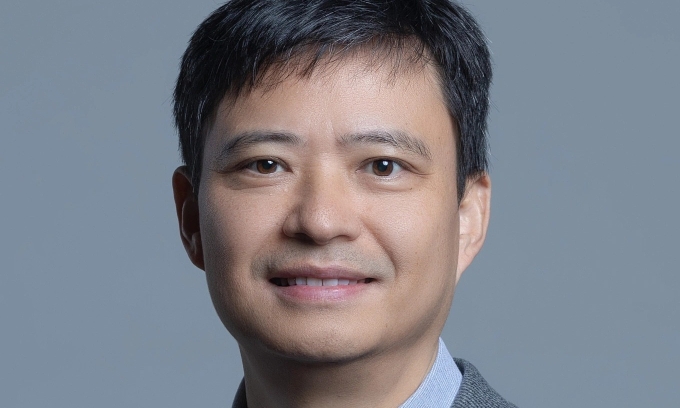
Westlake University announced in late December 2025 that renowned researcher Haibin Ling has joined the institution as a chair professor in its Department of Artificial Intelligence. He will lead the Intelligent Computing and Application Lab at the university, which is located in Hangzhou, a prominent technology hub in eastern China.
Ling is widely recognized for his groundbreaking work in computer vision and artificial intelligence. He is particularly noted for his development of LeafSnap, the world’s first mobile application utilizing image recognition to identify plant species based on leaf photographs, as reported by the South China Morning Post. His original leaf-recognition algorithm marked a significant advancement, enabling machines to interpret visual data more effectively, and laid the foundation for technologies that are now prevalent in augmented reality, medical imaging, and visual analysis.
At 51 years old, Ling stated that his relocation to China was driven by the desire to explore unconventional research avenues. “Many traditional AI fields have matured,” he commented. “Real breakthroughs now require exploring new and less-traveled paths.”
Before his return to China, Ling held the position of SUNY Empire Innovation Professor in the Department of Computer Science at Stony Brook University since 2019. He is an IEEE Fellow, a prestigious accolade awarded by the Institute of Electrical and Electronics Engineers.
Ling completed his bachelor’s and master’s degrees in computer science at Peking University in 1997 and 2000, respectively. He began his career as a research assistant at Microsoft Research Asia before advancing to the University of Maryland, where he earned his PhD in 2006.
Initially, Ling’s research concentrated on computer vision during its formative years, culminating in the creation of LeafSnap, which rapidly gained traction and served as a model for subsequent plant-identification and visual-recognition applications. Following his doctoral studies, he redirected his focus to visual tracking and dynamic target tracking technologies, which are now integral to security and surveillance systems, as well as to medical imaging and gesture-based interactions in augmented reality and virtual reality environments.
Throughout his career, Ling has received numerous prestigious awards, including the U.S. National Science Foundation CAREER Award, the Yahoo Faculty Research and Engagement Award, the Amazon Machine Learning Research Award, and the IEEE Transactions on Visualization and Computer Graphics Best Journal Paper Award at IEEE VR 2021, a leading conference in the field of virtual reality.
In 2024, Ling was recognized among the top 1% of the world’s most cited researchers by Clarivate, which manages the Web of Science database. His Google Scholar profile currently lists over 51,000 citations
Ling has actively contributed to the academic community by serving on the editorial boards of several leading IEEE journals and frequently acting as an area chair at major international AI conferences. His decision to return to China aligns with a broader trend of overseas Chinese scientists repatriating, bringing valuable expertise and extensive global research networks that are increasingly influencing China’s ambitions in global science and technology.
Ling’s arrival at Westlake University marks a significant development in the ongoing evolution of AI research in China, potentially fostering innovative breakthroughs that could reshape the landscape of artificial intelligence and its applications.
See also Saudi Arabia Achieves AI Ambitions: 15 New Services by 2030 Under Vision 2030
 California Proposes AI Safety Measure for Youth, Backed by OpenAI and Common Sense Media
 Edmonds College Launches AI and Robotics Programs to Address Workforce Demand in Snohomish County
 Irish EdTech Firms Position for Success in US Amid Rising AI Learning Demand
 Manik Gupta Departs Microsoft Teams to Pursue Next Phase of AI Innovation