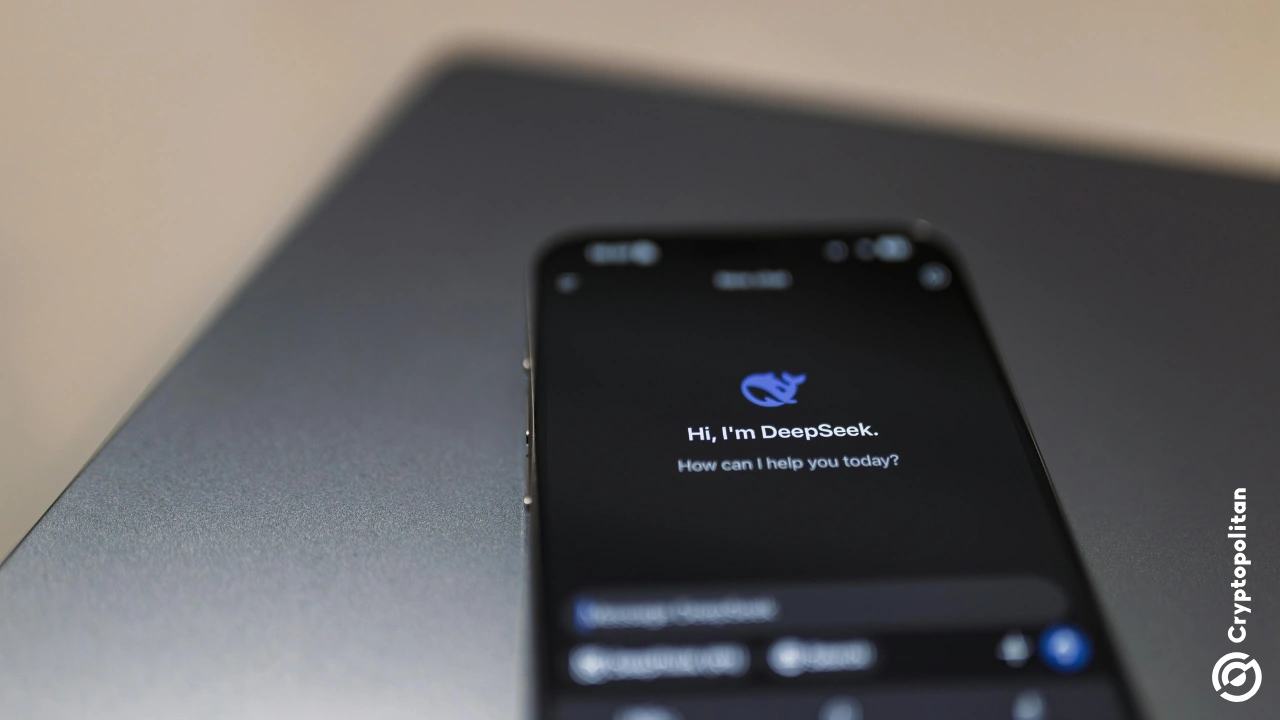
DeepSeek is set to unveil its latest large language model, DeepSeek V4, on February 17, 2024, with whispers in the tech community suggesting it could surpass competitors like OpenAI‘s ChatGPT and Anthropic‘s Claude in handling long-context coding tasks. Insiders claim that if internal tests align with expectations, Silicon Valley’s AI landscape may face significant disruption following the launch.
The Chinese-based AI start-up has remained tight-lipped about the upcoming model, failing to confirm any specifics publicly as of this writing. Nevertheless, anticipation has surged among developers, particularly on social networks. Yuchen Jin, an AI developer and co-founder of Hyperbolic Labs, recently posted on X stating that “DeepSeek V4 is rumored to drop soon, with stronger coding than Claude and GPT.”
On the subreddit r/DeepSeek, excitement has reached a fever pitch, with users expressing a near obsession over the forthcoming model. One contributor mentioned frequently checking for updates, stating that their fixation on DeepSeek’s impending V4 “was not normal.”
DeepSeek has previously made waves in the market, particularly with the January 2025 release of its R1 reasoning model, which triggered a trillion-dollar sell-off as it matched OpenAI’s 01 model on critical math and reasoning benchmarks, all while being significantly less costly. DeepSeek’s expenditures totaled only $6 million for the model release, a stark contrast to the nearly $420 million spent by competitors for similar outputs. The company’s V3 model also achieved a notable 90.2% score on the MATH-500 benchmark, compared to Claude’s 78.3%, while the V3.2 Speciale upgrade further enhanced productivity.
In a shift from its V3 model’s focus on reasoning and formal proofs, the upcoming V4 is expected to be a hybrid model, integrating both reasoning and non-reasoning tasks. This approach aims to address a market gap for high-accuracy, long-context code generation, positioning DeepSeek to capture developer interest. Current benchmarks indicate that Claude Opus 4.5 leads with an accuracy of 80.9% in the Software Engineering (SWE) category, a benchmark DeepSeek V4 would need to exceed to establish dominance.
The rapid ascent of DeepSeek has raised eyebrows across the industry, prompting questions about how a relatively small company has achieved such remarkable milestones. The key to their success may lie in a research paper released on January 1, introducing a new training methodology known as Manifold-Constrained Hyper-Connections (mHC). Liang Wenfeng, founder and CEO of DeepSeek, explained that mHC addresses challenges faced in training large language models by allowing data to flow through multiple channels instead of a single, narrow pathway, thereby avoiding training collapse.
Lian Jye Su, chief analyst at Omdia, praised Wenfeng’s transparency in publishing the research, emphasizing how this fosters renewed confidence in the Chinese AI sector. DeepSeek currently commands an impressive 89% of China’s AI market, according to a Microsoft report released Thursday, and is gaining traction in developing countries as well.
The release of DeepSeek V4 promises not only to challenge existing paradigms in AI coding tasks but also to redefine expectations across the industry. As developers and tech enthusiasts prepare for the model’s debut, it remains clear that DeepSeek’s innovations could significantly reshape the competitive landscape, further entrenching its position as a formidable player in the global AI arena.
See also Investment Firms Deploy AI Tools, Driving 44% Productivity Shift by 2030 Across Wall Street
 AI Transforms Aviation: Streamlining Operations and Enhancing Passenger Experience Now
 Google Launches AI Overviews and Inbox in Gmail, Powered by Gemini 3 Features
 Salesforce Unveils AI-Driven Two-Way Communication Tools to Transform E-Commerce Engagement
 Indigenous Leadership Essential for Ethical AI in Global Conservation Efforts