At the 44th Annual J.P. Morgan Healthcare Conference, Jamie Dimon, CEO of J.P. Morgan, advocated for integrating healthcare education into K-12 curricula, underscoring a gap in the current system. He highlighted that the U.S. healthcare system, projected to exceed $5.6 trillion in spending by 2025, may increasingly rely on artificial intelligence (AI) to fill this educational void. This raises an interesting connection between healthcare education, escalating costs, and the evolving economic landscape.
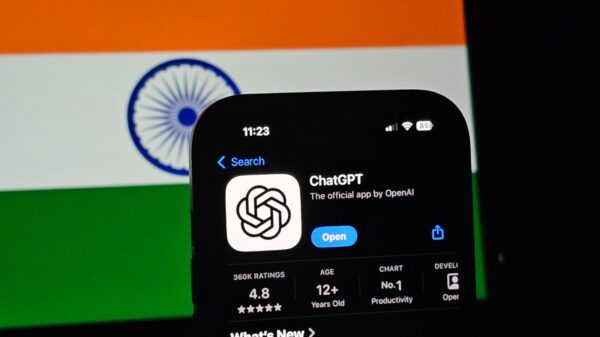
OpenAI’s recent announcements concerning healthcare-focused AI solutions have further spotlighted this trend. The company introduced ChatGPT Health, a consumer-facing model, alongside enterprise solutions like ChatGPT for Healthcare and Anthropic’s Claude for Healthcare. These large language models (LLMs) are designed to assist healthcare enterprises with various administrative tasks, such as billing, coding, and care coordination while adhering to HIPAA regulations. The consumer-oriented ChatGPT Health aims to empower users to seek health information, connect medical records, and manage their health effectively.
As of January 2026, data shows that over 40 million people are utilizing ChatGPT daily for healthcare inquiries. A staggering 200 million users submit healthcare-related prompts weekly, with healthcare topics constituting more than 5% of global messages on the platform. This surge in AI-driven health inquiries reflects a growing desire among Americans to manage their health, understand symptoms, and explore treatment options.
Research indicates that 5% of Google searches pertain to healthcare, presenting an opportunity for early disease detection. Many individuals seek to educate themselves about health conditions and associated costs, which underscores a pressing need for enhanced healthcare literacy. However, as noted by Ann Somers Hogg, the healthcare delivery system often fails to deliver the personalized, proactive, and preventive education patients require.
Rob Allen, CEO of Intermountain Health, echoed this sentiment at the conference, revealing that 25% of U.S. healthcare spending is preventable. Achieving effective cost reduction hinges on proactive health management by both the healthcare system and individuals. The traditional model of primary care, where a doctor knows their patients intimately, is increasingly rare, particularly amid the growing shortage of primary care physicians and the rise in chronic conditions affecting three-quarters of the U.S. population, as indicated by Baylor Scott & White CEO Pete McCanna.
Dr. Stephen Jones, CEO of Inova Health, emphasized that healthcare is fundamentally about trust, underscoring the personal nature of health. In this context, AI chatbots might emerge as effective tools for delivering healthcare education and guidance, particularly in underserved areas. Insights from the OpenAI report suggest that rural communities, where access to healthcare professionals is limited, are turning to AI for assistance, especially after normal clinic hours.
Despite concerns about the reliability of current AI offerings for healthcare education, experts suggest that the information provided does not need to be flawless; it just needs to be adequate. As healthcare technology progresses, early adopters may witness both the limitations and advantages of AI. Hartford Healthcare CEO Jeff Flaks remarked on the current phase of AI development, likening it to the early days of the iPhone, where initial shortcomings eventually paved the way for significant advancements.
The disruptive innovation framework, as articulated by Harvard’s Clayton Christensen, implies that innovations making services more accessible can democratize healthcare. AI-driven LLMs may offer a solution to break down existing barriers to healthcare information, which are often obscured by systemic complexities. These models can enhance public access to vital health information without replacing direct medical care, as patients will still need to seek human healthcare providers for treatment.
Healthcare executives at the conference shared insights into how AI is reshaping their operations, particularly in administrative efficiency. Applications such as ambient listening for patient-provider interactions, call center automation, and revenue cycle management are streamlining processes and enhancing patient experiences. Dr. Richard Gray, CEO of Mayo Clinic, revealed that Mayo currently utilizes 155 AI applications, with further developments underway, including an AI avatar designed to educate patients post-surgery.
As healthcare systems continue to explore AI’s potential, the first wave of impact is likely to focus on administrative tasks, with leaders like ChristianaCare CEO Janice Nevin predicting that by 2028, any task amenable to automation will be addressed by AI. This could usher in a transformative period for the healthcare industry, paving the way for more efficient and personalized care models.
Looking ahead, the integration of AI into healthcare presents both challenges and opportunities. As the industry grapples with rising costs, a renewed focus on educating patients and improving access to healthcare information could redefine the patient experience and enhance outcomes in an increasingly complex healthcare landscape.
See also Novee Emerges from Stealth with $51.5M to Transform AI-Driven Offensive Security
 Oakmark Funds Boosts Gartner Shares Amid AI Concerns; Future Trends Highlighted
 South African Businesses Must Address Ethical AI to Mitigate Operational Risks, Warns Alkemi CEO
 SAP.DE Stock Closes at €202.15 Amid AI Partnership; Upside Forecasts Signal Potential Growth
 ScaleLogix AI Launches Investor-Grade Platform to Democratize Access to High-Performance AI