The SimuLingua project, spearheaded by Flowphys AS of Norway, has garnered significant attention, ranking second out of 47 proposals in a competitive European funding initiative. With an impressive score of 14 out of 15, the project unites partners from the Netherlands, Sweden, UK, Ireland, Lithuania, and Ukraine, and aims to revolutionize the design and development of materials in Europe.
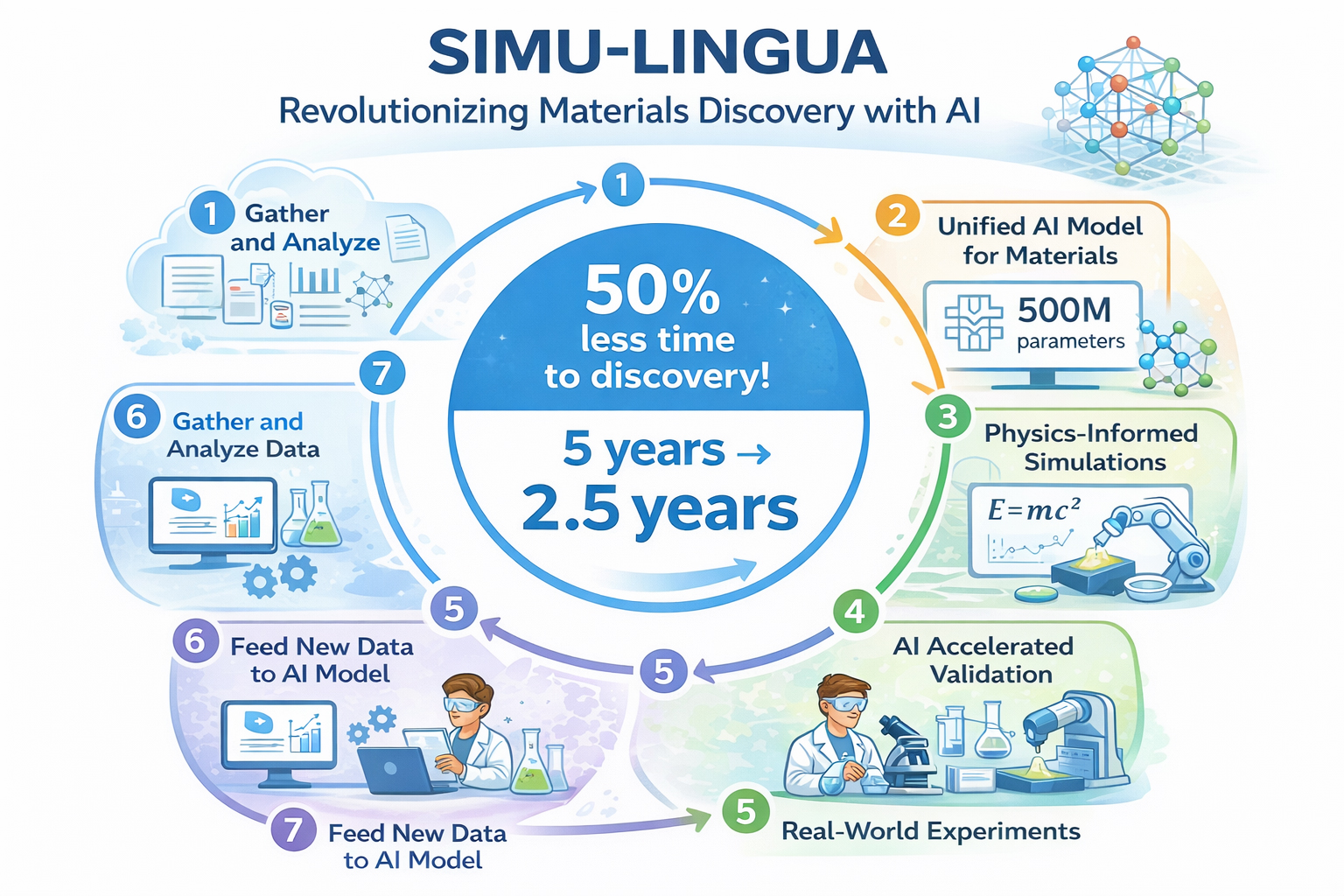
At its core, SimuLingua aspires to transform how engineers and scientists approach materials development through the creation of an AI system that enables seamless interaction between natural language, physics-based simulations, images, and experimental data. By establishing an open, multimodal scientific foundation model, the project intends to support a closed design loop that facilitates design, simulation, and validation.
This innovative approach allows researchers to explore new materials via natural-language queries while AI-driven models assess the physical feasibility of proposed designs. By harnessing computer-based simulations, the platform is expected to expedite the discovery of advanced materials, making it easier for experts to test hypotheses quickly and efficiently.
Victorita Dolean, a professor at TU/e and the university’s point of contact for the project, remarked, “This project brings together two revolutions: foundation models from AI and simulations based on first principles from engineering.” The initiative aims to allow researchers to “talk” to materials models, thereby facilitating interactive exploration and rapid in silico testing.
SimuLingua’s implications extend beyond academic settings, as industrial partners within the consortium indicate that AI tools have already transformed software development. They anticipate a similarly disruptive impact on engineering and science. The project’s goal is to establish a European blueprint for scientific foundation models, potentially leading to more efficient and scalable materials research across various industries.
Structured as a 48-month Research & Innovation Action, SimuLingua aims to advance its Technology Readiness Level (TRL) from TRL-1 to TRL-4, reflecting a commitment to moving from basic research principles to validated prototypes in a laboratory setting. This ambitious timeline underscores the project’s dual goal of developing a sophisticated AI model while demonstrating its real-world applicability in materials discovery.
The funding associated with SimuLingua enhances TU/e’s strategic position at the intersection of AI, computational science, and engineering. The research team, led by Professor Victorita Dolean, will recruit five post-doctoral positions to focus on machine learning for physics, high-performance computing, and trustworthy AI for critical engineering applications. This initiative aligns closely with other efforts within the Brainport high-tech ecosystem, reinforcing the region’s status as a hub for advanced technology and innovation.
Looking ahead, SimuLingua stands as a testament to the evolving landscape of materials science, where AI’s integration promises to accelerate discovery and enhance practical applications. As Europe seeks to bolster its engineering capabilities, projects like SimuLingua may well pave the way for significant advancements and a new era of materials research.
See also U.S. Faces Dilemma as Nvidia Seeks Approval to Sell AI Chips to China Amid Security Risks
 Elon Musk Critiques Anthropic’s AI Ethics, Ignites Debate on Industry Values and Accountability
 Mistral AI’s Arthur Mensch Declares China Not Behind in AI, ASML Invests €1.3B
 EY’s Teigland: Invest in Workforce Redesign for AI Productivity Gains of 14%