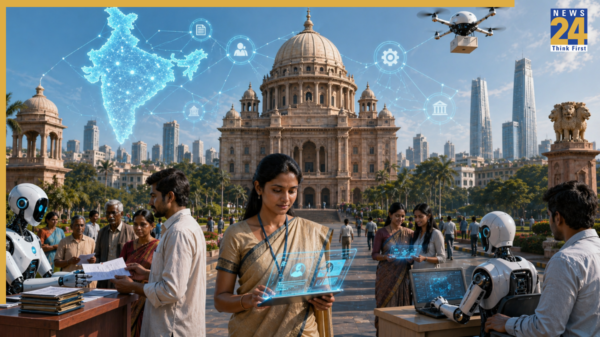
The Indian business landscape is on the cusp of a transformative shift as enterprises increasingly adopt what is termed “Agentic AI.” This evolution marks a departure from the previous era of merely “going paperless” toward a new paradigm that liberates human cognition from mundane tasks. As businesses transition from outdated “Systems of Record” like traditional ERPs and CRMs, a new “System of Agency” is emerging, promising to enhance efficiency across various sectors, from bustling boardrooms in Mumbai to quiet clinics in rural Rajasthan.
The financial sector is particularly poised for change, transitioning from “High Frequency Trading” to “High Frequency Thinking.” The traditional reliance on human analysts for cross-referencing transactions is giving way to autonomous systems capable of ensuring compliance and mitigating risk. Imagine a “Financial Compliance Agent” that operates on a “Dual-Clock” architecture: a fast clock that detects fraud in milliseconds and a slow clock that autonomously drafts Suspicious Activity Reports (SARs) for human review. For instance, a mid-sized Non-Banking Financial Company (NBFC) can leverage a “Loan Origination Agent” that processes loan applications by examining bank statements and credit bureau data within seconds, resulting in pre-approved loan offers that are unbiased and risk-adjusted.
Healthcare is another domain where AI is making significant inroads, particularly in a country grappling with a doctor-patient ratio of 1:834. The concept of “Clinical Decision Support at the Edge” is gaining traction, with vision-capable agents capable of diagnosing conditions from images taken via smartphone cameras. A rural clinic in Rajasthan can utilize a “Radiology Agent” to scan X-rays for markers of tuberculosis with 99% accuracy, routing any anomalies to specialists in urban centers. Hospital chains are deploying “Patient Concierge Agents” that communicate with patients post-surgery in their native languages, monitoring recovery and updating electronic health records automatically.
In the education sector, the push for digital inclusion via AI is reshaping traditional classroom models. The “guru” of the future could be an “Education Agent” that provides hyper-personalized learning experiences. This agent can adapt curricula based on individual student performance, allowing for tailored instruction that meets each learner’s needs. Ed-Tech companies are transitioning from static content libraries to dynamic platforms offering bespoke quizzes and feedback, ensuring students receive personalized guidance in both English and Hindi.
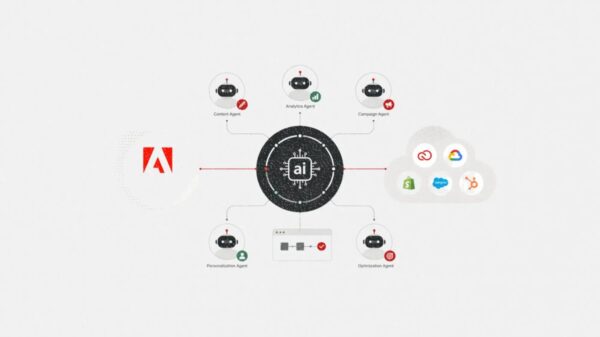
The rise of “Department of One” is particularly relevant for India’s 63 million micro, small, and medium enterprises (MSMEs), which often cannot afford a full C-suite. Multi-agent systems are optimizing supply chains, with “Inventory Agents” predicting stockouts and negotiating restocking orders. A textile manufacturer in Surat, for example, can employ a “Design Agent” to create patterns based on social media trends while a “Logistics Agent” streamlines delivery routes, enhancing operational efficiency.
The Indian government is positioning itself as a catalyst for this AI-driven transformation through its India-AI Mission, which includes a substantial outlay of over ₹10,300 crore. Key initiatives such as the deployment of 38,000 GPUs will empower startups, while the India-AI Datasets Platform unlocks non-personal government data to spur innovation, particularly in agriculture and governance. The Bhashini initiative is breaking language barriers, enabling the development of “Bharat-first” AI solutions that cater to the broader population.
As AI permeates various sectors, ethical considerations are paramount. The introduction of standards such as ROMA (Robust Orchestration for Multi-Agent) aims to ensure transparency in AI decision-making processes. Trust becomes essential as AI systems take on more agency; human oversight remains crucial, especially in critical decisions such as medical diagnoses or legal briefings. The balance between machine efficiency and human judgment is not merely a best practice but a necessity for sustainable growth.
AI is transitioning from being viewed as an experimental cost center to a core enabler of business strategy. In manufacturing, it enhances predictive maintenance and optimizes production planning. Retailers are utilizing AI analytics for improved customer behavior insights and inventory management. As businesses become more adept at integrating AI, it is evident that technology alone will not distinguish leaders in the market. Successful enterprises will combine AI adoption with robust standard operating procedures and effective risk management.
The “Quiet Revolution” of AI is already in motion, manifesting in various forms—drones inspecting power lines, automated financial reconciliations, and vernacular bots assisting farmers. For business leaders, the imperative is clear: rather than seeking AI that dazzles with complexity, they should focus on practical applications that enhance productivity. The future will belong to those who can orchestrate these intelligent systems effectively.
See also AI Revolutionizes UK Finance: 75% Adoption Sparks Urgent Skills Overhaul and Governance Needs
 Perplexity Launches AI Research Assistant with 128 Academic Sources for In-Depth Learning
 BRICS CCI Youth Lab 2026 Empowers Young Innovators to Shape Global AI Governance
 Google DeepMind’s AlphaGenome Analyzes 1M DNA Bases, Revolutionizing Genetic Insights
 Google DeepMind Launches AlphaGenome AI Tool to Identify Genetic Disease Drivers