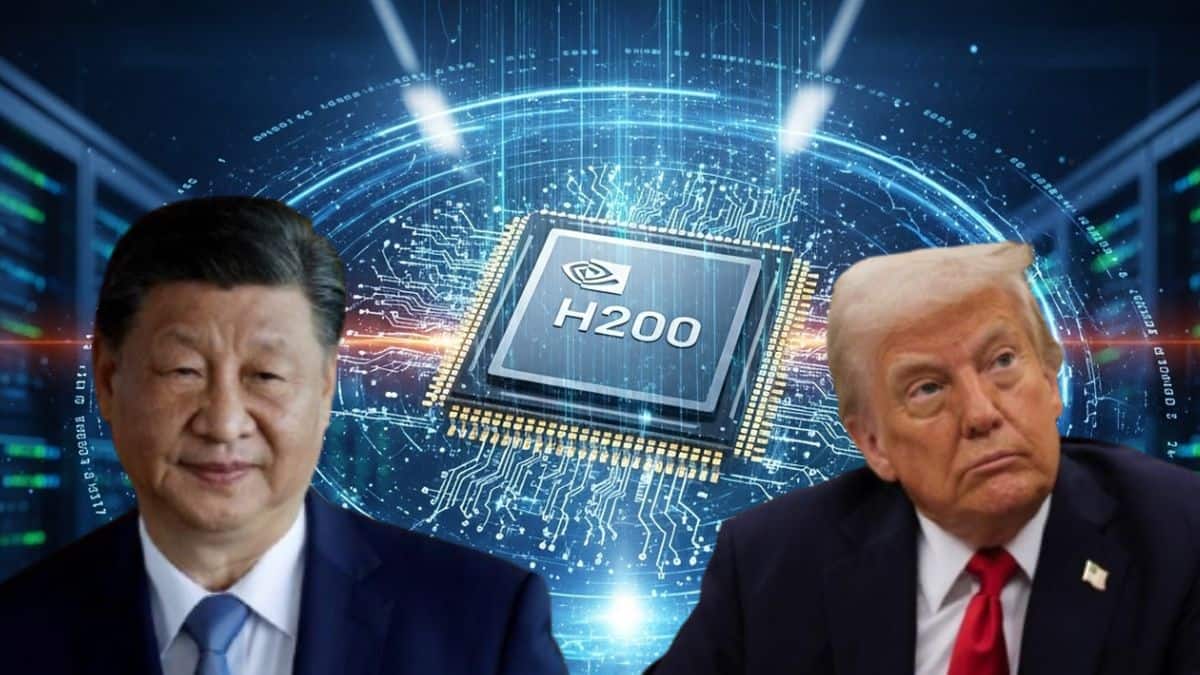
China has approved major tech firms ByteDance, Alibaba, and Tencent to purchase over 400,000 of Nvidia’s H200 artificial intelligence chips. This move marks a significant policy shift as the country strives to enhance its position in the global AI landscape. Reuters reported that while these companies have received the green light, additional tech firms are now seeking similar government approvals.
However, the approvals come with conditions that remain under negotiation. Sources suggest that current licensing arrangements are restrictive, leading to delays in converting these approvals into actual purchase orders. The approval process appears to be designed not only to manage demand for these advanced chips but also to ensure that domestic alternatives have been explored.
Last month, Chinese regulators indicated a potential intent to limit access to the H200 chips, which are considered Nvidia’s second-best generation of AI technology. As part of this strategy, buyers may be required to undergo a rigorous approval process, including justifying why they cannot meet their needs with locally produced chips. Additional measures could involve heightened customs checks on chip imports and providing energy subsidies to data centers that utilize domestic chip technologies.
The National Development and Reform Commission and the Ministry of Industry and Information Technology, the two regulatory bodies spearheading China’s push for semiconductor self-sufficiency, are considering further actions to bolster the competitiveness of domestic chips. Among these, prohibiting public sector purchases of the H200 chips has been floated as a possible measure.
This regulatory landscape has evolved following U.S. President Donald Trump’s authorization in December for Nvidia to sell AI chips to China, a significant development he communicated directly to Chinese President Xi Jinping. While Trump clarified that the sale of the more advanced Blackwell chip would not be permitted, the transaction involving the H200 chips is projected to be worth billions for Nvidia. The company has indicated it has more than $500 billion in orders for its leading AI chips slated for delivery this year and next, not accounting for potential sales in China.
In a post on Truth Social, Trump remarked, “I have informed President Xi of China that the United States will allow NVIDIA to ship its H200 products to approved customers in China, and other countries, under conditions that allow for continued strong national security. President Xi responded positively!” This statement highlights the geopolitical complexities surrounding the semiconductor industry, particularly as nations grapple with maintaining technological supremacy.
As the demand for AI technology accelerates, the challenges posed by regulatory scrutiny and supply chain constraints may shape the future dynamics of the global semiconductor market. With China’s tech giants poised to expand their access to crucial components, the unfolding situation will likely influence both the domestic industry and international relations within the tech sector. As more firms await approvals and the regulatory framework continues to evolve, the overall landscape for semiconductor supply and demand remains in flux.
See also Students Tackle AI Ethics in Competitive ‘Iron Bowl’ Debate, Shaping Future Discourse
 Unified AI Platforms Market Set to Surge to $18.90B by 2030, Driven by Enterprise Demand and Innovations
 Google DeepMind Open-Sources AlphaGenome, Enhancing DNA Research with 1M Base Pairs
 Microsoft’s $37.5B AI Investment Sparks Concerns as Cloud Growth Slows to 39%
 SK Hynix Unveils $10 Billion AI Investment Arm in Silicon Valley to Transform Tech Landscape