























































The Philippines’ artificial intelligence (AI) in fintech market is experiencing significant growth, driven by the increasing integration of AI technologies among financial institutions, digital payment platforms, and emerging fintech startups. As these entities seek to enhance service delivery, boost operational efficiency, and elevate customer experiences, the market size reached **USD 79.38 million** in 2024, with projections suggesting it will expand to **USD 419.35 million** by 2033, reflecting a compound annual growth rate (**CAGR**) of **18.11%** from 2025 to 2033. This surge underscores the growing role of AI in fostering financial innovation and facilitating digital transformation across banking, payments, and financial services.
As the Philippine economy increasingly embraces digitalization, AI technologies are evolving to support next-generation fintech capabilities. These advancements are enabling faster lending decisions, smarter risk management, personalized financial services, and improved fraud prevention. The application of AI in these domains not only assists financial providers in scaling operations and enhancing regulatory compliance but also contributes to broader national objectives such as financial inclusion and digital financial resilience.
The surge in the adoption of digital financial services, including mobile wallets and online banking, has created a fertile environment for AI integration. AI-powered tools such as chatbots and automated customer service systems have markedly improved response times and reduced operational costs, delivering seamless user experiences. As online transaction volumes continue to rise, the need for efficient and effective customer engagement has become paramount.
Furthermore, the increase in online transactions has escalated the risk of fraud and cyber threats. AI-enabled analytics and machine learning algorithms are essential for real-time fraud detection, anomaly recognition, risk scoring, and automated monitoring, significantly minimizing losses and enhancing trust within digital financial ecosystems. This focus on security is critical as the volume of digital financial activity grows.
At the same time, initiatives aimed at financial inclusion in the Philippines are leveraging AI to expand access to credit and financial products for previously underserved populations. AI-driven credit scoring models can assess alternative data—such as mobile usage and transaction patterns—to facilitate credit extension for individuals without traditional banking histories. This approach broadens financial participation beyond conventional segments, fostering a more inclusive financial landscape.
Operational efficiency is another significant driver of the market’s growth. AI applications, including robotic process automation (RPA), business analytics, predictive modeling, and customer behavior engines, are streamlining internal operations and automating repetitive tasks. This not only reduces operational costs for service providers but also enhances their agility and precision in scaling services to meet customer needs.
Recent Developments in the AI Fintech Landscape
Recent developments in the Philippines’ AI in fintech market highlight the increasing strategic prioritization of intelligent fintech tools. In July 2025, financial institutions expanded their AI-powered lending and customer support capabilities, integrating machine learning credit scoring and chatbot systems to expedite loan approvals and automate client engagement. This shift reflects the growing emphasis on service scalability through AI technologies.
In September 2025, stakeholders within the fintech ecosystem reported an accelerated adoption of real-time fraud analytics and risk monitoring platforms. These advancements are enhancing the security of digital transactions and mitigating exposure to cyber threats, as online financial activity continues to surge across various digital payment platforms. By November 2025, industry analysts noted that virtual assistant and chatbot solutions demonstrated strong year-on-year growth, indicating a broader acceptance of self-service digital interfaces that enhance accessibility while reducing operational workloads for financial service providers.
The significance of the Philippines’ AI in fintech market cannot be overstated. As AI continues to play a pivotal role in shaping the financial landscape, it facilitates the delivery, experience, and security of financial services. The growth of digital payments, lending, and online financial interactions—driven by increasing mobile penetration and changing consumer expectations—underscores the importance of embracing AI technologies. For investors, this market presents exposure to a high-growth segment characterized by strong adoption trends and recurring technology demand.
Understanding the evolving landscape is equally crucial for financial institutions and startups. By grasping the dynamics of segmentation, application areas, and innovation trajectories, these entities can craft product designs, partnership strategies, and infrastructure investments that ensure competitiveness in the marketplace. Ultimately, the Philippines’ AI in fintech market exemplifies the convergence of technology, financial inclusion, and risk intelligence, marking it as a strategic arena for future growth with far-reaching implications for the broader financial ecosystem.
See also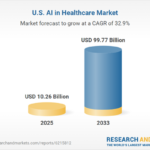 U.S. AI in Healthcare Market to Reach $99.77B by 2033, Driven by Innovation and Demand
 SPLICE Software Elevates AI Customer Engagement with Unified Voice and Strategic Partnerships
 Salesforce Shares Drop 0.8% Amid AI Concerns as Traders Await Key U.S. Data
 ConnectOne Bancorp Completes $14B Deal, Focuses on AI Efficiency and Shareholder Returns
 Wipro Launches AI-Powered Operating Model for Enterprise Transformation Across Four Key Functions















