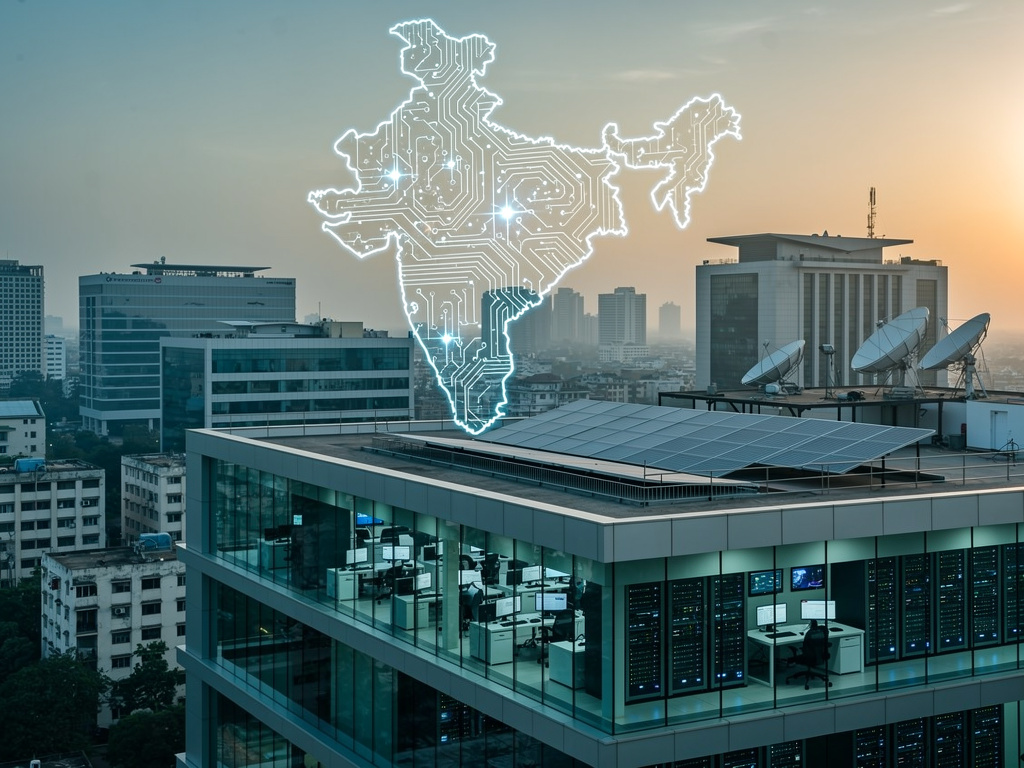
India is positioning itself as a global leader in artificial intelligence (AI) not through extensive computational resources or massive data centers, but by cultivating human capital strategically. As the nation gears up to host the AI Impact Summit, its model for developing AI talent serves as a practical blueprint for other emerging economies striving for technological transformation without the heavy infrastructure investments that characterize AI leadership in the United States and China.
The Indian strategy focuses on leveraging existing educational frameworks, fostering partnerships between academia and industry, and implementing policies that encourage private sector participation in workforce development. The Atlantic Council notes that India’s approach demonstrates how emerging economies can harness AI benefits through targeted talent development, rather than directly competing with established technology powers on infrastructure spending. As a result, India has produced over 416,000 AI specialists, making it the second-largest source of AI talent globally, just behind the United States.
This achievement is rooted in decades of investment in technical education, particularly through the Indian Institutes of Technology (IITs) and the National Programme on Technology Enhanced Learning (NPTEL). These institutions are responsible for churning out approximately 1.5 million engineering graduates annually, with growing concentrations in machine learning, data science, and other AI-related fields. The government’s recent AI for All initiative aims to further democratize AI education by offering free training modules accessible to students from various socioeconomic backgrounds.
Central to the success of India’s AI talent strategy is its alignment of academic curricula with the needs of the industry. Major technology firms like Google, Microsoft, and Amazon are establishing research centers in cities such as Bangalore and Hyderabad, creating feedback loops that help shape educational content while providing students with hands-on experience on cutting-edge projects. These partnerships benefit both parties: companies access a cost-effective talent pool, while educational institutions receive input on market-relevant skills and sometimes direct funding for research initiatives.
The involvement of the private sector extends beyond merely hiring graduates. Companies such as Tata Consultancy Services, Infosys, and Wipro have implemented comprehensive internal training programs aimed at reskilling existing employees in AI technologies. These corporate universities process tens of thousands of professionals each year, functioning as supplementary educational systems that complement traditional academic institutions. This dual-track approach addresses both the foundational requirements of AI education and the necessity for continuous upskilling in a fast-evolving field.
Government policy has played a critical role in fostering this ecosystem through targeted interventions. The National AI Portal, launched in 2020, serves as a centralized repository for AI resources, datasets, and learning materials. The Ministry of Electronics and Information Technology has allocated funding for AI centers of excellence at premier institutions and has supported smaller colleges in tier-2 and tier-3 cities to develop basic AI competencies. Such initiatives aim to ensure that AI talent development does not remain confined to elite institutions, as India seeks to maintain its competitive edge.
Despite impressive numbers, challenges persist regarding the quality and readiness of India’s AI graduates for the job market. Industry surveys frequently reveal that a significant portion of engineering graduates lack practical skills, necessitating substantial training before they can effectively contribute to AI projects. This discrepancy between credentials and capabilities has triggered reforms in assessment methodologies, prioritizing project-based learning, internships, and industry certifications alongside traditional degree programs.
The National Education Policy 2020 attempts to address these challenges by promoting multidisciplinary education, encouraging critical thinking, and integrating ethics and domain knowledge into AI training. This holistic approach recognizes that effective AI professionals require more than just technical prowess, especially as AI applications proliferate across various sectors demanding specialized understanding.
Language barriers also add complexity to India’s talent development landscape. While English proficiency has historically benefited Indian tech professionals in global markets, efforts to democratize AI education necessitate the creation of learning materials in regional languages. Several state governments have initiated programs to deliver AI training in Hindi, Tamil, Telugu, and other languages, thus broadening access beyond English-speaking urban populations.
India’s AI talent strategy is increasingly centered on geographic distribution to mitigate brain drain from smaller cities and rural areas to major metropolitan centers or foreign markets. The government’s Digital India initiative has enhanced internet connectivity in previously underserved regions, facilitating remote learning and enabling the emergence of distributed AI work. Additionally, Startup India programs are incentivizing AI ventures in tier-2 and tier-3 cities, aiming to generate local employment that retains talent within these communities.
Nevertheless, significant obstacles remain, such as limited access to mentorship and networking opportunities in less populated areas. The COVID-19 pandemic, however, has normalized remote work, demonstrating that meaningful AI projects can thrive outside traditional office settings. Many Indian AI startups now operate with fully distributed teams, sourcing talent based on skills rather than geographic proximity.
As lucrative opportunities abroad continue to attract top AI graduates, retaining this talent within India remains an ongoing concern. While brain drain poses a challenge, it also offers an unexpected advantage: the Indian diaspora in global tech companies fosters networks that promote knowledge transfer and investment flows, contributing to a circular talent flow that is vital to India’s AI ecosystem. Yet, policymakers are continuously exploring ways to encourage more top-tier talent to opt for domestic opportunities.
The Atlantic Council highlights that India’s hosting of the AI Impact Summit will provide a platform to share its talent development methodologies with other emerging economies. Unlike technology transfer agreements that often entail high costs and proprietary systems, workforce development frameworks can be adapted with relatively modest investments. Many nations in Southeast Asia, Africa, and Latin America face similar challenges in AI adoption, making India’s experience a valuable resource for crafting effective strategies in talent development.
India’s approach emphasizes leveraging existing educational infrastructure rather than constructing specialized AI institutions. It also illustrates the importance of incentivizing private sector involvement in training, focusing on practical skills, and addressing language diversity to expand access. These principles can guide countries at various stages of development in formulating their own talent strategies. As the AI Impact Summit unfolds, India’s AI talent journey stands as a potentially transformative model for inclusive participation in the global AI landscape, ensuring that technology serves a broader humanity rather than a select few.
See also UN Urges ‘People-First’ AI Approach as 44 Million Teachers Needed by 2030
 AI Transforms Assessments to Enhance Fairness and Real-World Skills in Education
 EdTech Congress Barcelona 2026 Unites 2,500 Leaders to Explore AI’s Role in Education
 Affective AI Literacy Boosts Student Satisfaction, Reveals New Research Findings
 Graduates Face 5.8% Unemployment as AI Alters Job Market Dynamics and Higher Ed Value