
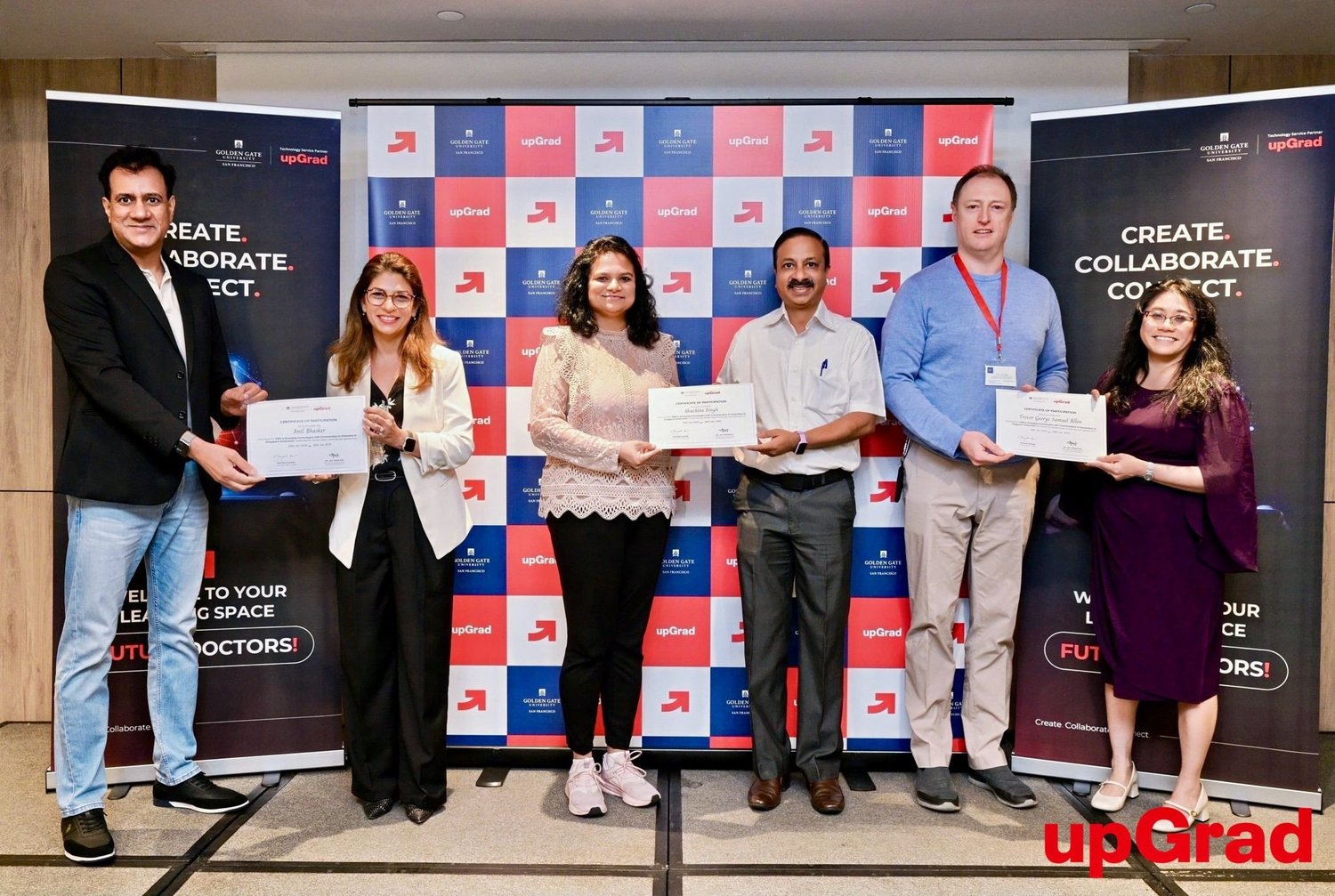
Golden Gate University recently completed a five-day immersion program in Singapore for its Doctor of Business Administration (DBA) students, focusing on the integration of Generative AI into doctoral research, business strategy, and applied learning. This initiative underscores a growing emphasis on incorporating advanced technologies into educational frameworks. Participants shared their reflections on LinkedIn, indicating that AI tools were utilized as integral components of research design and business strategy rather than as supplementary options.
AI researcher Shuchita Singh, who attended the immersion, characterized the program as a rich amalgamation of academic rigor and practical business insights. In her LinkedIn post, she stated, “This immersion beautifully blended academic rigor, real-world business thinking, and Generative AI applications—from business plans and books to thesis development.” The curriculum included in-depth discussions on business planning, dissertation frameworks, and sessions led by experts on GenAI applications, strategy, storytelling through data, and change management.
The program prioritized clarity in research design and methodological approaches. Singh noted that structured feedback throughout the immersion was crucial for refining doctoral focus, writing, “The feedback on thesis ideation and research direction was incredibly valuable—helping sharpen the problem statement, strengthen alignment with impact, and bring clarity to the research path ahead.” Additionally, participants engaged in team-based case studies that highlighted the practical applications of Generative AI in real-world business scenarios.
Rather than treating AI as a standalone subject, the DBA immersion effectively integrated Generative AI into how research questions were framed and tested, emphasizing its role in translating research into tangible business outcomes. This approach reflects a wider trend in advanced business education, where AI is increasingly recognized as a foundational element shaping doctoral studies, leadership training, and practical applications.
In a broader context, the DBA immersion program aligns with significant trends in the education sector, where institutions are rapidly adopting technology to enhance learning experiences. The shift towards integrating AI into academic curricula signifies an important evolution in how future leaders are being prepared to navigate increasingly complex business environments.
In related news, the ETIH Innovation Awards 2026 are now accepting entries aimed at recognizing education technology organizations that are making measurable impacts across various educational sectors, including K–12 and higher education. Open to submissions from the UK, the Americas, and other regions, the awards will assess candidates based on evidence of outcomes and real-world applications, further emphasizing the need for technologies that drive meaningful change in education.
See also Non-Tech Professionals Drive 2025 AI Upskilling Surge, 77% from Non-IT Sectors
 Northern Arizona University Launches AI Hub at Cline Library to Enhance AI Literacy
 Techville Education Celebrates 25th Anniversary, Unveils Vision for AI in Public Education
 IXL Wins 13 Awards in 2025, Recognized as Top EdTech Resource for Personalized Learning
 UAE Ministry Partners with Microsoft to Launch Four AI Agents for Higher Education