






















































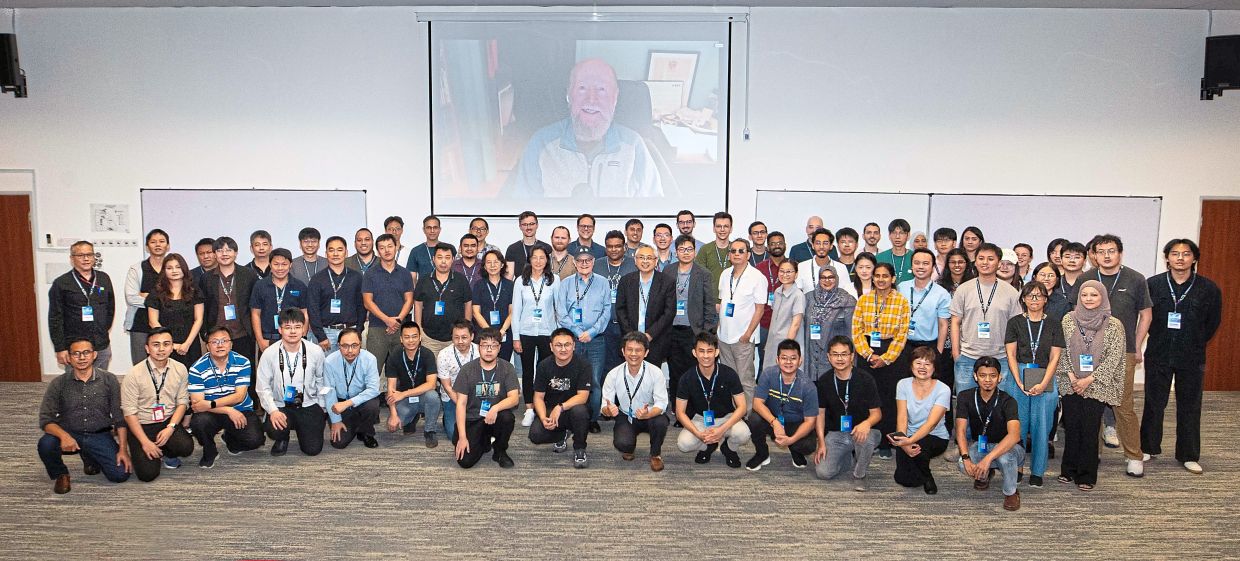
A four-day programme on reinforcement learning, dubbed the “Openmind Winter School,” recently concluded at the Sungai Long campus of Universiti Tunku Abdul Rahman (UTAR). The event brought together 60 international participants, including students, researchers, and industry practitioners, marking UTAR’s inaugural foray into this critical subfield of artificial intelligence (AI).
Reinforcement learning, a machine-learning technique, enables AI systems to make decisions by interacting with their environment and employing trial and error to maximize long-term rewards. This methodology underpins various applications, including targeted online advertising and investment strategy development through stock market analyses.
The Openmind Winter School was jointly organized by the Canadian-based Openmind Research Institute (ORI), UTAR, AI Malaysia, and Universiti Malaya (UM). The event received support from key educational institutions like AI Singapore, Universiti Teknologi Malaysia, National University of Singapore, Nanyang Technological University, and the Asean Academy of Engineering and Technology. Sponsorship came from organizations including Silverlake Axis, Berjaya Corporation, the Foundation for Science and AI Research (SAIR), and Oriza Holdings.
The keynote address was delivered virtually by ORI co-founder Prof Richard Sutton, recognized as the father of reinforcement learning. Sutton, who recently received the 2024 Association for Computing Machinery’s Turing Award for his groundbreaking work, also hosted a live “Ask Me Anything” session during the event.
Participants at the Winter School benefited from insights shared by ORI founders Randy Goebel and Joseph Modayil, who discussed the evolution of AI, the advancement of research, and practical real-world applications. Additionally, Prof Chee Seng Chan from UM showcased Malaysia’s first multimodal large language model (MLLM), capable of comprehending and producing diverse content forms, including text, images, video, and audio.
The programme comprised two segments: the first featured lectures and hands-on lab sessions led by experts from ORI and the University of Alberta. The second segment included seminars conducted by researchers affiliated with institutions such as Google and Eindhoven University of Technology. Topics covered ranged from core algorithms to the challenges in the evolution of AI, MLLM-based agents, and the future of autonomous systems.
Practical applications of learned concepts were highlighted in a session where participants implemented algorithms on a four-legged robot, initially in simulation and later on the actual hardware. This hands-on tutorial, led by Dr Sorina Lupu from ORI, culminated in an engaging robot competition.
In his closing remarks, UTAR president Prof Datuk Dr Ewe Hong Tat reflected on the success of the programme in promoting collaborative discourse and knowledge sharing among participants. He expressed gratitude to the organizers, partners, sponsors, and attendees, emphasizing the potential for ongoing connections and innovative ideas that could drive the AI community forward.
“UTAR celebrates the resounding success of the inaugural Openmind Winter School, which created a dynamic platform for knowledge exchange and professional networking across the AI research community,” Prof Ewe stated. He further indicated that plans are already in motion for future editions, aiming to build on the momentum and impact generated by the event.
See also Edge AI Hardware Market Projected to Surge to $248.08 Billion by 2035, Driven by VR Demand
 VCU Expert Warns of Five Dangers Posed by Political AI Chatbots in Elections
 SIM IP Merges with Garden Intel in $150M Deal to Launch Innovative AI Platform
 AI Enhances Lab Efficiency: Key Strategies for Compliance and Data Integrity
 Romanian Firms Prioritize IT Infrastructure Over AI, Invest 19% in Modernization















