






















































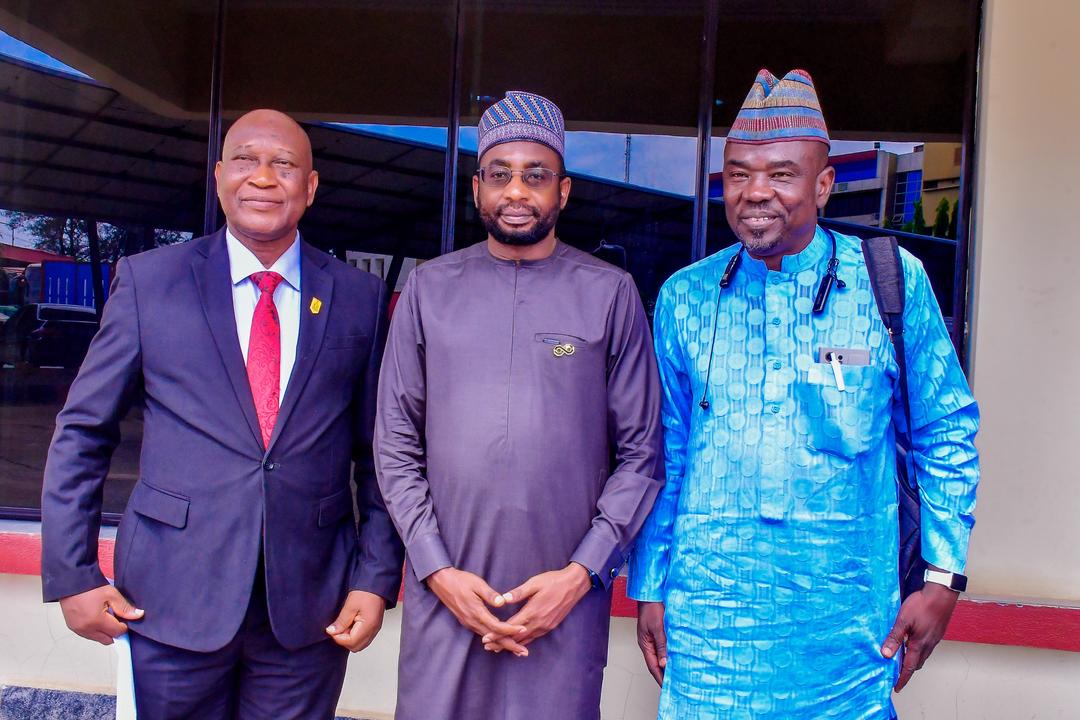
The publisher of PRNigeria, Yushau A. Shuaib, presented key findings from his latest research on Artificial Intelligence (AI) in crisis communication at the National Crisis Communication Symposium organized by the Centre for Crisis Communication (CCC) in Abuja. The study, which received endorsement from the CCC and support from the National Information Technology Development Agency (NITDA), highlights a rapidly growing, albeit uneven, adoption of AI tools across Nigeria’s security, emergency response, and public communication sectors.
Shuaib conducted a survey of 182 crisis communication professionals and interviewed five senior experts. His findings reveal that 75.8% of respondents are familiar with AI applications, while 54.9% confirmed that their organizations already deploy AI tools during emergencies. Notably, the respondents mainly consisted of seasoned officers with over 11 years of experience, drawn from security agencies, emergency services, and a mix of public and private institutions.
AI tools are increasingly utilized for various purposes, including public information dissemination (50%), social media monitoring (40.7%), emergency coordination (31.3%), early warning systems (25.3%), and risk assessment (24.7%). ChatGPT emerged as the most widely adopted platform, at 75.3%, followed by Meta AI and Google Gemini. Many professionals also mentioned using AI for brainstorming, drafting press releases, summarizing reports, and producing social media content.
Shuaib emphasized that while AI enhances message clarity, as confirmed by 80% of respondents, trust in AI-generated alerts remains fragile. “Over 51% of the respondents still trust human updates more than AI alerts,” he stated. Nevertheless, 63.2% believe AI already outperforms traditional communication methods in high-pressure emergencies. The study further indicates improvements in crisis response times, with 65.9% acknowledging faster communication and 58.8% praising the 24/7 availability of AI-powered systems. Overall satisfaction with AI responsiveness was reported at 80.2%, with clarity of messaging identified as the most valued benefit.
Despite these advancements, Shuaib cautioned that AI usage in Nigeria remains primarily tactical rather than strategic. He noted that adoption is skewed toward content creation and monitoring, while predictive analytics and early risk detection are underutilized. Accessibility challenges were identified by 33.5% of respondents, pointing to issues related to digital literacy, affordability, and infrastructure deficiencies.
The researcher highlighted that while AI is reshaping crisis communication—especially in public messaging and real-time monitoring—its full potential remains unrealized. “The future clearly points toward deeper AI integration,” Shuaib said. “But success will depend on enhanced training, stronger digital infrastructure, and a well-balanced synergy between AI systems and human expertise.” He announced that the entire research project will be formally unveiled at the next National Spokespersons Awards in Abuja in 2026.
In his keynote address, Malam Kashifu Inuwa Abdullahi, Director General of NITDA, advocated for the establishment of an AI-driven task force to combat misinformation during crises, particularly during elections. He warned that while technology itself is neutral, its misuse can trigger economic shocks, polarize societies, and spread harmful content. Inuwa emphasized the need for regulation of big tech, accountability of digital platforms, and the creation of independent crisis management centers aligned with local realities, citing Nigeria’s ongoing efforts, including the Nigerian Data Protection Commission and the proposed Online Harm Protection Bill.
Minister of Information Mohammed Idris Malagi, represented by Voice of Nigeria Director General Jibrin Ndace, described the symposium as timely given the growing influence of social media and AI. He encouraged the ethical use of digital tools to promote peace and unity and expressed hope that the symposium would become an annual event.
Maj. Gen. Chris Olukolade (Rtd.), Chairman of the CCC, underscored the strategic value of crisis communication as a national security asset, emphasizing the need for technology-driven solutions to enhance early warning, verified information dissemination, and inter-agency coordination. The symposium gathered key stakeholders from security institutions, communication experts, academics, emergency managers, media professionals, and civil society advocates, demonstrating a collective commitment to strengthening Nigeria’s crisis communication architecture.
See also CxOs Project IT Budget Increases, Focus on AI with 52% Aiming for Strategic Differentiation
 Generative AI Agents Automate Key Cash Management Tasks, Boosting Liquidity Efficiency
 Machine Learning Reveals Phase Transition in Zinc Oxide Nanoparticles During Growth
 AI Research Shifts Focus from Scaling to Human-Like Learning for Improved Generalization
 Amazon Awards 63 Research Grants to 41 Universities Across 8 Countries for AI Innovation















