Large Language Models (LLMs) have transitioned from a mere trend in technology to a pivotal element driving modern business transformation. Companies are employing LLMs in various applications, ranging from intelligent chatbots available around the clock to AI systems that generate content, analyze data, and automate workflows. This evolution is fundamentally altering how organizations operate and scale in today’s competitive landscape.
However, the integration of LLMs is not straightforward. Developing, fine-tuning, and deploying effective models necessitates deep technical expertise, robust infrastructure, and a clear grasp of business objectives. Consequently, many organizations are turning to specialized LLM development companies to actualize their AI aspirations.
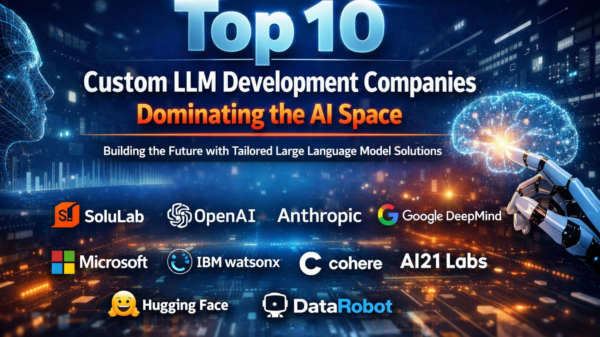
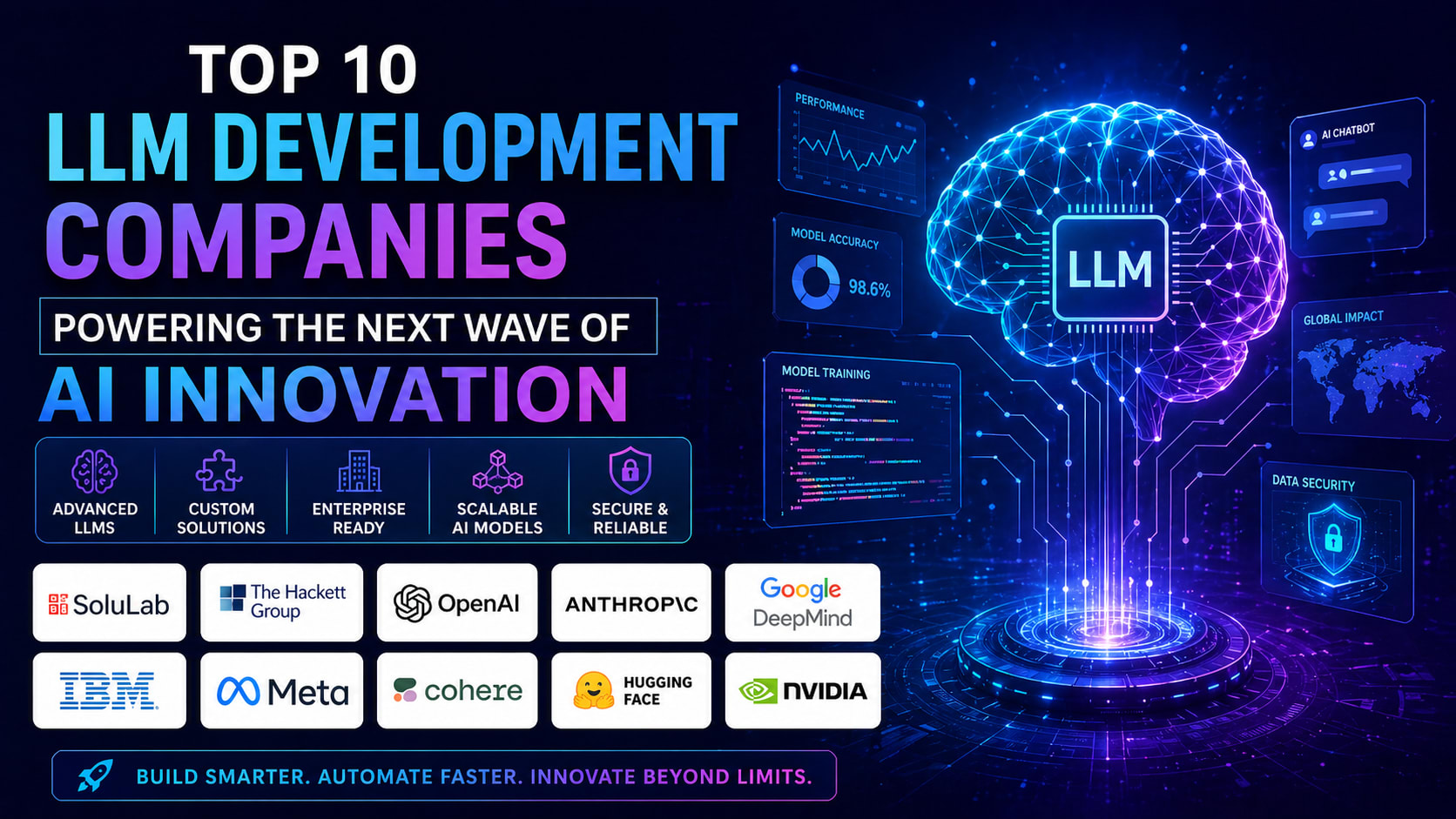
Among the leading firms in this domain is SoluLab, which has carved a niche in providing tailored AI solutions rather than one-size-fits-all models. Their focus on building custom LLMs aligns with specific business use cases across various sectors, including fintech, healthcare, and eCommerce. SoluLab emphasizes measurable outcomes, aiming to enhance efficiency, accuracy, and user experience.
Another notable player is The Hackett Group, which adopts a strategic approach to LLM integration. Their services extend beyond mere development; they specialize in embedding AI within existing enterprise frameworks. This consulting-driven model assists businesses in pinpointing where LLMs can deliver the greatest value, whether through automation, process optimization, or data-informed decision-making. This focus on operational efficiency makes them an attractive option for many organizations.
OpenAI is widely recognized for its influence in the LLM space, particularly through its GPT models, which have set high standards in natural language understanding and generation. Businesses globally are leveraging OpenAI’s APIs to create applications ranging from conversational AI to content automation tools. This ecosystem fosters rapid development, eliminating the need to construct models from the ground up.
Anthropic distinguishes itself by prioritizing AI safety and reliability. Their Claude models are designed with interpretability and alignment to human intent in mind, addressing significant concerns regarding AI adoption. Organizations in regulated industries seeking responsible AI solutions may find Anthropic’s offerings particularly compelling.
Google DeepMind, supported by its parent company, is making strides in advanced AI research that goes beyond traditional LLM capabilities, delving into intricate reasoning systems and large-scale machine learning innovations. DeepMind is particularly suited for scenarios demanding high performance and scalability in data-heavy environments.
Similarly, IBM Watson remains a trusted name in enterprise AI. Its LLM functionalities are effectively integrated into business applications such as customer support, analytics, and workflow automation. One of Watson’s major advantages is its seamless integration into existing enterprise frameworks, which simplifies AI adoption for large organizations.
Meta AI is pushing boundaries in open AI research and large-scale model development, significantly impacting how developers access and build LLMs. Their relevance is particularly pronounced for businesses operating in social media, digital platforms, and user engagement technologies.
Cohere is emerging in popularity due to its developer-centric approach. Its LLM APIs are designed to be efficient, scalable, and easy to integrate, making them attractive to startups and growing businesses that require robust capabilities without substantial infrastructure investments.
Hugging Face has altered the AI landscape by enhancing accessibility to LLMs through its open-source platform, which encourages developers to experiment, fine-tune, and deploy models with relative ease. This flexibility and customization have made Hugging Face the preferred choice for teams emphasizing innovation and adaptability.
While Nvidia AI does not develop LLMs in the traditional sense, it plays a crucial role in powering the infrastructure that supports modern AI systems. Its GPUs and AI frameworks facilitate faster training and deployment of large-scale models, making Nvidia a vital component for companies focused on high-performance AI applications.
The rapid advancement of LLMs presents both opportunities and challenges for businesses. Successful implementation hinges on selecting the appropriate development partner, as each of the companies mentioned offers unique strengths—ranging from cutting-edge research and enterprise integration to developer-friendly tools. Aligning these capabilities with specific business objectives is essential for success.
As the landscape of artificial intelligence continues to evolve, businesses that embrace and effectively scale LLM technologies today are poised to emerge as the leaders of tomorrow.
See also Novi AI Launches Long Video Agent for 5-Minute AI Narrative Video Creation
 Pinterest Reduces AI Budget While Adopting Hybrid Model with OpenAI and Alibaba
 OpenAI’s GPT Image2 Generates MS Paint-Style Drawings, Sparking Viral Trend
 Apple Researchers Reveal LaDiR Framework, Enhancing LLM Accuracy by 20% in Math and Code Generation
 Bangalore AI Startups Develop Proprietary Models, Target Global Markets with Local Solutions