









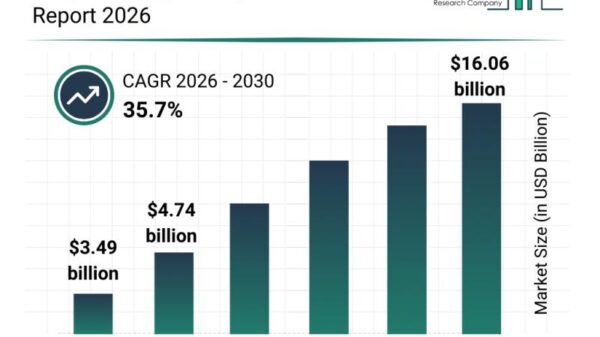



































The global Deception Technology Market is projected to grow significantly, reaching an estimated value of US$ 6,307.66 million by 2033, up from US$ 2,476.52 million in 2025. This growth, marked by a compound annual growth rate (CAGR) of 12.6% during the forecast period of 2026 to 2033, underscores the increasing demand for proactive cybersecurity measures that extend beyond traditional threat detection systems.
As cyber threats evolve in sophistication, deception technology has emerged as a pivotal layer in modern security strategies. By deploying traps and decoys that lure attackers and enable organizations to analyze their tactics in real time, deception tools enhance early breach detection and offer deep insights into malicious behavior.
Recent developments within the United States highlight the rapid evolution of this sector. In March 2026, Attivo Networks expanded its deception platform with AI-driven threat detection capabilities, aimed at fortifying enterprise security against advanced persistent threats. TrapX Security followed suit in February 2026, enhancing its deception grid solutions to safeguard critical infrastructure, particularly within healthcare and industrial control systems. In the same month, Illusive Networks launched advanced identity-based deception tools designed to prevent credential theft and lateral movement across enterprise networks.
Notably, Rapid7 integrated deception technology into its extended detection and response (XDR) platform in December 2025, enhancing real-time threat visibility and response capabilities.
In a notable innovation, Zscaler recently launched an AI-powered deception platform that embeds realistic decoys across user sessions and endpoints, designed to minimize false positives and enhance detection accuracy. The system operates within a zero-trust framework, alerting security teams in real time. Furthermore, a new deception orchestration tool tailored for Kubernetes environments allows for automated deployment and management of decoys using cloud-native technologies, offering enhanced defense for modern container-based infrastructures.
A framework utilizing generative AI for adaptive deception was recently introduced, capable of creating dynamic and personalized traps. This system can adjust bait environments in real time based on attacker behaviors, significantly improving engagement and early threat detection. Studies suggest that companies employing deception solutions are reducing breach-related costs by over 50%, with enhanced operational efficiency in security operations leading to a reduced workload for analysts and quicker incident detection.
In Japan, significant strides have also been made, with NTT Security unveiling next-generation deception solutions in March 2026, focusing on the protection of smart city and IoT ecosystems. Fujitsu Limited advanced its offerings in February 2026, integrating deception-based threat intelligence for enterprise and government networks, while NEC Corporation deployed AI analytics integrated with deception technology to detect sophisticated cyberattacks in real time.
Investment in deception technology is increasingly viewed as an integral component of a broader active defense strategy, particularly in sectors such as healthcare, banking, and critical infrastructure. Strategic acquisitions and partnerships among cybersecurity firms are on the rise, with a focus on integrating deception tools into their existing portfolios. Investors are attracted by the potential for deception platforms to reduce breach costs and improve security operations, leading to a lower total cost of ownership and quicker returns on investment.
Regionally, North America dominates the market, bolstered by substantial investments in cybersecurity and the presence of numerous technology companies amid a high frequency of cyberattacks. The U.S. is specifically prioritizing the integration of deception into its federal and defense cybersecurity frameworks. In Europe, compliance with data privacy regulations like GDPR is driving the adoption of deception technologies, particularly among financial institutions and public sector entities. Meanwhile, the Asia-Pacific region is experiencing the fastest growth due to a burgeoning threat landscape, particularly in countries such as Japan, South Korea, India, and China, fueled by digital transformation and national cybersecurity initiatives.
The Deception Technology Market is rapidly gaining traction as organizations seek innovative, intelligence-driven cybersecurity measures to outsmart increasingly sophisticated cyber attackers. With the ability to detect threats early, limit attacker movement, and reduce response times, deception technology is becoming an essential component of modern security frameworks. As global awareness increases and deployment becomes easier through managed services and AI-powered platforms, this market is well-positioned for ongoing expansion, particularly in sectors characterized by high risk and stringent compliance requirements.
See also Anthropic’s Claims of AI-Driven Cyberattacks Raise Industry Skepticism
 Anthropic Reports AI-Driven Cyberattack Linked to Chinese Espionage
 Quantum Computing Threatens Current Cryptography, Experts Seek Solutions
 Anthropic’s Claude AI exploited in significant cyber-espionage operation
 AI Poisoning Attacks Surge 40%: Businesses Face Growing Cybersecurity Risks