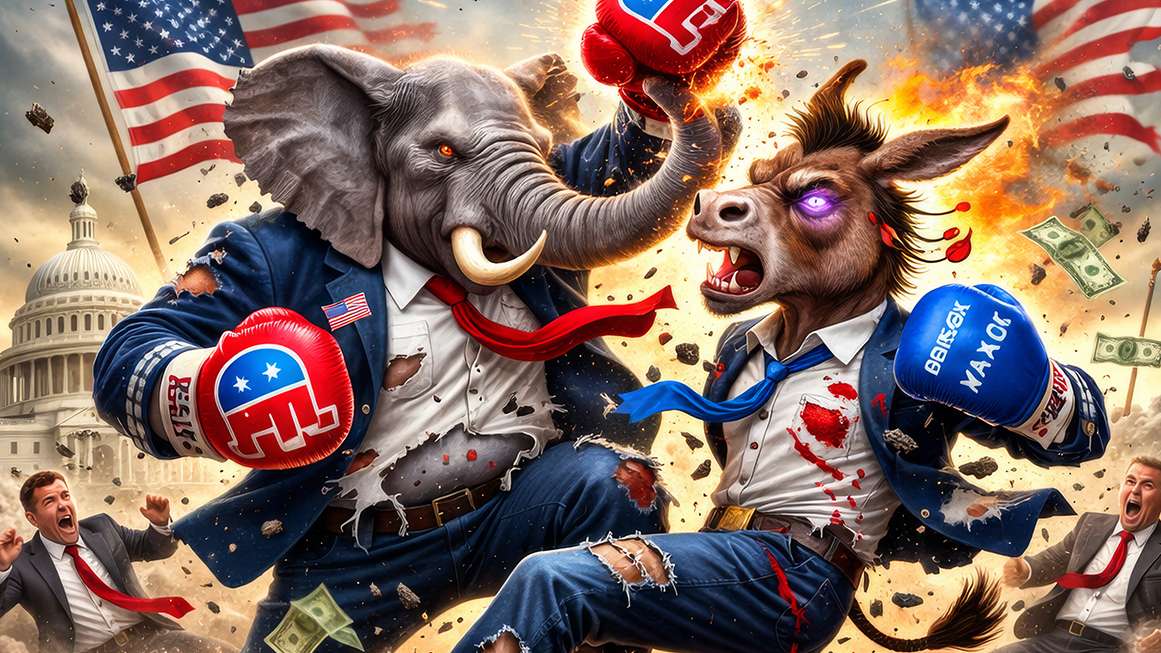
As lawmakers grapple with the rapid evolution of artificial intelligence (AI), a distinct divide emerges in their regulatory approaches. Republican-sponsored AI bills tend to prioritize the regulation of the technology’s development, particularly large language models (LLMs), while Democratic proposals focus more on individual misuse rather than the technology itself. This divergence is evident in various legislative efforts currently underway.
Senator Amy Klobuchar (D–Minn.) voiced her concern last year after a deepfake of her surfaced, calling for Congress to affirm the right to demand the removal of such content from social media platforms. In a similar vein, California Governor Gavin Newsom signed three bills in 2024 aimed at curbing the creation of deceptive AI-generated political content ahead of elections.
On the Republican side, Senator Josh Hawley (R–Mo.) advocates for measures that go beyond mere regulation of technology. He proposes banning driverless cars to protect unionized truck drivers and limiting minors’ access to AI companion chatbots. His legislation mandates that AI developers submit their models to the Energy Department for potential nationalization, should the department determine that various “adverse scenarios” could arise from their deployment.
Despite these party lines, there is some overlap in legislative sponsorship. Hawley’s AI Accountability and Personal Data Protection Act, which would make it illegal to use legally acquired copyrighted materials for AI training without permission, counts Democratic Senators Richard Blumenthal of Connecticut and Peter Welch of Vermont among its co-sponsors. This bill follows a legal case involving Anthropic, which was found guilty of copyright infringement for using illegally acquired copyrighted works. If enacted, it could significantly hinder AI developers who rely on both public and legally purchased data.
Hawley’s Artificial Intelligence Risk Evaluation Act, also co-sponsored by Blumenthal, would require AI developers to disclose detailed information about their LLMs to the Energy Department prior to deployment. The legislation raises concerns about stifling innovation, as developers may be dissuaded from pursuing advancements if the government holds the power to nationalize promising technologies.
The GUARD Act, another initiative from Hawley, appears to have the best chance of being enacted. It has garnered bipartisan support, with co-sponsors that include Blumenthal, Welch, and several other senators from both parties. This legislation would ban chatbots from producing sexually explicit content for minors and prohibit the provision of any AI companions to minors altogether, leading to extensive age verification processes that raise privacy concerns.
In the Democratic camp, Senator Dick Durbin (D–Ill.) introduced the DEFIANCE Act, which aims to make it a civil offense to create digital forgeries depicting intimate activity or nudity. Furthermore, the AI LEAD Act, co-sponsored by Hawley, would impose liability on AI developers and deployers when their systems cause harm. Critics argue that such measures could hold developers liable for misuses of their products, akin to holding firearm manufacturers accountable for criminal acts involving their weapons.
Meanwhile, the NO FAKES Act, introduced by Senator Chris Coons (D–Del.), seeks to protect individuals’ likenesses from unauthorized AI-generated recreations. With 11 co-sponsors, this bill would hold platforms liable for hosting unauthorized digital replicas and exclude these digital creations from First Amendment protections. Critics warn that such legislation could hinder creativity in the gaming industry, disproportionately affecting small developers.
While lawmakers push for regulations, some express concerns that these efforts overlook the potential benefits of AI. For instance, the AlphaFold AI system has significantly accelerated drug discovery and improved research capabilities. Advocates argue that imposing stringent regulations could stifle innovation and limit AI’s positive impacts on fields like healthcare, logistics, and public service.
As Congress continues to debate AI legislation, the political landscape remains fragmented. Although some members, such as Senator Ted Budd (R–N.C.), emphasize the importance of fostering AI advancement without excessive regulation, bipartisan cooperation on this issue appears tenuous. With a patchwork of state laws potentially complicating the regulatory environment, the risk of hamstringing AI’s growth looms large.
The current legislative climate is marked by both urgency and uncertainty. While some bills may successfully advance, the broader implications of regulation on innovation and development remain a pressing concern. As the debate unfolds, the challenge remains to balance safety and accountability with the necessity for technological progress.
See also Microsoft Launches Agent 365 for AI Governance Amidst Valuation Concerns
 Anthropic Warns: AI Model Distillation Poses Serious Risks of Misuse and Safety Bypasses
 Gurugram University Hosts Global AI & Law Summit, Engages 192 Researchers and Experts
 Karnataka Proposes AI-Driven Digital Safety Law with 24-Hour Content Takedown Mandate
 Karnataka Proposes AI-Focused Social Media Safety Bill with 24-Hour Content Moderation Requirement