









































Shaig Abduragimov, Solutions Lead for Government and Education across EMEA and APAC at OpenAI, has announced via LinkedIn that he will teach two courses at the University of Oxford in the coming months. The programs are part of the university’s Department for Continuing Education, which focuses on providing professional learning and accredited courses aimed at working professionals.
Abduragimov will first lecture on the Low-Code Data Scientist course, designed for non-technical professionals, followed by the AI Engineering program, which targets a more technical audience. The AI Engineering course emphasizes the construction and deployment of AI systems utilizing large language models and full-stack agentic frameworks.
In his announcement, Abduragimov expressed excitement about his teaching debut, stating, “This is my first time teaching — and at Oxford, no less.” He reflected on his upbringing, noting how his family history influenced his decision to embrace education. “I grew up surrounded by people who cared deeply about education, with teachers in one generation and missed opportunities in the next,” he added.
Oxford’s AI Engineering course dives into foundational models, retrieval-augmented generation (RAG), prompt engineering, multi-step agent design, vibe coding, LLM-native interfaces, and establishing guardrails for safe deployment. Participants will engage in hands-on exercises and complete a capstone project utilizing tools such as LangGraph, CrewAI, LlamaIndex, and cloud-native architectures.
Abduragimov plans to direct his sessions toward the “foundations of agentic systems, safety-first design, and moving from idea to working solution using OpenAI tools.” He aims to equip learners with the “mental models to work with AI rather than observe it from a distance,” bridging the gap between theoretical understanding and practical application.
The Low-Code Data Scientist course introduces professionals without technical backgrounds to AI and analytics concepts. Both programs require a minimum attendance of 75 percent and feature a combination of online weekday sessions along with longer weekend blocks. This structure is designed to accommodate working professionals seeking to enhance their skills while balancing their job commitments.
Abduragimov’s decision to teach also draws from his family’s legacy in education. His late grandparents taught Russian and Mathematics in rural Soviet Azerbaijan, while his parents faced interruptions in their studies due to conflict. He shared that stepping into a teaching role now feels like a way to support learners who may be at their own “inflection points in a rapidly changing world.”
In closing, Abduragimov expressed gratitude to course director Ajit Jaokar for the opportunity and for curating these thoughtful programs. The courses highlight Oxford’s commitment to addressing the growing demand for skilled professionals in the field of AI, aligning educational offerings with the evolving landscape of technology.
See also ISTE and Old Dominion University Launch Faculty Standards for Digital Teaching Competencies
 Ambow Transforms into AI-Driven Tech Company with 40% Revenue from HybriU Platform
 Tamil Nadu Expands AI-Driven Learning Ecosystem with New Innovation Labs and Career Guidance
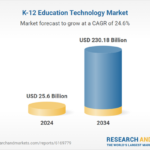 K-12 EdTech Market to Hit $230B by 2034 Driven by AI and Personalized Learning
 17-Year-Old UP Student Launches AI Teacher Robot ‘Sophie’ with LLM Chipset