





























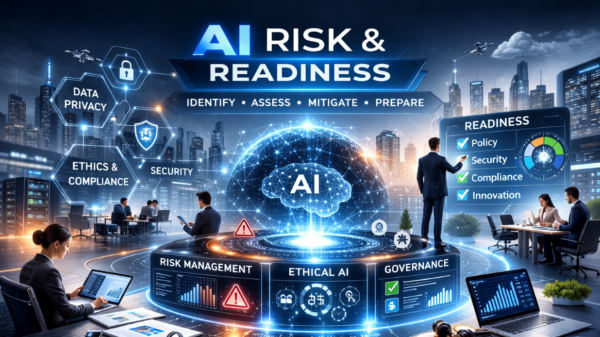












As artificial intelligence (AI) continues to permeate various facets of daily life, calls for ethical oversight have intensified. In 2024, UN Secretary-General António Guterres cautioned the Security Council that the fate of humanity “must never be left to the ‘black box’ of an algorithm.” His remarks highlighted an urgent need for human oversight in AI decision-making, ensuring that human rights are protected amid rapid technological advancement.
The United Nations has since been actively consolidating efforts for a “people-first” approach to AI governance, building on the principles set forth in the Global Digital Compact. As AI technologies evolve, the UN emphasizes that education plays a crucial role in preparing individuals to navigate an AI-enabled future effectively.
Shafika Isaacs, head of technology and AI in education at UNESCO, noted that the global education system will require 44 million teachers by 2030. Isaacs argues that prioritizing investment in education over AI technologies is essential. “AI can manage data transfer, but it cannot manage human development. Education is fundamentally a social, human and cultural experience and not a technical download,” she stated. This perspective underscores the belief that technology should augment, rather than replace, human interactions in educational settings.
The UN’s emphasis on education as a cornerstone of AI governance resonates with sentiments expressed by various stakeholders in the tech industry. As companies and organizations integrate AI into their operations, the demand for a workforce skilled in AI and data literacy is growing. Initiatives aimed at enhancing digital literacy are becoming increasingly vital for individuals to thrive in an evolving job market.
Public discourse around AI is also shifting. Concerns regarding privacy, security, and ethical implications of AI technologies have prompted discussions not only among policymakers but also within civil society. Advocates stress the importance of inclusive dialogue, aiming to ensure that diverse perspectives shape the development and deployment of AI tools.
As AI systems become more complex, the notion of accountability takes center stage. Experts argue that establishing clear guidelines for the ethical use of AI is paramount. The UN’s work in this realm seeks to foster international collaboration, promoting standards that safeguard human rights and dignity in the face of potentially disruptive technologies.
The ongoing integration of AI into everyday life raises critical questions about the future of work and societal structures. As industries adapt to these changes, the imperative for a robust ethical framework grows stronger. The UN’s advocacy for a “people-first” approach seeks to ensure that technological progress does not come at the expense of fundamental human values.
In the coming years, the challenge will lie in balancing technological innovation with the necessity for ethical oversight. As nations and organizations navigate this complex landscape, the commitment to education and human development will be crucial to harness AI’s potential while preserving the rights and dignity of individuals worldwide.
See also AI Transforms Assessments to Enhance Fairness and Real-World Skills in Education
 EdTech Congress Barcelona 2026 Unites 2,500 Leaders to Explore AI’s Role in Education
 Affective AI Literacy Boosts Student Satisfaction, Reveals New Research Findings
 Graduates Face 5.8% Unemployment as AI Alters Job Market Dynamics and Higher Ed Value
 Google Launches Project Genie AI Model for Interactive Real-Time Environments