



















































Financial services firms in India are increasingly leveraging artificial intelligence (AI) to enhance operational efficiencies, moving beyond basic customer service functions into more complex areas such as risk compliance and onboarding. This shift comes in response to a push from the Reserve Bank of India (RBI), which issued guidelines last August to facilitate AI deployment across various internal workflows, thus accelerating the transition away from traditional call centre automation.
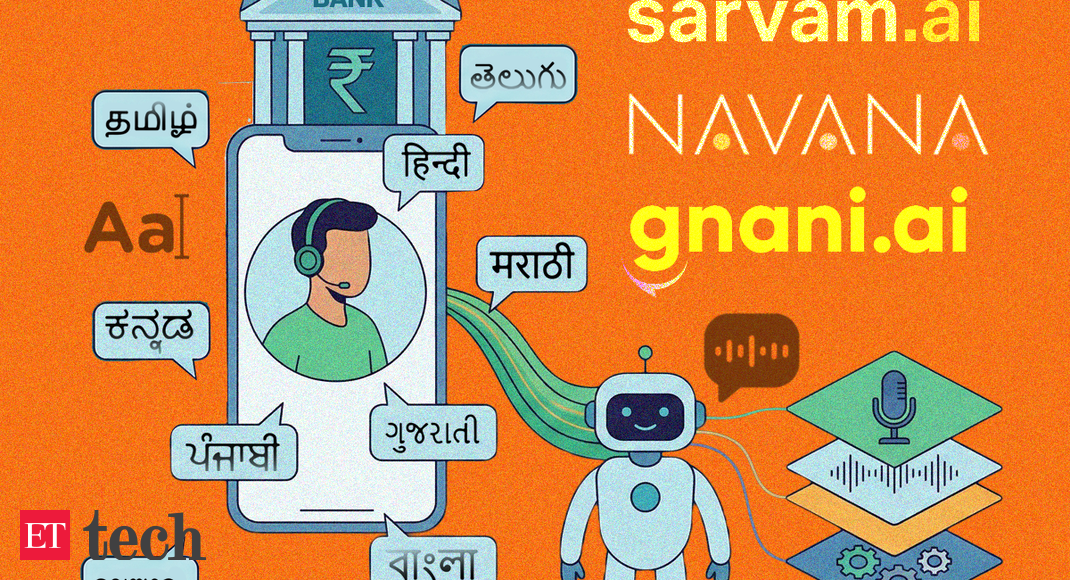
Startups focusing on voice AI are gaining traction among banks and non-banking financial companies. For instance, Sarvam and Navana are deploying voice bots that handle routine customer servicing, while Info Edge Ventures-backed Gnani.ai collaborates with enterprise clients like HDFC Bank and IDFC First Bank to develop multilingual voice-AI systems. These innovations not only streamline high-volume interactions but also cater to the diverse linguistic landscape of India.
As banks become more confident in AI’s capabilities, they are exploring its applications in collections and credit underwriting. “Currently, mostly standard processes are going to AI, but whenever there is an escalation or more complex tasks involved, humans are still frontending it,” said Raoul Nanavati, cofounder of Navana Tech. This indicates a gradual but significant shift in how banks are managing operations, highlighting the dual role of AI and human expertise in financial services.
In parallel, analysts are divided on the implications of AI for India’s IT services sector. The introduction of automation tools, such as those from Anthropic that streamline routine tasks across finance, research, and human resources, has prompted varied forecasts. Some analysts predict revenue pressures as automation expands, while others believe AI could create new market opportunities for technology services.
JP Morgan, for instance, remains optimistic about AI’s long-term impact, characterizing it as a productivity tool akin to previous technological advancements like offshore labor and enterprise software. Conversely, Jefferies warns of potential “sharp revenue deflation” in managed services, which represent up to 45% of major IT firms’ revenues. Domestic analysts have weighed in as well; Motilal Oswal estimates that 12-15% of sector revenue could face disruption due to AI, while Kotak Institutional Equities anticipates stable near-term demand but foresees long-term margin pressures.
In a separate development, fintech lender Moneyview has filed a draft red herring prospectus with the Securities and Exchange Board of India (Sebi) as it seeks to raise ₹1,500 crore through a public offering. The equity offering includes a fresh issue as well as an offer for sale of 136 million shares by promoters Sanjay and Puneet Agarwal, along with existing investors Accel, Apis Partners, and Ribbit Capital. The proceeds are earmarked for expanding its lending operations, with ₹450 crore targeted for its non-banking finance entity and ₹650 crore allocated for loan disbursements under its first-loss default guarantee model in collaboration with partner lenders.
Moneyview, founded in 2014, has made significant strides in the fintech space, reporting loan disbursements of ₹16,299 crore between April and December 2025. Its revenue during this period stood at ₹2,373 crore, with a net profit of ₹209 crore in the first nine months of the current fiscal year.
In another sector, India’s beauty and personal care market is projected to expand from a valuation of $27 billion in FY25 to $39 billion by FY30, driven by a growing young consumer base and an increasing interest in self-care products. According to a report by 1Lattice, online sales of beauty and personal care products have more than doubled since 2020, with approximately 75% of shoppers now favoring e-commerce platforms. Nykaa leads the market, trailed by Amazon and Myntra, while quick commerce is anticipated to grow significantly, accounting for 30% of online sales by 2030.
Gen Z consumers are fueling this growth, representing 45% of total spending in this segment. Their preferences are shaping the market, reflecting broader trends in consumer behavior and retail dynamics.
Ford Motor Company is also embracing AI, as indicated by Franziska Bell, its chief data, AI, and analytics officer. Bell noted that the automaker seeks to integrate AI across various functions, from design to manufacturing, to transform ‘manual hours’ into automated processes while maintaining a focus on human expertise. This approach underscores the growing importance of AI in traditional industries as firms adapt to the evolving technological landscape.
As AI continues to permeate various sectors, the balance between automation and human oversight will likely remain a focal point in discussions about the future of work and operational efficiency.
See also Finance Ministry Alerts Public to Fake AI Video Featuring Adviser Salehuddin Ahmed
 Bajaj Finance Launches 200K AI-Generated Ads with Bollywood Celebrities’ Digital Rights
 Traders Seek Credit Protection as Oracle’s Bond Derivatives Costs Double Since September
 BiyaPay Reveals Strategic Upgrade to Enhance Digital Finance Platform for Global Users
 MVGX Tech Launches AI-Powered Green Supply Chain Finance System at SFF 2025