























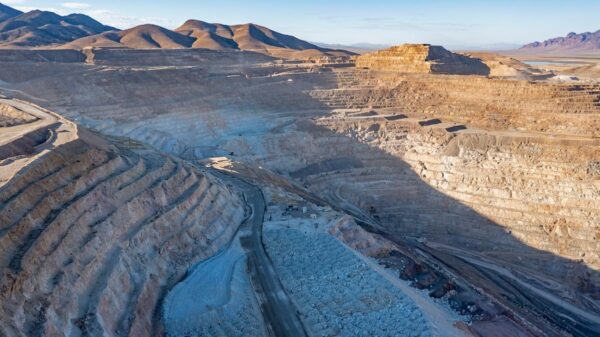


















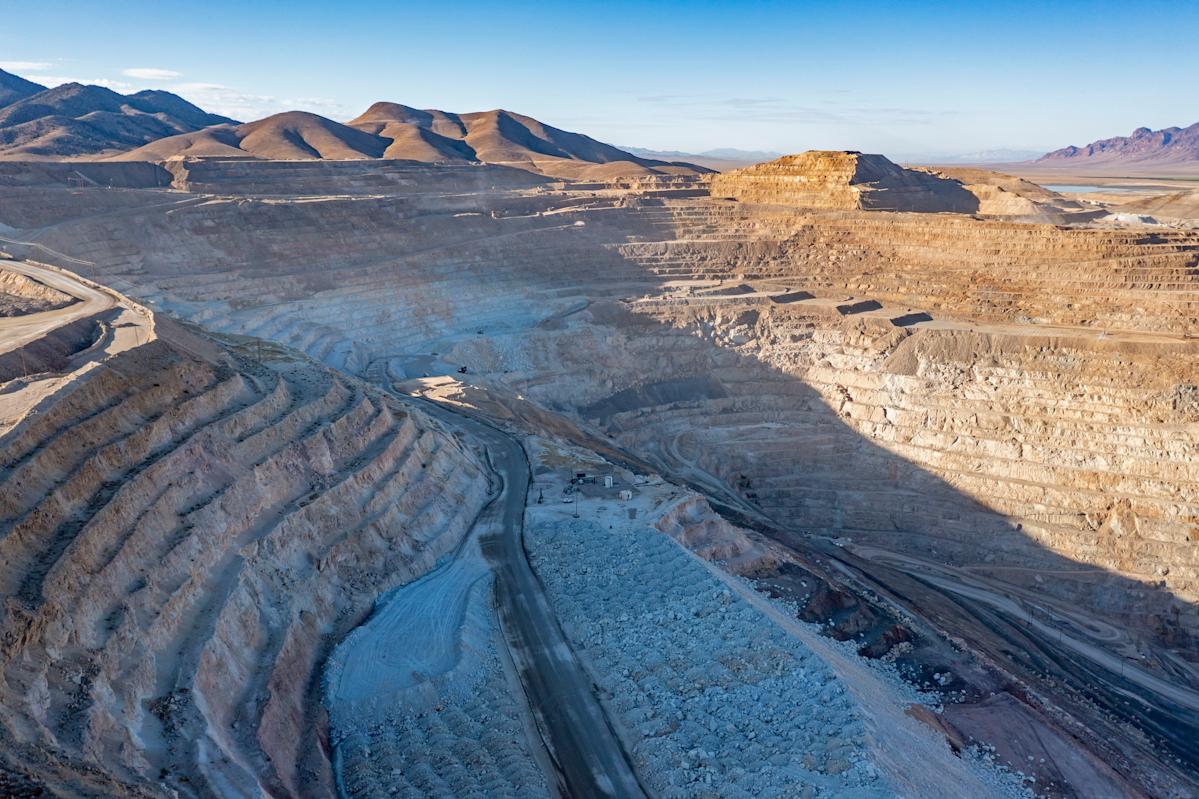
For the first time in at least three decades, geopolitical risks are driving a surge in mining stocks rather than prompting a sell-off. This shift signifies a transformation in the sector, evolving from a focus on industrial growth to strategic investments associated with security and supply control, according to analysts at Jefferies.
The reversal in mining stock trends underscores a broader change in global markets. Historically, heightened geopolitical risks led to weaker growth expectations and diminished demand for raw materials as investors reacted to trade wars, military conflicts, and sanctions that slowed emerging-market demand and delayed capital expenditures. However, recent events have seen investors increasingly perceive conflict as a constraint on physical supply, reinforcing the appeal of assets that produce these materials.
In the past six months, the S&P 500 (^GSPC) has returned approximately 8%. In contrast, the US mining sector (XME) has surged by 48%, while international mining stocks (PICK) have rallied by 57%. This dramatic uptick is indicative of a major shift in market sentiment.
The relationship between mining stocks and global economic growth has significantly altered in recent years. The ongoing war in Ukraine, coupled with the U.S. government’s tariff regime, has disrupted global metals flows. Simultaneously, rising tensions in the Middle East have increased risks related to energy and shipping, while the ongoing trade war between the U.S. and China has triggered export controls on critical minerals and industrial technologies.
New supply has also faced constraints due to stricter environmental policies in Western countries and rising resource nationalism in regions like Latin America and Africa. Notably, the Democratic Republic of Congo controls approximately three-quarters of the world’s cobalt supply, highlighting the geopolitical stakes involved.
In parallel, governments are intensifying efforts to ensure domestic access to metals critical for defense, energy transition, and electrical infrastructure. Jefferies analysts Christopher LaFemina and Giovanni Holmes note that “geopolitical risk no longer signals falling consumption; instead, it tends to indicate tighter supply, export controls, sanctions, and inventory hoarding.” This dynamic raises scarcity premiums, effectively lowering miners’ cost of capital.
Mining stocks are also experiencing benefits from the burgeoning artificial intelligence (AI) sector. A widespread “AI scare trade” has seen investors shift away from soft assets such as software and financial services, directing their funds toward sectors tied to energy, materials, and physical production.
UBS Wealth Management’s Ulrike Hoffman-Burchardi stated that her firm is pivoting portfolio allocations from software to mining, power generation, and heavy machinery manufacturing. Concurrently, the demand for metals like copper, steel, aluminum, and gold has surged due to the ramp-up in AI infrastructure, as manufacturers race to produce essential components such as data center cooling racks and GPU chips.
The intersection of AI demand and geopolitical risks has effectively established a floor for metals consumption, even amid uneven global growth. Analysts argue that while software and digital services can scale with minimal physical input, the systems supporting AI—such as power generation and transmission—are heavily reliant on tangible resources.
Goldman Sachs strategists have advocated for investment in sectors rich in assets yet low in obsolescence, identifying industries such as energy grid development and mining as areas of interest. They emphasize that markets are increasingly rewarding “capacity, networks, infrastructure, and engineering complexity”—assets that are costly to replicate and less vulnerable to technological changes.
In essence, mining is now regarded as a form of long-duration strategic infrastructure. It serves as a crucial component in power generation, defense supply chains, grid expansion, and the foundational structure of the AI economy. Jefferies analysts highlight that “grids, AI data centers, defense, and digital infrastructure all rely on copper, aluminum, and other metals,” reinforcing the industry’s newfound significance amidst shifting global dynamics.
See also Finance Ministry Alerts Public to Fake AI Video Featuring Adviser Salehuddin Ahmed
 Bajaj Finance Launches 200K AI-Generated Ads with Bollywood Celebrities’ Digital Rights
 Traders Seek Credit Protection as Oracle’s Bond Derivatives Costs Double Since September
 BiyaPay Reveals Strategic Upgrade to Enhance Digital Finance Platform for Global Users
 MVGX Tech Launches AI-Powered Green Supply Chain Finance System at SFF 2025