






























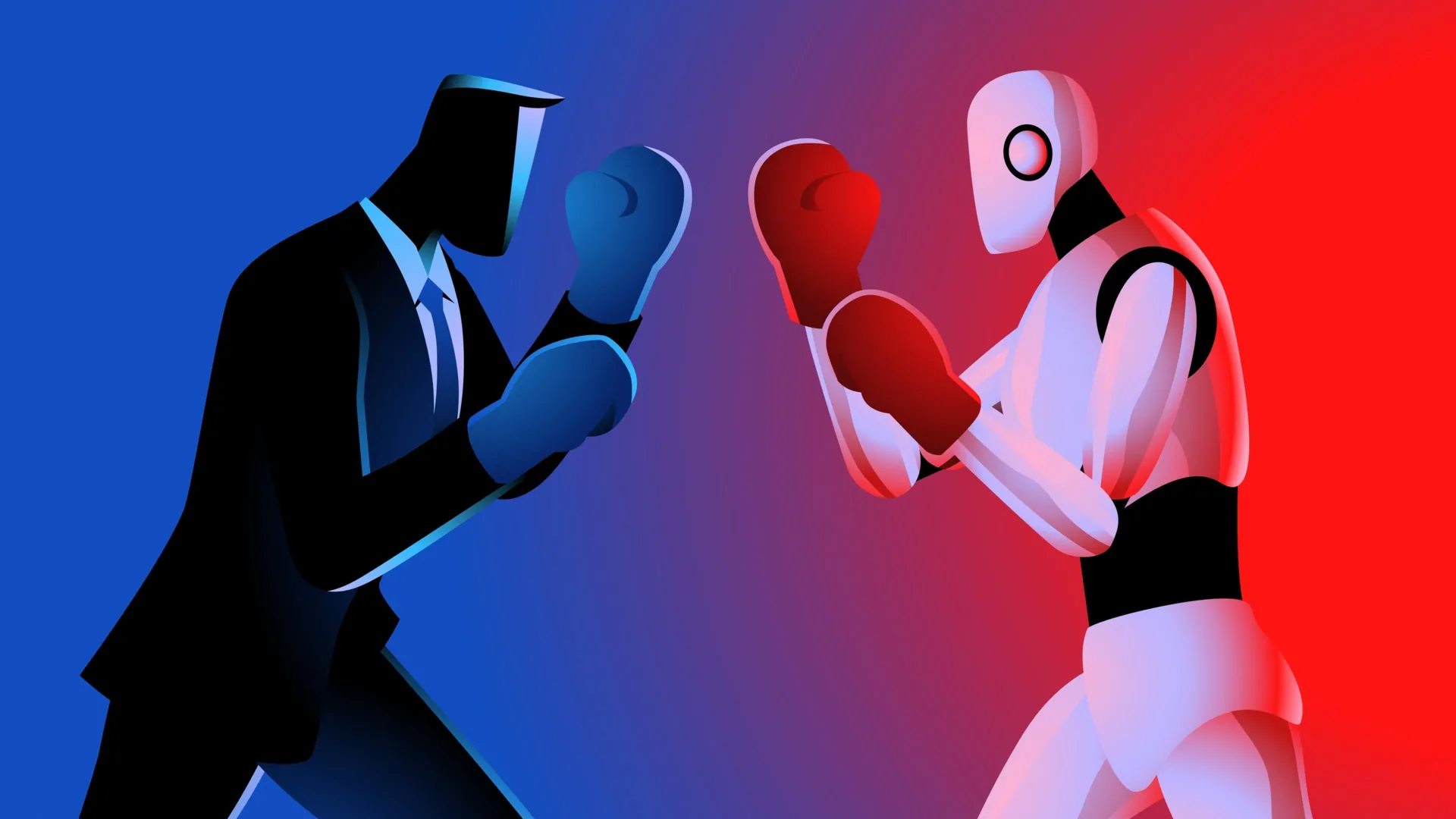
Generative artificial intelligence systems, including prominent models like ChatGPT, are increasingly demonstrating the ability to create original ideas, according to a comprehensive study led by Professor Karim Jerbi from the Université de Montréal. This research, which also involved AI pioneer Yoshua Bengio, marks the largest direct comparison of human and AI creativity to date, published in the journal Scientific Reports on January 21, 2026.
The findings reveal a pivotal shift in the capabilities of generative AI. Certain AI models, such as GPT-4, have begun to outperform the average human on specific creativity assessments, suggesting that AI can achieve levels of creativity comparable to those of everyday individuals. However, the study underscores that the most creatively gifted humans still maintain a distinct advantage over even the most sophisticated AI systems.
Researchers assessed several leading large language models, including Claude and Gemini, juxtaposing their performances against results from over 100,000 human participants. The comparative analysis highlights a significant turning point: while some AI systems excelled in tasks measuring divergent linguistic creativity, the most creative human participants consistently outperformed AI. “Our study shows that some AI systems based on large language models can now outperform average human creativity on well-defined tasks,” stated Professor Jerbi. “This result may be surprising — even unsettling — but it underscores that peak creativity remains a human domain.”
Co-first authors Antoine Bellemare-Pépin and François Lespinasse further noted that while AI models have surpassed average human creativity, the gap widens significantly when evaluating the top 10 percent of the most creative individuals.
The study’s methodology employed the Divergent Association Task (DAT), designed to fairly assess creativity across both humans and AI. Participants were tasked with listing ten unrelated words, an exercise that measures the ability to generate diverse and original ideas. The task’s design encourages cognitive processes integral to creative thinking and allows for swift online access. For instance, a creative response might include words like “galaxy, fork, freedom, algae, harmonica, quantum, nostalgia, velvet, hurricane, photosynthesis.”
Following the DAT, researchers explored whether AI’s performance on this straightforward task extended to more complex creative activities. They compared contributions from both AI systems and human participants in generating haikus, writing movie plot summaries, and producing short stories. The results confirmed a familiar trend: while AI occasionally matched the average human’s performance, the most adept human creators consistently delivered more original and impactful work.
The research also raises important questions regarding the potential to shape AI creativity. The results indicate that AI creativity can be influenced by adjusting technical settings, particularly the model’s temperature, which dictates the predictability of generated responses. Lower temperature settings lead to more conventional outputs, while higher settings foster varied and exploratory responses. The study revealed that instructional prompts significantly impact AI’s creative output; for instance, prompts emphasizing etymology can prompt more unexpected associations and enhance creativity scores.
As concerns about AI replacing human creators mount, the study presents a balanced viewpoint. While AI can now reach or exceed average human creativity in certain contexts, it remains reliant on human direction and guidance. “Even though AI can now reach human-level creativity on certain tests, we need to move beyond this misleading sense of competition,” Professor Jerbi commented. “Generative AI has above all become an extremely powerful tool in the service of human creativity: it will not replace creators but profoundly transform how they imagine, explore, and create — for those who choose to use it.”
The research suggests a future where AI serves as a collaborative creative assistant rather than a replacement for human artists. By enhancing exploration and expanding the boundaries of imagination, AI could amplify human creativity rather than supplant it. “By directly confronting human and machine capabilities, studies like ours push us to rethink what we mean by creativity,” concluded Professor Jerbi.
The collaborative effort behind the study included scientists from Université de Montréal, Université Concordia, University of Toronto Mississauga, Mila (Quebec AI Institute), and Google DeepMind, with Jerbi as the lead investigator and contributions from notable figures such as Yoshua Bengio.
See also Charity Digital Hosts £20 Masterclass on Practical AI Strategies for Nonprofits
 HELIOS Achieves 85%+ Compilability for LLM Binary Decompilation Using Control Flow Graphs
 Scientists Advance Continual Learning with New Multimodal Panoptic Perception Model
 Mexican President Sheinbaum Presents AI-Generated Image Claiming Ryan Wedding Surrender