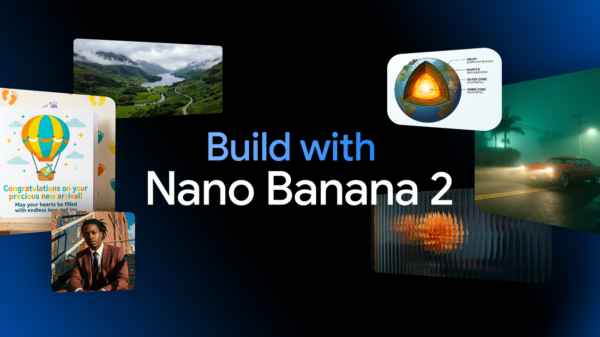

















































Google has unveiled its latest innovation, Project Genie, an AI-driven platform capable of generating three-dimensional environments based on user-generated text prompts. This development marks a significant leap from the company’s existing Nano Banana AI-image generation technology, which creates static images, to a more dynamic and immersive 3D experience. The rollout is currently limited to AI Ultra subscribers in the United States, at a monthly subscription cost of $250.
Project Genie operates on the underlying Genie 3 model and integrates features from Google’s Gemini AI model and Nano Banana. The platform begins with a feature called “World Sketching,” which allows users to outline their desired 3D environment using natural language descriptions or by uploading reference images. This foundational stage is complemented by the Nano Banana model, facilitating the initial planning process before users transition to the full capabilities of Project Genie.
Once a world is sketched, users can engage in “World Exploration,” a feature enabling real-time navigation through the generated environment. As users traverse the space, the AI generates the landscape ahead, akin to an open-world video game with virtually no restrictions. The platform also includes a “World Remixing” option, allowing users to enhance existing worlds or incorporate elements from other user-generated environments, fostering creativity and collaboration.
Despite its innovative features, access to Project Genie is restricted to a select group of users. The subscription model is positioned at the high end of the market, which may limit broader engagement. Even for those who qualify, the experience comes with certain limitations; users are capped at 60-second session durations, and the generated worlds are displayed in 720p resolution. Additionally, the interaction rate is constrained to 20-24 frames per second, which may detract from the overall fluidity of the experience.
While the technology demonstrates significant potential, it also raises questions about accessibility and user experience. With many consumers unable to afford the steep subscription fee, the rollout may cater primarily to a niche audience, thereby limiting the widespread impact that such innovative technology could have in the broader market.
Project Genie represents a notable advancement in AI-driven creative tools, bridging the gap between static and immersive environments. As Google continues to refine its offerings, the implications for gaming, design, and virtual experiences could be profound, setting the stage for future developments in the realm of artificial intelligence and user interaction.
See also KLCI Launches Rafiki X, Enhancing Africa’s AI Career Counseling to Over 9,300 Users
 Elon Musk’s AI-Generated Sydney Sweeney Video Sparks Digital Consent Controversy
 Stable Diffusion Unveils Cantonese Embroidery Image Generator with 2048×2048 Resolution in 50 Seconds
 India’s IT Secretary S Krishnan Advocates for Sector-Specific AI Models Over Generative AI