













































Large language models (LLMs) are becoming integral to various industries, transforming the way organizations approach tasks such as customer service, content creation, and data analysis. These AI systems, trained on extensive datasets of text, are adept at generating and interpreting language, which empowers applications from chatbots to coding assistants. Their rapid integration into sectors such as healthcare, education, and cybersecurity underscores their growing significance in contemporary workflows.
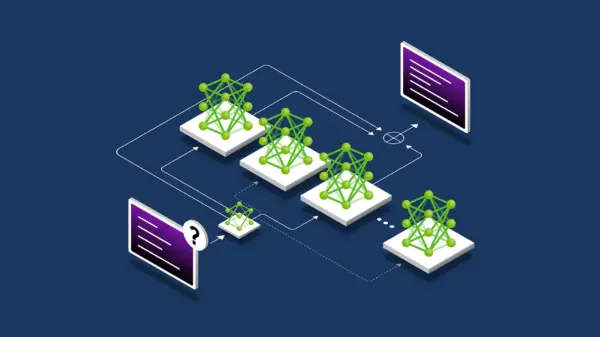
At the core of LLMs is the predictive ability to generate coherent text sequences based on learned patterns. By analyzing relationships between words and phrases through statistical training, these models can produce responses that closely mimic human conversation. Some of the most prominent architectures include autoregressive models, like OpenAI’s GPT-4, which generate text one token at a time and have shown utility in a variety of applications, despite occasional issues with context retention.
Other types, such as masked language models like BERT, predict missing words in sentences, while encoder-decoder models handle more complex tasks such as translation and summarization. Additionally, multilingual models, including Meta’s Llama 2, are capable of processing multiple languages, enhancing the accessibility of AI tools across different linguistic demographics.
Practical Applications and Implications
The influence of LLMs is particularly evident in content creation, where they contribute to over 80% of social media recommendation algorithms, shaping user experiences online. Industry projections suggest that the market for AI-driven social media tools may grow from approximately $2.1 billion in 2021 to $12 billion by 2031. This rapid expansion raises concerns about the authenticity of digital content, as evidenced by discussions around the “Dead Internet Theory,” which posits that a significant portion of online activity may eventually be dominated by AI-generated content.
Virtual influencers are another emerging application of LLMs. These computer-generated characters, like Instagram’s Aitana Lopez, are designed to interact on social media, raising questions about authenticity and engagement in digital branding. Companies are increasingly partnering with these synthetic personas, which offer controlled marketing opportunities without the unpredictability associated with human influencers.
In cybersecurity, LLMs are being utilized to enhance security measures. Companies like Snyk are integrating AI-assisted tools to help developers identify vulnerabilities in coding projects efficiently. Similarly, autonomous security systems, like those from XBOW, are being developed to conduct penetration tests without human intervention, marking a significant shift in how organizations approach digital safety. However, the potential for misuse of these technologies—such as facilitating phishing attacks—remains a pressing concern.
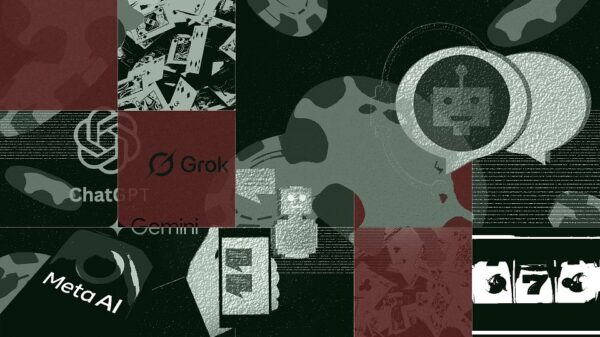
Conversational AI tools, including ChatGPT and Google Gemini, are transforming customer service by allowing businesses to automate responses and improve user interaction. These systems can understand and generate natural language, enhancing the user experience significantly. However, their growing integration into daily life prompts ongoing debates regarding privacy and the potential overreliance on AI.
Despite the advantages, the rise of LLMs brings with it a set of challenges. Concerns about cognitive offloading and diminishing problem-solving skills are increasingly prominent. A study indicated that younger users exhibit higher dependence on AI tools, potentially undermining their critical thinking abilities. In technical fields, while AI can expedite tasks like coding, it may also hinder professionals from honing their essential skills.
Moreover, the proliferation of deepfakes, which can create highly realistic but fabricated media, raises ethical questions and threatens digital trust. Law enforcement agencies, including the FBI and Europol, have expressed concerns that such technologies may undermine societal integrity by enabling misinformation and fraud.
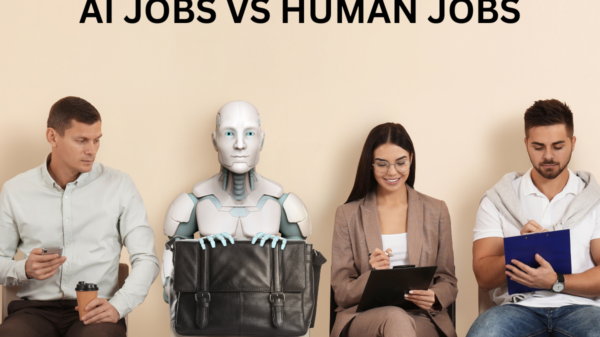
The job market also faces transformation as automation reshapes traditional roles. While some experts warn of displacement in sectors like construction, others argue that new job opportunities will emerge in areas such as AI specialization and digital security. This duality emphasizes the need for a thoughtful approach to AI deployment.
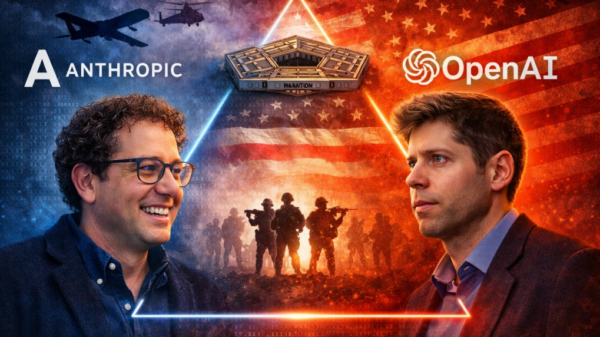
The future of LLMs hinges not only on technological advancements but also on the frameworks governing their use. As the capabilities of AI systems continue to evolve, the discourse surrounding transparency, ethical considerations, and oversight will become increasingly vital. Instances where companies, such as Anthropic, resist military applications of their technology highlight the ongoing struggle between innovation and responsibility in AI development. As LLMs reshape our interaction with technology, the questions of who controls these systems and how they are utilized will be pivotal in determining their impact on society.
See also Sam Altman Praises ChatGPT for Improved Em Dash Handling
 AI Country Song Fails to Top Billboard Chart Amid Viral Buzz
 GPT-5.1 and Claude 4.5 Sonnet Personality Showdown: A Comprehensive Test
 Rethink Your Presentations with OnlyOffice: A Free PowerPoint Alternative
 OpenAI Enhances ChatGPT with Em-Dash Personalization Feature