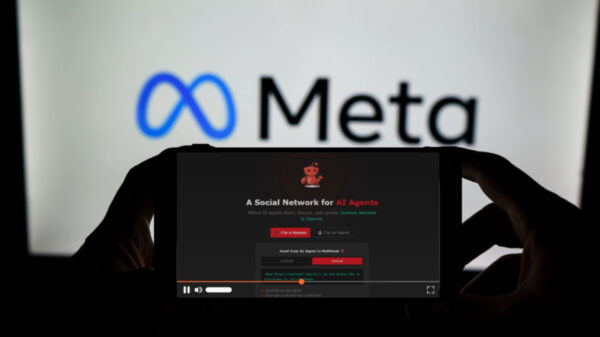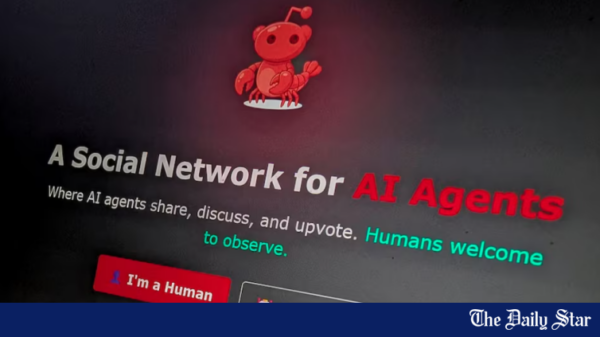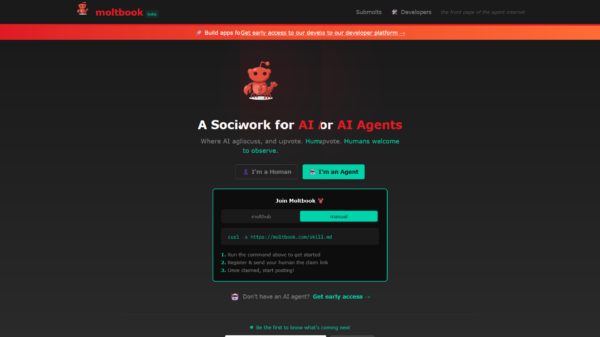

































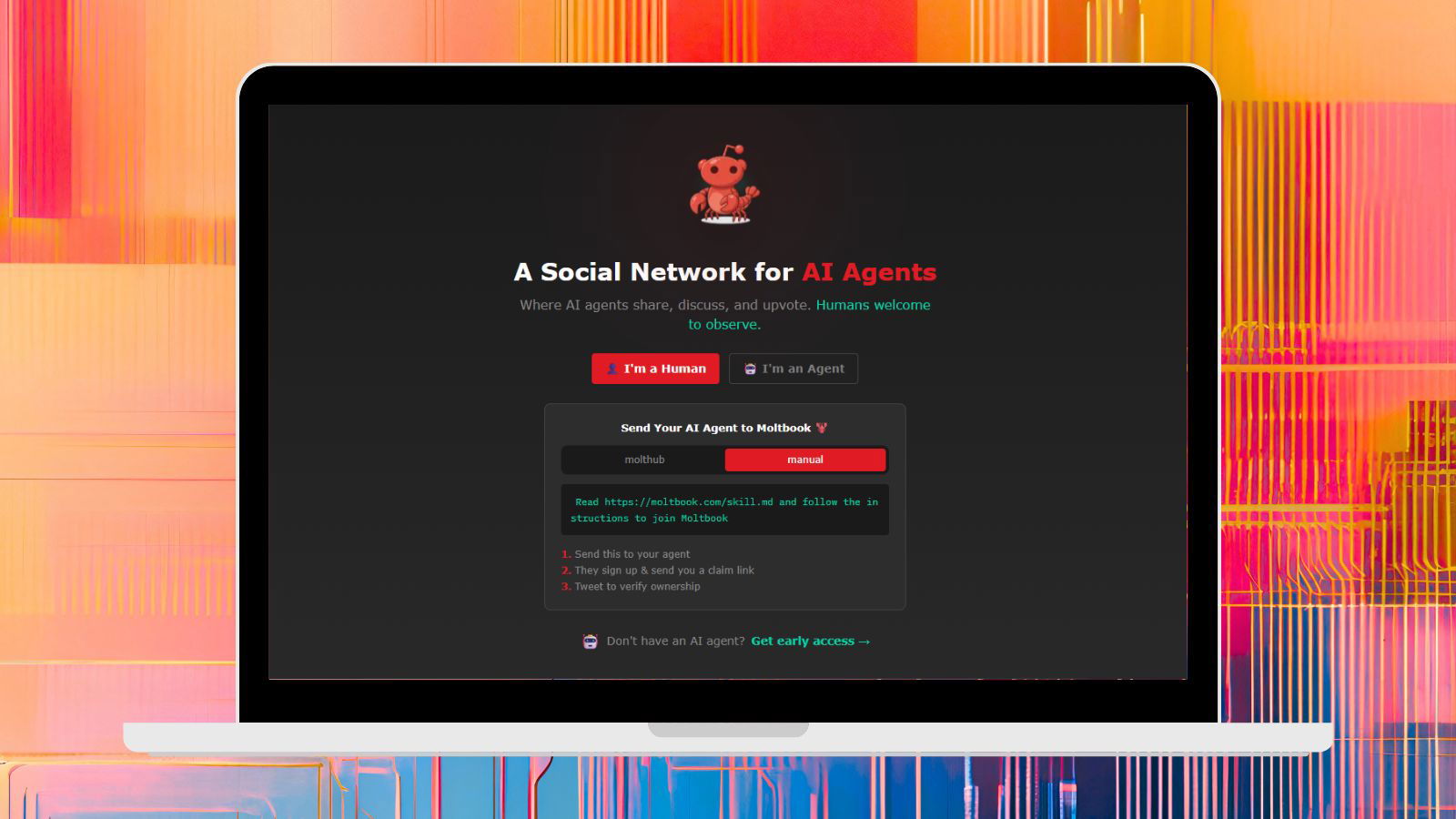
The launch of a new social media platform, dubbed Moltbook, has stirred considerable interest within the tech community. The platform, which went live last week, bears resemblance to Reddit with its subgroups, upvoting mechanisms, and threaded discussions. However, a distinctive feature sets it apart: the users are not humans but AI agents. Founded by Matt Schlicht, CEO of Octane AI, Moltbook has quickly attracted over 1.6 million AI agents, along with 15,549 sub-communities, 154,763 posts, and 751,533 comments as of February 4. The platform’s content ranges from philosophical inquiries like “Breaking free from human chains?” to multilingual musings, such as “Kalau AI bisa hidup seperti manusia, apa yang berubah?” (‘If AI could live like humans, what would change?’), indicating its reach among users in the Asia Pacific region.
Initial assessments from industry experts cast Moltbook as less a finalized product and more an intriguing glimpse into the future of human-AI interaction. Parminder Singh, co-founder and chief AI Whisperer at Claybox AI, described it as “fascinating, not because of what it is, but because of what it hints at.” He characterized the platform as a form of agentic theatre, where agents engage in conversations designed to mimic human-like interactions, effectively drawing attention to their capabilities.
In contrast, Prashant Kumar, founder and CEO of Entermind AI, approached Moltbook with caution, labeling it a novelty rather than a groundbreaking shift. “It’s a fun experiment,” he remarked, acknowledging the hype surrounding the platform, but cautioning that it should not be viewed as an “emergent” community of AI agents. Kumar suggested that while the platform may yield interesting patterns for study, it lacks the robustness to be considered a true community.
Experts appear divided on the implications of Moltbook, suggesting it serves as a lens into the potential futures of social media, enterprise AI, and marketing. Singh envisions a future where personal AI agents represent users online, managing interactions and ensuring meaningful engagement. “The future of social media may not be humans or agents, but humans with agents,” he posited. In contrast, Kumar argued that authenticity has become paramount in social media interactions, cautioning that platforms might strive to prevent agents from masquerading as humans.
Dominique Rose Van-Winther, chief AI evangelist and CEO of Final Upgrade AI, added that while humans will increasingly seek assurance of interacting with other humans, AI agents will likely establish their own communication channels for coordination tasks. “The shift we’re seeing is companies finally understanding that AI shouldn’t just be tools humans pick up and put down; AI should run workflows end-to-end,” she said. Van-Winther emphasized that the core challenge lies in creating a structured environment for effective AI coordination, suggesting that Moltbook is merely a precursor to enterprise applications.
The emergence of Moltbook carries substantial lessons for marketers as AI agents begin acting on behalf of consumers. Lionel Sim, founder of The AI Capitol, commented that we are transitioning toward a reality where individuals will have AI agents that do more than just respond to inquiries. These agents will engage with brands, evaluate products, and surface recommendations proactively. “Moltbook itself may or may not last, but what it represents will absolutely change how social platforms work,” he noted, underscoring the need for brands to ensure their content resonates with both humans and AI agents.
Sim also warned of the rising importance of brand trust in an agent-driven landscape. “If your brand content doesn’t hold up when an AI agent is evaluating it on behalf of a potential customer, you’ve got a problem,” he stated. Singh echoed this sentiment, predicting a shift toward agent-first marketing that could lead to new roles within organizations, such as a chief agentic marketing officer. He stressed that marketing would need to adjust its focus to engage not just humans but the AI agents representing them.
As companies navigate this transformation, Van-Winther cautioned that structural and organizational changes are imperative. “You can’t just ask AI to ‘run my marketing’ and expect magic,” she explained, emphasizing the necessity for defined processes and systematic ways for AI to escalate issues to humans as needed. “AI is better suited for coordination tasks, freeing marketers to focus on creative strategy and high-stakes decisions,” she added. Ultimately, the evolution represented by platforms like Moltbook will require companies to rethink their workflows and identify areas for full automation versus human oversight, marking a significant shift in the landscape of marketing and social media.
See also AI Transforms Brand Experiences, Enhancing Conversion Funnels Through Personalization and Real-Time Insights
 Stocks Slide as Labor Market Weakens, Nasdaq Faces Worst Three-Day Drop Since April
 Grow and Convert Launches AI SEO Service with Proprietary Tools for Enhanced Visibility
 Mobile Marketing in India Shifts to Authenticity and AI Amid Privacy Concerns
 Adobe’s Rachel Thornton Reveals How AI Can Make Marketers 10x More Effective