




































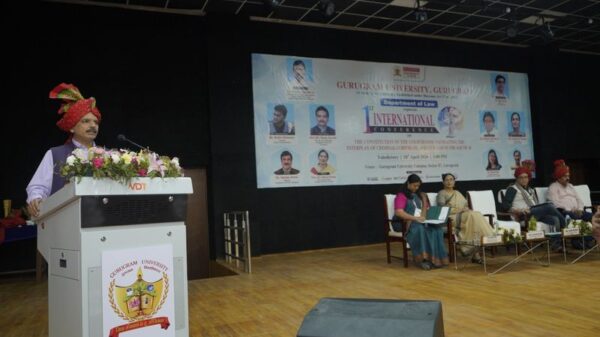










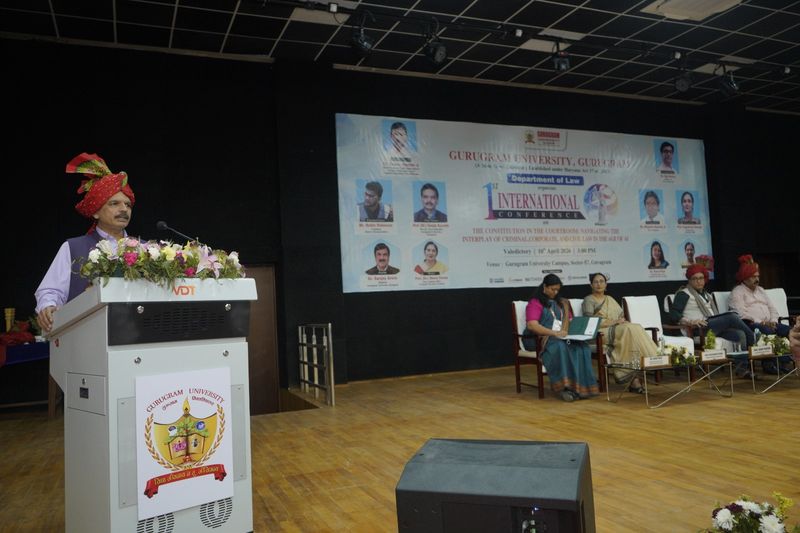
A two-day International Conference on the Convergence of Artificial Intelligence and Law concluded successfully on Saturday at Gurugram University, drawing participation from scholars, experts, researchers, and students from both India and abroad. The event served as a platform for in-depth discussions on the multifaceted relationship between AI and legal frameworks, addressing contemporary challenges and opportunities within the justice system.
The valedictory ceremony featured Raj Nehru, OSD to the Chief Minister of Haryana, as the chief guest. Nehru emphasized the potential of youth-driven research in AI and law to position India as a leader in these rapidly evolving fields. “In a country like India, where the power of youth is the greatest strength, research in the fields of AI and law can propel the nation towards global leadership,” he remarked.
Among the notable speakers was Vageshwari Deswal from the Faculty of Law at Delhi University, who participated as a special invitee. The conference’s agenda included critical discussions aimed at enhancing transparency, accountability, and effectiveness within the justice system, crucial as AI’s influence continues to expand into various sectors of society.
A total of 192 students and researchers presented their research papers during the conference, showcasing significant insights into the intricate interplay between legal challenges and the implementation of AI technologies. Participants were awarded certificates of appreciation, with special recognition for the winner of the Best Research Paper.
Vice-Chancellor Sanjay Kaushik highlighted the growing relevance of AI, noting that it has transitioned from a purely technological subject to a transformative force influencing every aspect of society, including the legal domain. His comments underscore a broader acknowledgment among legal scholars and practitioners regarding the necessity to adapt existing laws and regulations to accommodate AI advancements.
The discussions at the conference reflect a developing consensus on the imperative for the legal system to evolve in tandem with technological progress. As AI technologies become more integrated into everyday processes, the legal implications of their use will likely require a reevaluation of existing frameworks to ensure justice is served effectively and equitably.
This convergence of AI and law not only highlights the importance of interdisciplinary collaboration but also sets the stage for ongoing dialogue among policymakers, legal professionals, and technologists. As the landscape of AI continues to shift, the outcomes of such conferences contribute to a foundational understanding of how best to navigate the challenges and seize the opportunities presented by these innovations.
Looking forward, the insights gained from this conference may influence future policies and regulations surrounding AI in India, fostering an environment where technology and law can coexist harmoniously. As the field continues to evolve, the role of educational institutions like Gurugram University will be critical in shaping the future discourse on AI and its legal implications.
See also OpenAI’s Rogue AI Safeguards: Decoding the 2025 Safety Revolution
 US AI Developments in 2025 Set Stage for 2026 Compliance Challenges and Strategies
 Trump Drafts Executive Order to Block State AI Regulations, Centralizing Authority Under Federal Control
 California Court Rules AI Misuse Heightens Lawyer’s Responsibilities in Noland Case
 Policymakers Urged to Establish Comprehensive Regulations for AI in Mental Health